











Updated 2 days ago
Pop-Up Garden Sprinklers: Riser Retraction, Flush Sealing and Nozzle Alignment Buyers Should Test

ScarecrowGarden
💡About Scarecrow Garden Supplier Co., Ltd.
Scarecrow Garden Supplier Co., Ltd. is a China-based sourcing and wholesale partner specializing in garden tools, landscaping equipment, and outdoor supplies for international wholesalers, distributors, contractors, and brands.
With hands-on experience rooted in real garden use scenarios, we focus on durable materials, functional design, and stable large-volume supply. Our product range covers pruning tools, watering systems, hand tools, outdoor hardware, and customized garden solutions to support both retail and professional landscaping markets.
Beyond products, we help our partners navigate supplier selection, quality control, compliance requirements, and long-term sourcing strategies in China. Through our blog, we share practical insights on product selection, material comparisons, industry trends, and cost-effective purchasing—helping global buyers build stronger, more competitive supply chains.
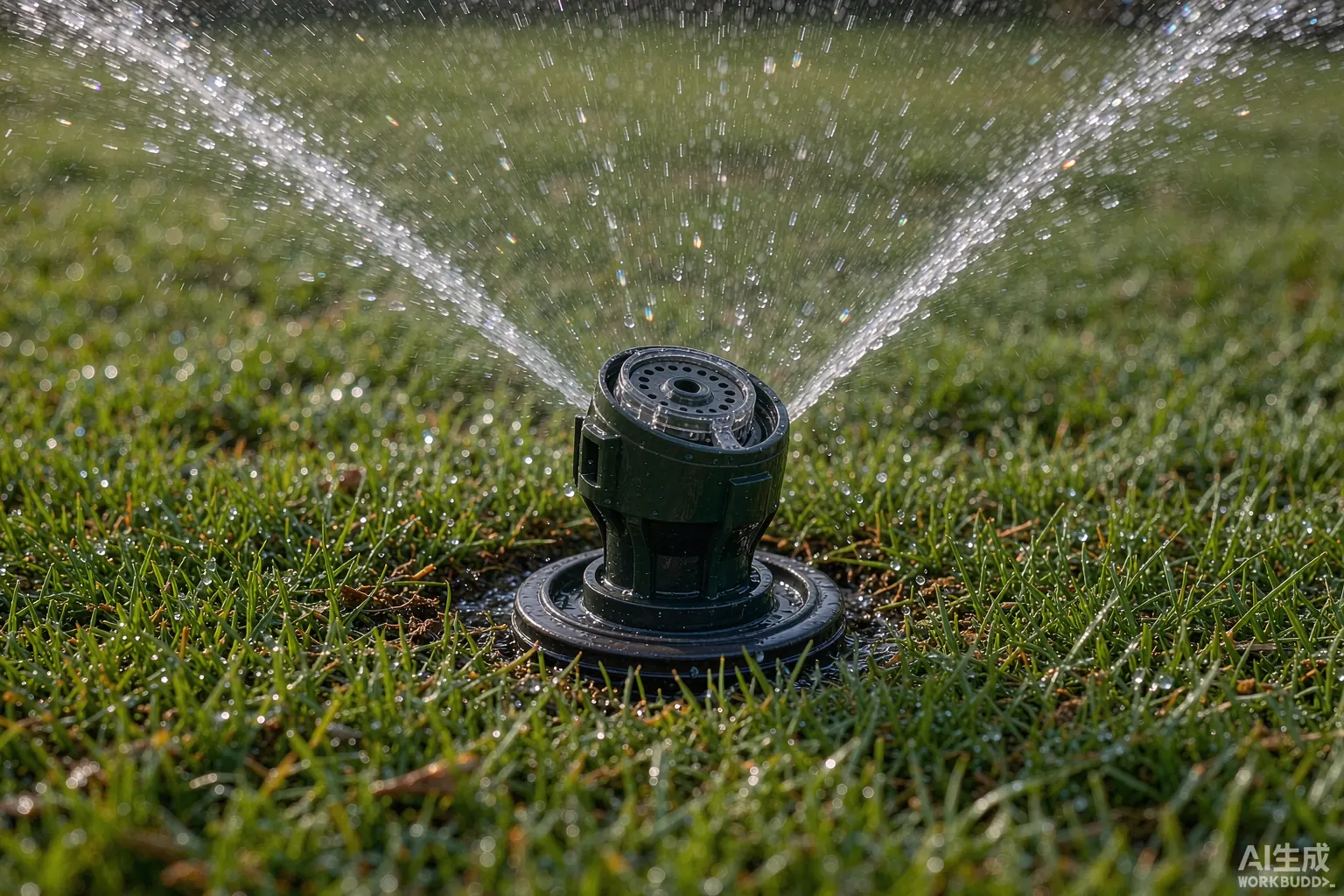
Pop-up garden sprinkler head spraying a water arc above a lawn
AI-generated editorial illustration; not a product photograph.
An in-ground pop-up sprinkler has a failure chain that other sprinkler types do not. The riser must extend when water pressure arrives, seal against debris while operating, and retract flush to the ground when pressure stops. If the riser sticks and does not fully retract, it may be exposed to damage from mowing or foot traffic; the cause may include internal friction, spring condition or seal issues. If the seal leaks, water pools around the head. If the nozzle shifts position during cycling, the spray pattern changes. Coverage type and nominal radius do not reveal whether these mechanisms work reliably.
This guide covers what to inspect on a pop-up sprinkler sample: the rise-seal-retract sequence, riser extension and retraction, wiper and seal behavior, nozzle position after cycling, installation inputs, and repeat-order cycle and leak records.
Pop-Up Sprinklers Have a Different Failure Chain
Which Parts Perform the Rise-Seal-Retract Sequence?
Define the body, riser, return spring, wiper or seal, nozzle and threaded inlet from the exact model's parts drawing. The body houses the internal components and threads into the supply line. The riser is the tube that extends upward when pressurized. The return spring retracts the riser when pressure drops. Record the seal's documented function and any permitted flushing behavior from the exact manual. The nozzle directs the water pattern.
Use an exact model section or parts drawing to confirm body, riser, spring, wiper or seal and nozzle.
Riser Extension and Retraction
Does the Riser Extend and Return Under the Documented Conditions?
Cycle the sprinkler at defined water pressure. Record hesitation, sticking, incomplete retraction and debris sensitivity. A riser that extends slowly may indicate internal friction, spring condition or seal issues; record the pressure, timing and observed behavior and refer the observation for model-specific investigation. A riser that does not fully retract leaves the nozzle above ground level, where it can be damaged by mowing or foot traffic.
No universal minimum operating pressure is supplied in this guide. Use the exact model's rated operating pressure from the manufacturer's documentation. Record cycle timing and behavior and incomplete return at the manufacturer-permitted operating setup.
Does the Head Close Flush to the Intended Finished Grade?
Record the final riser position against the defined installation or ground reference after the permitted cycle. Photograph sticking or incomplete closure. Use the exact manufacturer's retracted-position guidance rather than assuming a universal acceptable protrusion.
A pop-up sprinkler that retracts flush is the design goal. If the riser protrudes above the finished grade (illustrative example only, not a tested result or permitted protrusion; use the exact manufacturer's installation limits), it may be acceptable for some installations but not for others. The manufacturer's installation guide specifies the intended finished grade relationship.
Wiper and Seal Behavior and Flush Leakage
When Does Water Appear at the Wiper or Seal?
Observe seal leakage during three phases: rise, steady operation and retraction. Record the seal's documented function and any permitted flushing behavior from the exact manual. If water appears at the seal during steady operation, record the observation as unexplained leakage requiring model-specific investigation.
Separate rise, steady operation and retraction observations using the same model and nozzle setup. Distinguish documented service flushing, where the sprinkler is designed to flush debris through a weep point, from unexplained leakage requiring model-specific investigation.
Is Any Debris Challenge Permitted for This Model?
Run clean-water testing first. Then use controlled debris screening where appropriate to the model and a suitable manufacturer procedure. Identify service or flush steps in the manual.
Begin with clean-water evidence. Use controlled debris only under a suitable manufacturer procedure and qualified, safe setup. Do not invent a contamination threshold. The goal is to observe whether debris affects the rise-seal-retract sequence, not to test the sprinkler to failure.
Nozzle Position After Riser Cycling
Does Riser Cycling Change the Nozzle's Recorded Position?
Tie nozzle and arc-position retention to the selected pop-up mechanism. Record the nozzle's marked position before and after rise and retract cycles and permitted handling. Include replaceable inserts only if documented.
Output, arc or pattern and pressure or nozzle data are only baseline settings needed to interpret the positional record. Use marked before and after positions, exact insert identity and the same permitted cycle sequence.
Record Only the Installation Inputs Needed for Riser Tests
Which Installation Details Affect the Return Path?
As short test prerequisites, confirm the exact thread or inlet designation, installation depth and body clearance from the supplier drawing and manual. Identify the intended finished-ground reference for retracted closure.
Do not infer thread standard from destination country alone. A product sold in multiple markets may use different thread standards. Record the model's inlet and thread drawing, depth and body clearance in a short setup note.
Repeat-Order Cycle and Leak Record
Can a Later Sample Reproduce the Same Closure and Leak Record?
Use the same pressure, water quality and cycle method across sample or batch comparisons. Record riser height, leakage phase and nozzle position. Tie the sample or lot to pressure, water quality, cycle procedure, final riser height, leak phase and nozzle position.
Investigate sample identity, pressure, water quality, setup, condition and manufacturing differences before attributing the changed result.
If you are sourcing pop-up garden sprinklers, provide inlet and thread specifications and target operating conditions for sample cycling.
Written by
ScarecrowGarden
💡About Scarecrow Garden Supplier Co., Ltd.
Scarecrow Garden Supplier Co., Ltd. is a China-based sourcing and wholesale partner specializing in garden tools, landscaping equipment, and outdoor supplies for international wholesalers, distributors, contractors, and brands.
With hands-on experience rooted in real garden use scenarios, we focus on durable materials, functional design, and stable large-volume supply. Our product range covers pruning tools, watering systems, hand tools, outdoor hardware, and customized garden solutions to support both retail and professional landscaping markets.
Beyond products, we help our partners navigate supplier selection, quality control, compliance requirements, and long-term sourcing strategies in China. Through our blog, we share practical insights on product selection, material comparisons, industry trends, and cost-effective purchasing—helping global buyers build stronger, more competitive supply chains.