






Why Every Gardener Needs a Transplanting Trowel | Expert Guide from Scarecrow Garden Supplier
1. Introduction
A transplanting trowel is one of the most essential garden hand tools for safely moving seedlings and young plants. Transplanting is a common yet essential gardening practice, especially when working with young plants or seedlings.
But what do we actually mean by transplanting? It is an essential technology that involves moving trees, shrubs, or young vegetable plants. This is because young plants are easily stressed by cold, drought, or pests. Young plants, unless directly sown in their final positions, must eventually be set out in the soil.
Choosing the right transplanting trowel is necessary for your customers' efficient garden care. As a professional trading company, Scarecrow Garden Supplier offers all kinds of hand trowels designed for transplanting seedlings and small plants.
Based on real gardening conditions, this article focuses on helping home gardeners and professional landscaping companies understand the benefits and usage of transplanting trowels.
2. What is a Transplanting Trowel?
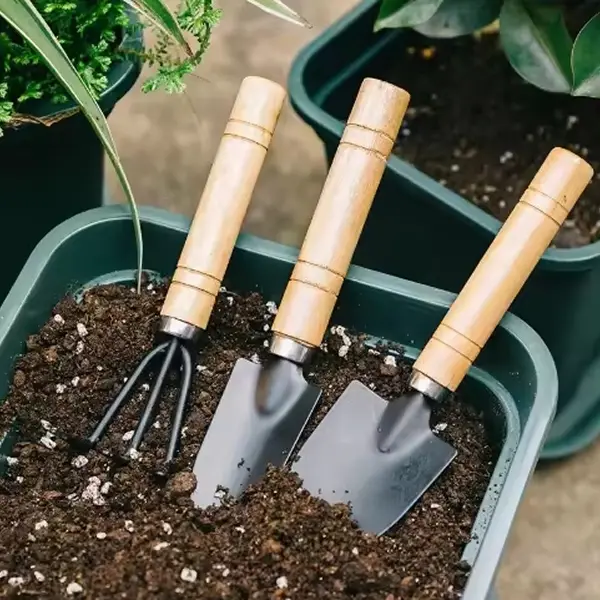
First, the transplanting trowel has narrower heads than normal garden trowels, which helps prevent plant roots from being damaged. Every transplanting trowel provided by the Scarecrow Garden supplier has with scale or a slight curve. It is specifically designed for safer and more efficient garden care.
Today, transplanting trowels are widely used by gardeners due to their precision and efficiency. So for home gardeners who want young plants could grow up safely, and professional landscaping companies who want to source the most suitable garden trowels for their different customers. Knowing the features of transplanting trowels is necessary.
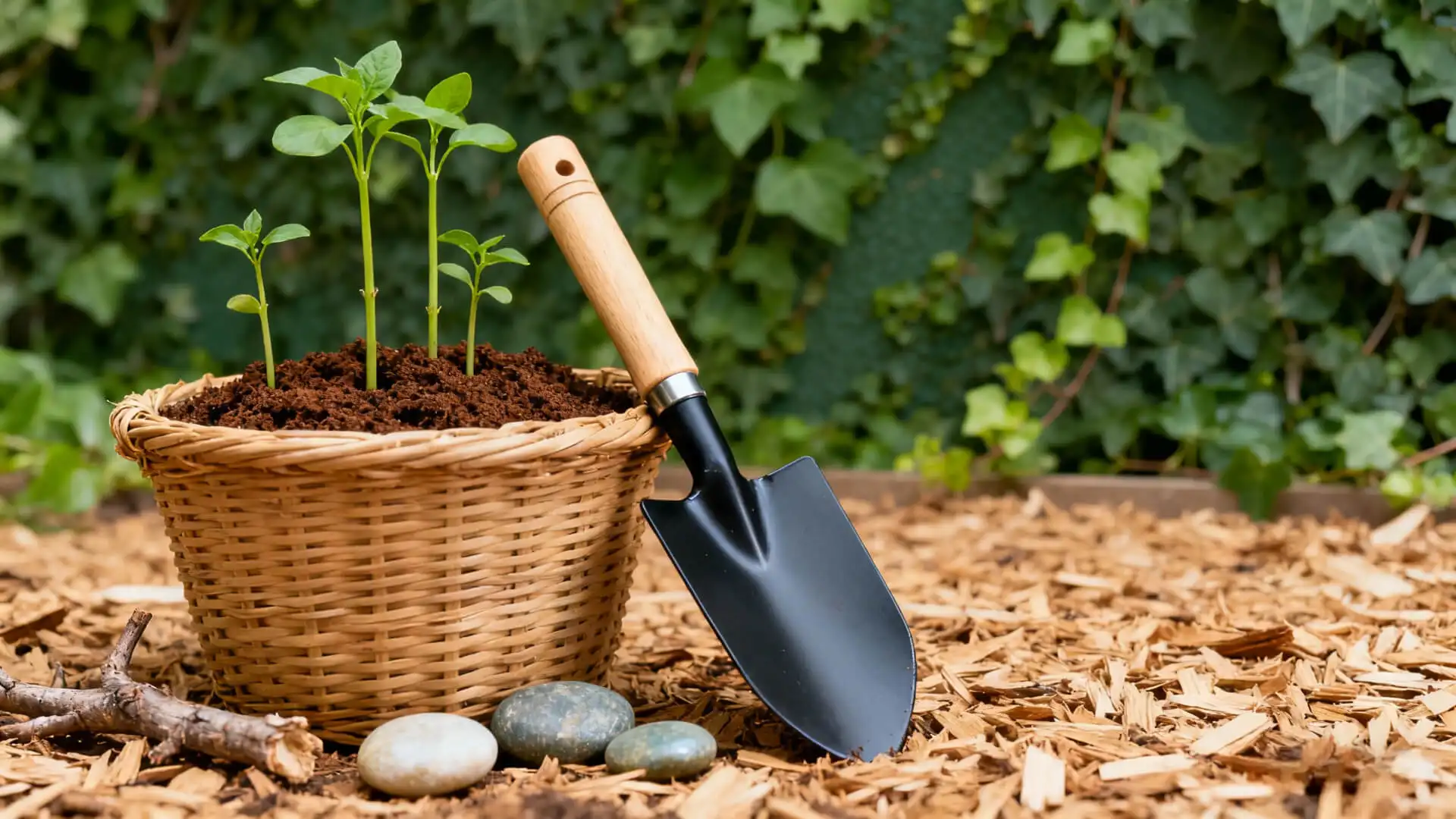
Its narrow, deep blade makes it ideal for working in tight spaces, raised beds, and pots.
3. Key Points of Using a Transplanting Trowel for Your Customers' Reference
3.1 Transplanting Seedlings and Young Plants
A Transplanting trowel is a small but convenient gardening tool that could serve many important purposes. One of its key uses is transplanting seedlings and young plants. By using this trowel, gardeners can carefully dig out the root ball. At the same time, the soil is still hard and in contact. Then the roots can be placed into a new hole and gently firm the soil around them.
This is where a transplanting trowel provides better control than a standard garden trowel.
3.2 Digging Precise Holes
Another key function of a transplanting trowel is digging precise, uniform holes. The transplanting trowel could be used for creating small and well-sized holes, which are good for flowers, vegetables, and young plants. There’s no doubt that roots need enough space to grow comfortably. So well-sized holes control the depth and width, which will help with that.
3.3 Soil Aeration Around Plants
Additionally, the trowel is helpful for soil aeration around plants. With a transplanting trowel, the soil beside the roots will be gently loosened without harming the plants. Of course, it is also especially useful for raised beds.
This helps improve airflow and water absorption, especially in compact or clay soils.
3.4 Mixing Fertilizer or Amendments
Finally, a good transplanting trowel could be used to mix fertilizers or amendments. As long as your customers mix fertilizers before or after planting. This will help improve a better environment for plant growth.
Gardeners often use this tool to blend compost or slow-release fertilizer directly into planting holes.
4. Benefits of Using a Transplanting Trowel
4.1 Protects Plant Roots
When moving delicate seedlings such as tomatoes, a narrow transplanting trowel allows your customers to loosen the surrounding soil without cutting or damaging the roots. How to avoid this condition to protect our roots? The narrow, pointed blade of a transplanting trowel is perfect for loosening the soil around the edges.
4.2 Improve Plant Survival Rate
Its root-friendly design directly contributes to a higher transplant survival rate. In general, the trowels allow for precise digging, which helps keep the root ball intact. When gardeners are transplanting, this reduces the shock that plants often experience, giving them a better chance to adapt and grow successfully.
4.3 Easy to Handle
Many gardening tools are bulky and tiring to use for long periods. So it’s very unfriendly for those who work in a small garden or a large landscape project. But this trowel is easy and comfortable to use. Its design of compact design and lightweight make it suitable for various gardeners. In order to reduce wrist strain during longer gardening sessions, many models feature an ergonomic handle that fits naturally in the hand.
If you want to know more about the ergonomic garden trowels, feel free to take reference.
5. How to Choose the Right Transplanting Trowel
Choosing a good transplanting trowel for garden care not only makes your customers' garden work more efficient and enjoyable but also prevents the roots from damage.
5.1 Blade Material
Why is the blade material an important consideration? Because of the common stainless steel blades. They resist rust and are easy to maintain, which is helpful for those who often work in damp soil or forget to clean their tools right away. Carbon steel is also a good idea; it’s sharper and stronger, but may require more care to prevent rusting.
For gardeners who frequently work in wet environments, stainless steel is usually the most reliable option.
5.2 Blade Size and Shape
When transplanting seedlings between existing plants, a narrow, pointed blade is ideal. It lets your customers dig deep with minimal disturbance to nearby roots. If they need to plant bulbs or small plants at a consistent depth. Some trowels also come with measurement marks on the blade—a simple but helpful feature.
5.3 Handle Material
A comfortable handle makes a big difference. The first one of the handle material is wooden handles that offer a natural feel but need occasional oiling. While rubber or TPR grips provide a soft, non-slip hold—especially useful when your customers' hands are wet or dirty. Try holding a few different styles to see what feels best in your hand, and this can help you source more suitable tools for your customers.
5.4 Full-Tang or Reinforced Construction
The point of choosing a suitable trowel is to think about your customers' specific needs - like soil type, garden size, and how often your customers garden. For those who occasionally garden, a standard trowel is sufficient, but frequent gardeners will benefit from a stronger full-tang design. But consider sourcing a full-tang trowel if some of your customers garden frequently or have tough soil, where the metal extends fully into the handle. This makes the tool less likely to break under pressure by adding strength and durability.
Conclusion
Looking for a reliable transplanting trowel supplier?
As a professional garden tools trading company, Scarecrow Garden Supplier supports wholesalers, distributors, and landscaping companies with carefully selected transplanting trowels suited for different soil conditions and market needs.
Whether you’re sourcing tools for retail, project use, or seasonal promotions, our team can recommend the right options based on your target customers and usage scenarios.
Contact us to discuss wholesale pricing, product specifications, and suitable models for your market.
Written by
ScarecrowGarden
💡About Scarecrow Garden Supplier Co., Ltd.
Scarecrow Garden Supplier Co., Ltd. is a China-based sourcing and wholesale partner specializing in biaogarden tools, landscaping equipment, and outdoor supplies for international wholesalers, distributors, contractors, and brands.
With hands-on experience rooted in real garden use scenarios, we focus on durable materials, functional design, and stable large-volume supply. Our product range covers pruning tools, watering systems, hand tools, outdoor hardware, and customized garden solutions to support both retail and professional landscaping markets.
Beyond products, we help our partners navigate supplier selection, quality control, compliance requirements, and long-term sourcing strategies in China. Through our blog, we share practical insights on product selection, material comparisons, industry trends, and cost-effective purchasing—helping global buyers build stronger, more competitive supply chains.
Related Articles

How to Source from China Without Missing Your Peak Season
China Public Holidays 2026: A Buyer’s Guide to Avoid Supply Chain Disruptions Before Long Shutdowns
Why Bulk Garden Tool Orders Fail — and How We Help Buyers Prevent Costly Quality Issues in China