







Source fabric and non-woven seedling grow bags directly from a China-based garden-supply manufacturer for nursery propagation, farm planting, garden retail, landscaping, and private-label growing product lines. Garden Tools Wholesale supplies breathable seedling grow bags in multiple materials, fabric weights, gallon sizes, colors, handle designs, and export packing formats for bulk buyers, distributors, garden brands, supermarkets, e-commerce sellers, and agricultural project suppliers.
Our seedling and nursery grow bag collection is designed for practical growing performance: breathable sidewalls, fast drainage, air-pruning root development, stable stitching, optional UV stabilisation, and flexible OEM customization. Whether you need light single-season non-woven nursery bags, reusable fabric grow bags with handles, biodegradable seedling pots, or retail-packed grow bags in custom sizes, we help you match material, gsm, size, packaging, and MOQ to your target market.
Fabric and Non-Woven Seedling Grow Bags for Bulk Supply
Seedling grow bags are used to start, transport, and grow young plants before transplanting or retail sale. Compared with rigid plastic pots, fabric and non-woven grow bags are lighter, easier to pack, space-saving for export, and suitable for many nursery and garden retail applications.
Garden Tools Wholesale supplies seedling grow bags for:
- Commercial nurseries and propagation farms
- Garden centers and home gardening brands
- Vegetable, herb, flower, and fruit seedling programs
- Tree nursery and landscaping projects
- Online garden product sellers
- Agricultural distributors and wholesalers
- Private-label grow bag brands
- Seasonal garden promotion kits
For buyers building a full seed-starting product line, seedling grow bags can also be supplied together with seedling tray humidity domes, seed starter trays, 72-cell seedling trays, and biodegradable seedling pots.
Why Buyers Choose Breathable Seedling Grow Bags
The main advantage of fabric and non-woven seedling grow bags is root-zone control. The breathable bag wall allows better air exchange around the root system. When roots reach the side of the bag, exposure to air helps reduce root circling and encourages more lateral root branching.
This process is commonly called air pruning. For nurseries and growers, it can help produce a denser root structure, better transplant readiness, and improved plant stability compared with seedlings kept too long in smooth plastic containers.
Key growing benefits include:
- Better oxygen exchange around the root zone
- Reduced root circling compared with rigid plastic pots
- Faster drainage after watering
- Lower risk of waterlogging when the correct fabric is used
- Lightweight handling for nursery workers and retail customers
- Foldable storage and efficient export packing
- Suitable for indoor, greenhouse, nursery, patio, and garden use
For wholesale buyers, the commercial advantage is also clear: fabric grow bags are easy to customize, easy to brand, and available in both economy and premium product grades.
Seedling Grow Bag Product Collection
Garden Tools Wholesale can supply a wide range of seedling and nursery grow bag types depending on your market position, target price, and growing use.
Non-Woven Seedling Grow Bags
Non-woven seedling grow bags are popular for nursery propagation, vegetable seedlings, flower seedlings, herbs, and seasonal garden kits. They are lightweight, cost-effective, breathable, and suitable for single-season or short-cycle growing.
Common applications include:
- Vegetable seedlings
- Flower seedlings
- Nursery plugs
- Greenhouse propagation
- Garden starter kits
- School or promotional planting kits
- Low-cost retail packs
These bags can be supplied in small metric sizes or small gallon sizes, depending on your market. They are often selected when buyers need large quantities at a competitive unit cost.
Fabric Nursery Grow Bags
Fabric nursery grow bags are stronger than light non-woven seedling bags and are suitable for repeated handling, larger plants, and higher-value garden retail products. They can be made with heavier gsm fabric, reinforced seams, and optional handles.
Common applications include:
- Young trees and shrubs
- Tomato and vegetable growing
- Herb gardens
- Balcony gardening
- Potato grow bags
- Nursery transport bags
- Retail gardening products
Reusable fabric nursery grow bags are often selected by garden brands, online sellers, and retailers that need a more durable product with stronger perceived value.
Grow Bags With Handles
Handles make grow bags easier to move, lift, display, and transport. For larger gallon sizes, handles are especially important because the grow bag becomes heavy after filling with soil and plants.
Handle options may include:
- Two side handles
- Reinforced stitched handles
- Same-material fabric handles
- Webbing handles for heavier bags
- Custom handle length
- Handle color matching the bag body
For export buyers, handle strength should be matched with bag size, fabric gsm, soil weight, and expected customer use. A 1-gallon seedling bag may not need handles, but 5-gallon, 10-gallon, 15-gallon, and larger grow bags usually benefit from handle reinforcement.
Size and Fabric Weight Options
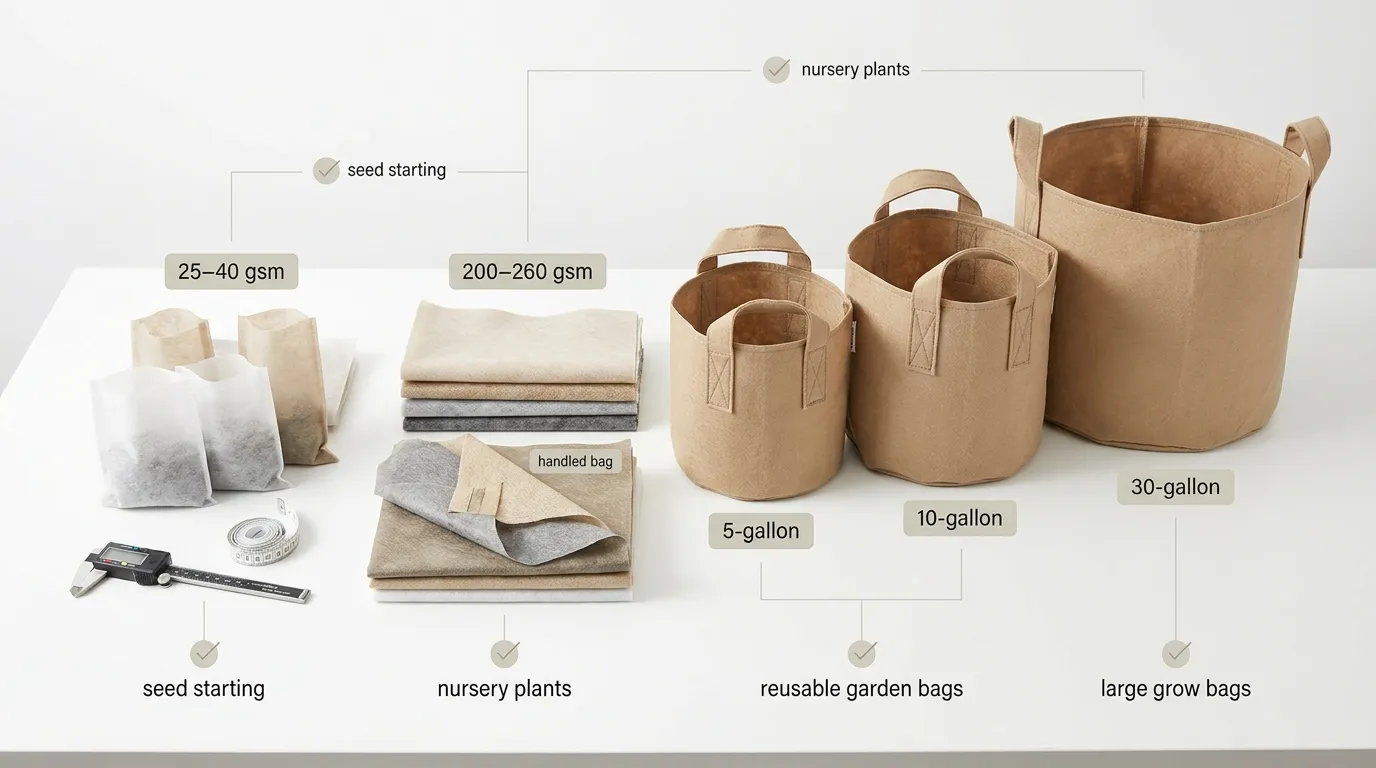
Selecting the correct grow bag size and fabric weight is one of the most important sourcing decisions. Small seedling bags need low cost, breathability, and easy packing. Larger nursery grow bags need stronger stitching, heavier gsm fabric, better structure, and stronger handles.
| Product type | Common size range | Suggested fabric weight | Typical use | Handle option | Reuse level |
|---|---|---|---|---|---|
| Small non-woven seedling bag | 7×9 cm, 9×11 cm, 15×17 cm | 25–40 gsm | Seed starting, nursery seedlings, light propagation | Usually no handle | Single-season |
| Medium seedling nursery bag | 0.5–1 gallon | 40–80 gsm | Herbs, flowers, vegetables, young plants | Optional | Single-season to limited reuse |
| Economy fabric grow bag | 1–3 gallon | 120–180 gsm | Home gardening, small vegetables, retail packs | Optional | Limited to reusable |
| Standard reusable grow bag | 5–10 gallon | 200–260 gsm | Tomatoes, peppers, herbs, patio plants | Recommended | Reusable |
| Heavy-duty grow bag | 15–30 gallon | 260–350 gsm | Potatoes, larger vegetables, shrubs | Yes, reinforced | Reusable |
| Large nursery grow bag | 50–100+ gallon | 300–500 gsm | Trees, landscaping, commercial nursery use | Heavy-duty handles | Reusable, project-based |
These are general recommendations. The best specification depends on your crop type, soil weight, watering frequency, retail price point, and whether the product is designed for one growing cycle or repeated use.
Reusable vs Single-Season Seedling Grow Bags
Wholesale buyers usually choose between two main product directions: economy single-season bags and stronger reusable grow bags.
Single-Season Grow Bags
Single-season grow bags are usually made from lighter non-woven fabric. They are suitable for propagation, seedlings, short growing cycles, promotional kits, and low-cost retail packs.
They are a good choice when buyers need:
- Lower unit cost
- Large order quantity
- Lightweight export packing
- Simple size customization
- Nursery or greenhouse use
- Short-term growing performance
Reusable Grow Bags
Reusable grow bags use heavier fabric and stronger stitching. They are often supplied with handles and are designed for repeated use in home gardening, nursery growing, and retail markets.
They are a better choice when buyers need:
- Higher retail value
- Stronger hand feel
- Better durability
- Repeated moving and handling
- Premium packaging
- Brand logo printing
- Larger gallon sizes
For OEM projects, we can help you select a fabric grade based on your required product lifespan, target retail price, and market expectations.
Fabric Weight, Drainage, and UV Stabilisation
Fabric weight is usually measured in gsm, which means grams per square meter. A higher gsm generally means thicker material, stronger hand feel, and better durability, but it also increases cost and packing weight.
Important specification points include:
- GSM: Determines fabric thickness and strength.
- Drainage: Helps prevent water buildup and supports healthier roots.
- Breathability: Allows air exchange around the root zone.
- UV stabilisation: Helps improve outdoor resistance under sunlight.
- Seam strength: Important for larger grow bags and handled bags.
- Handle reinforcement: Essential for heavy-duty sizes.
- Color fastness: Important for black, green, tan, grey, and custom colors.
- Shape retention: More important for larger retail grow bags.
For outdoor garden markets, UV stabilisation is an important upgrade. It helps the bag resist sunlight exposure during greenhouse, patio, nursery, and garden use. For low-cost short-cycle seedling bags, buyers may choose a lighter grade without heavy UV requirements. For premium reusable bags, UV-stabilised fabric is recommended.
Custom Seedling Grow Bags for OEM and Private Label
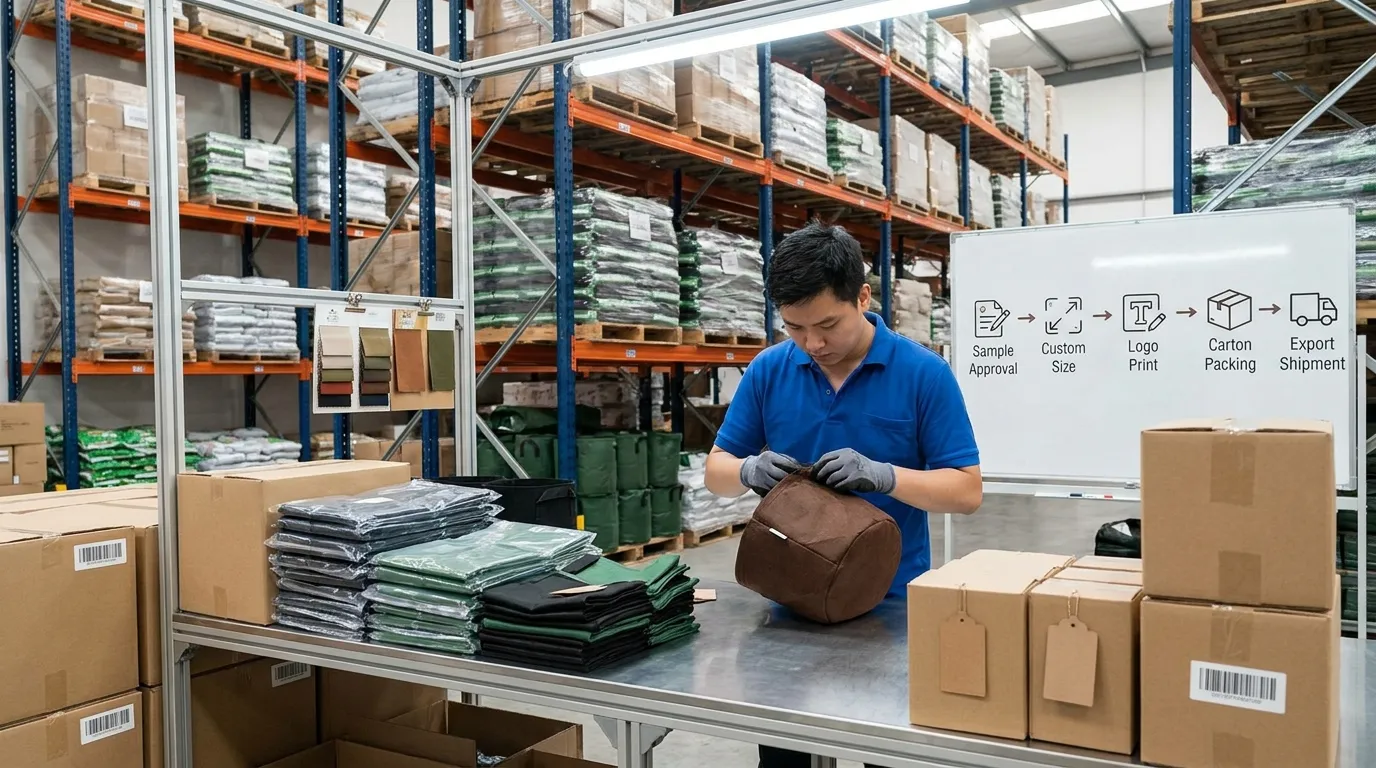
Garden Tools Wholesale supports OEM and private-label grow bag production for garden brands, distributors, retailers, and agricultural suppliers. Customization can be simple or fully branded depending on your budget and order quantity.
Available customization options include:
- Custom bag size
- Gallon size range
- Round, square, or special shape
- Fabric gsm selection
- Non-woven or heavier fabric material
- Custom color
- Logo printing
- Private-label packaging
- Hang tags or inserts
- Barcode sticker
- Carton mark
- Handle style and handle length
- Drainage and stitching details
- Retail set packing
For e-commerce and retail buyers, we can help prepare grow bags as multi-pack sets, such as 5-pack, 10-pack, 20-pack, or mixed-size kits. For nursery and agricultural buyers, we can prioritize bulk packing to reduce cost and maximize carton loading efficiency.
MOQ, Samples, and Bulk Production
MOQ depends on size, fabric type, gsm, color, printing method, and packaging requirements. Stock or standard-size grow bags usually have a lower MOQ than fully customized designs. Custom color, logo printing, special packaging, and non-standard sizes normally require higher minimum quantities.
Typical MOQ factors include:
- Whether the bag uses standard material or custom fabric
- Whether logo printing is required
- Number of sizes in one order
- Number of colors
- Packaging type
- Carton quantity and export loading plan
- Whether the buyer needs sample approval before mass production
Sample orders can be arranged for size, fabric, stitching, handle strength, and packaging confirmation. For custom printed products, a pre-production sample may be required before bulk manufacturing.
For accurate quotation, please provide your target size, fabric gsm, quantity, logo artwork, packaging style, destination port or country, and whether the grow bags are for nursery bulk use or retail sale.
Export Packing for Wholesale Grow Bags
Seedling and fabric grow bags are naturally suitable for export because they are foldable and lightweight compared with rigid pots. Packing can be optimized for either bulk nursery use or retail shelf presentation.
Common packing options include:
- Bulk carton packing
- Folded bag packing
- Polybag packing
- Inner bag plus master carton
- Retail set packing
- Custom color box
- Header card packing
- Hang tag packing
- Barcode sticker
- Palletized export packing
- Custom shipping mark
For wholesale and distributor orders, bulk carton packing is usually the most cost-effective. For retail and e-commerce orders, individual packaging, set packaging, barcode labels, and brand inserts may be more suitable.
We can help adjust the carton size, quantity per carton, gross weight, and packing method to fit your logistics requirements.
Quality Control Points for Bulk Orders
For wholesale seedling grow bags, quality control should focus on practical growing use and export consistency. The product must look clean, hold soil properly, drain well, and survive handling during filling, watering, moving, and retail use.
Key inspection points include:
- Correct size and gallon capacity
- Correct fabric gsm
- Consistent fabric color
- Smooth cutting and stitching
- Strong seam connection
- Handle pull strength
- Clean logo printing
- Proper drainage performance
- No obvious fabric damage
- Correct packing quantity
- Correct carton marks and labels
For larger handled grow bags, seam and handle strength are especially important. A low-cost bag may look acceptable when empty, but weak stitching can fail after the bag is filled with wet soil. For this reason, we recommend matching the fabric weight and stitching method with the actual use case.
How to Choose the Right Grow Bag for Your Market
Different buyers need different grow bag specifications. A nursery farm may care most about cost per bag and packing efficiency. A retail garden brand may care more about hand feel, logo printing, reusable durability, and shelf presentation.
Use these guidelines when selecting your product grade:
- Choose 25–40 gsm non-woven bags for small seedling propagation and high-volume nursery use.
- Choose 40–80 gsm nursery bags for short-cycle plants and stronger seedling handling.
- Choose 120–180 gsm fabric bags for economy retail grow bags and small home gardening products.
- Choose 200–260 gsm fabric bags for standard reusable grow bags in 5–10 gallon sizes.
- Choose 260–350 gsm fabric bags for heavy-duty grow bags with handles.
- Choose 300–500 gsm fabric bags for large nursery, tree, and landscaping applications.
If your customers are price-sensitive, start with a standard non-woven or economy fabric grade. If your customers expect premium reusable garden products, choose heavier gsm fabric, UV stabilisation, reinforced stitching, and branded packaging.
Build a Complete Seed-Starting Product Line
Seedling grow bags are often purchased together with seed-starting and nursery propagation products. For garden retailers, e-commerce sellers, and distributors, combining grow bags with trays, domes, and biodegradable pots can create a stronger product range.
Related wholesale categories include:
A complete seed-starting collection can help buyers serve home gardeners, greenhouse growers, garden centers, nurseries, and farm supply channels with one coordinated product line.
Request a Wholesale Quote
Send us your required seedling grow bag size, fabric weight, quantity, logo design, packaging preference, and destination market. Garden Tools Wholesale can recommend the best specification for your price point, growing application, and export packing target.
For faster quotation, please include:
- Bag size or gallon capacity
- Fabric type and gsm
- Quantity per size
- With or without handles
- Logo printing requirement
- Packaging method
- Destination country or port
- Target use: nursery, retail, e-commerce, farm, or promotional kit
We can support standard wholesale supply, OEM production, private-label packing, and mixed garden product sourcing for bulk buyers.
FAQs About Seedling Grow Bags Wholesale
What is the MOQ for wholesale seedling grow bags?
MOQ depends on the size, material, gsm, color, logo printing, and packaging method. Standard sizes usually have a lower MOQ, while custom color, custom printing, and private-label packing require higher quantities.
Can I customize the size, color, logo, and packaging?
Yes. Garden Tools Wholesale supports custom size, gallon capacity, fabric gsm, bag color, handle design, logo printing, label, barcode, carton mark, and retail packaging for OEM and private-label orders.
What gsm should I choose for seedling grow bags?
For small seedling bags, 25–40 gsm is common for light nursery use. For stronger nursery bags, 40–80 gsm is suitable. For reusable fabric grow bags, 200–260 gsm or higher is recommended depending on gallon size and handling needs.
Are seedling grow bags reusable?
Light non-woven seedling bags are usually designed for single-season or short-cycle use. Heavier fabric grow bags with reinforced stitching and handles can be reused, especially in 5-gallon, 10-gallon, 15-gallon, and larger sizes.
Do fabric grow bags drain better than plastic pots?
Fabric and non-woven grow bags generally drain faster than rigid plastic pots because the material allows water and air movement through the bag wall. Proper drainage helps reduce waterlogging and supports healthier root development.
Can you supply grow bags with handles?
Yes. Handles can be added to many fabric grow bag sizes, especially 5-gallon and larger bags. For heavy-duty use, reinforced stitching and stronger handle material are recommended.
Can I order mixed sizes in one shipment?
Yes. Mixed-size orders can be arranged depending on MOQ, packing plan, and production schedule. Many buyers order several sizes together to create a complete grow bag range for retail or distribution.
How are seedling grow bags packed for export?
Grow bags can be folded and packed in bulk cartons, polybags, retail sets, color boxes, or palletized export cartons. Packing can be customized with barcode labels, carton marks, inserts, and private-label branding.