







Updated 3 months ago
LED Grow Lights Wholesale: Product Types and Selection Guidelines

hqt
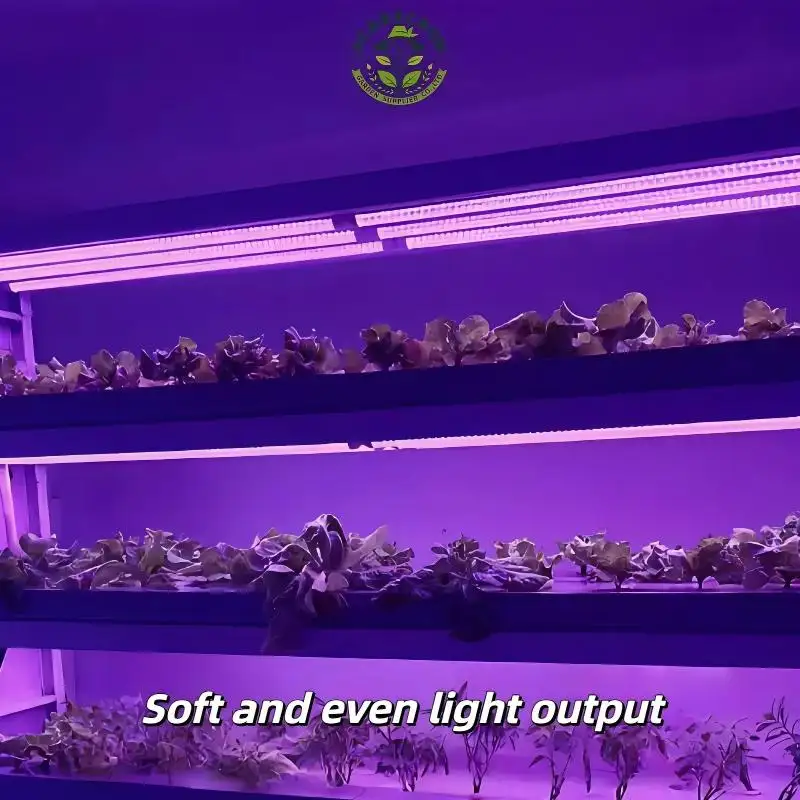
LED Grow Lights Wholesale
For garden centers, greenhouse distributors, nurseries, and horticultural brands, building an effective LED Grow Lights Wholesale range requires more than choosing wattage or color temperature. Buyers should compare plant-level light output, spectrum, fixture efficiency, coverage, control options, electrical safety, packaging, and the intended crop environment.
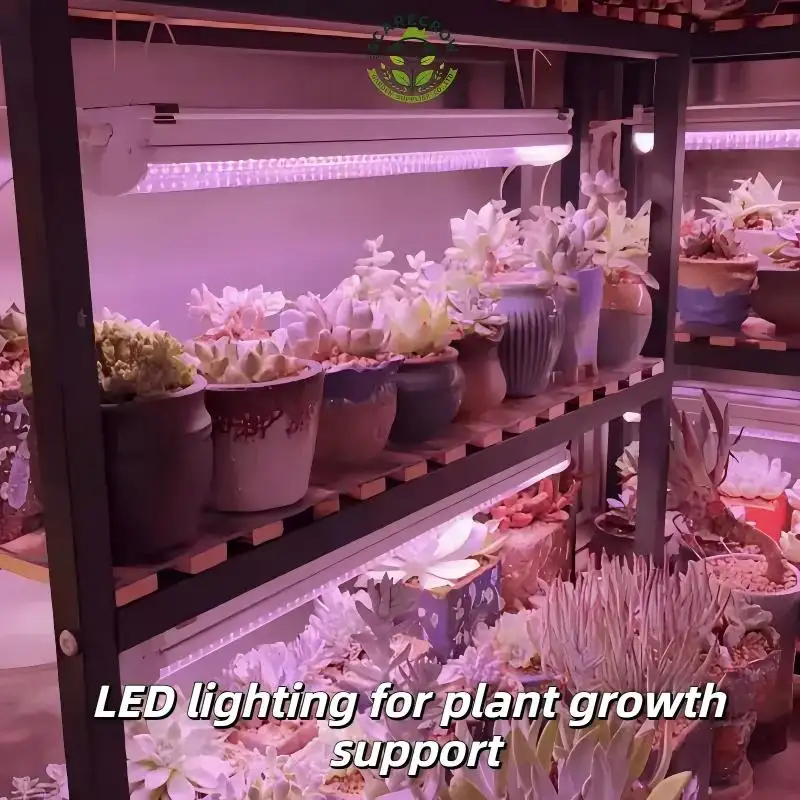
From Scarecrow Garden Supplier's sourcing perspective, the most reliable approach is to define the application first and then match the fixture's specification, rather than selecting a model by appearance alone.
Start with Plant-Light Metrics, Not Color Temperature Alone
Color temperature, expressed in kelvin (K), describes how warm or cool white light appears to people. It can help position products for retail displays or home-growing kits, but it does not fully describe the wavelengths delivered to plants.
When selecting wholesale LED grow lights, customers should consider the following:
•PPF (μmol/s): Total output of photons, which can stimulate photosynthesis
•PPFD (μmol/m²/s): Density of light reaching the canopy
•PPE (μmol/J): Light emitted that is photosynthetically active per unit of energy consumed
•Spectrum or SQD: Distribution of light output across the spectrum
•DLI (mol/m²/day): Accumulated total daily incident light at the plant surface, derived from PPFD and the time duration the light source is energized.
Michigan State University recommends defining the required PPFD at crop height according to crop type, target DLI, available sunlight, and photoperiod. This makes PPFD maps and mounting-height data more useful than lumen values for horticultural purchasing.
Common White-Light Options
A practical LED Grow Lights Wholesale assortment may include several white-light options. The following descriptions are general tendencies; the actual spectral report should always be checked.
| Color Temperature | Typical Visual Character | Common Commercial Positioning |
| 3000K | Warm white, usually with a higher relative red component | Retail plant displays, flowering-product ranges, and decorative indoor growing |
| 4000K | Neutral white | General-purpose seedling, herb, vegetable, and ornamental lighting |
| 5000K | Cool white | Propagation shelves, leafy greens, and work areas requiring clear visibility |
| 6500K | Daylight white, often with a higher relative blue component | Seedling and vegetative-growth product ranges |
CCT should not be used as a guarantee of crop response. Two fixtures with the same CCT can have different spectral distributions, PPF, and efficiency. White light can enhance visibility of crops and optimize the comfort of workers. However, red-and-blue or broad-spectrum designs can be used for other specific purposes in the production process.
Types of Fixture and Control Configuration of LED Grow Lights at Wholesale
Linear Light Bars
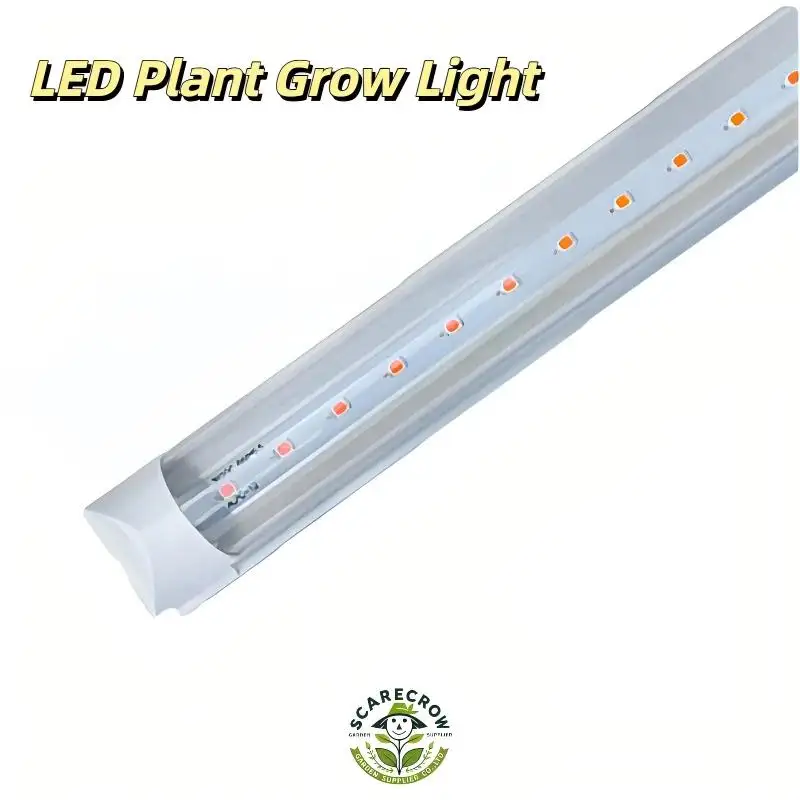
Light Bars are designed for efficient use of space and versatility in use, applicable in propagation and seedling racks, mini greenhouses, and indoor gardening kits. Potential customers should consider the following:
•Quantity of linkable fixtures
•Design of connectors and cables
•Mounting accessories
•Spacing of fixtures
•Crop level PPFD
Panel or Board Fixtures
This design is ideal for grow benches, tents, and retail cultivation systems, as it has a spacious design. Important things to consider for LED Grow Lights Wholesale in this design are driver quality, hanging height, enclosure strength, and light distribution.
High-Output Greenhouse Fixtures
Commercial greenhouse and indoor-farm models require verified PPF, PPE, beam distribution, ambient-temperature ratings, and suitable ingress protection.
Under the current DLC Horticultural Lighting V4.0 requirements, qualifying products must report horticultural performance data and have a nominal PPE of at least 2.5 μmol/J. However, DLC qualification is primarily relevant to specific North American commercial and rebate-supported projects.
Dimmable and Controllable Models
Dimming allows growers to adjust output according to crop stage, daylight availability, or energy-management requirements. Depending on model feasibility, control options may include the following:
•Manual dimming
•0–10 V control
•DALI control
•Timers
•Daylight sensors
•Centralized or networked control
Current DLC requirements also distinguish dimming capability and reporting according to fixture type and PPF level.
Application-Based LED Grow Lights Wholesale Selection
| Application | Priority Specification | Useful Features |
| Seed starting and propagation | Uniform PPFD, suitable spectrum, controlled heat near foliage | Linear bars, adjustable height, timers |
| Greenhouse supplemental lighting | PPF, PPE, light distribution, ambient rating | Dimming, corrosion-resistant construction |
| Indoor leafy greens and herbs | Target PPFD and DLI, coverage uniformity, energy efficiency | Multi-level mounting, centralized control |
| Garden-center displays | Plant support plus visual appearance | 3000K–4000K white light, CRI Ra ≥80 |
| Educational or home-growing kits | Simple installation and electrical protection | Low-voltage designs, clear instructions, compact packaging |
CRI indicates how naturally plant and product colors appear to people, but it is not a plant-growth performance metric.
Wholesale Quality and Compliance Checklist
Before confirming an LED Grow Lights Wholesale order, request documentation that matches the target market and sales channel:
•Rated power, voltage, frequency, power factor, and driver specification
•PPF, PPE, spectral report, and PPFD map at stated mounting heights
•Operating-temperature range and IP rating
•Thermal design and expected photon-output maintenance
•Applicable electrical-safety and EMC documentation
•Plug, cable, connector, suspension, and daisy-chain specifications
•Sample approval records and warranty terms
•Barcode, manual, retail box, and export carton requirements
For EU-bound products, CE marking should be supported by an applicable conformity assessment, technical documentation, and an EU Declaration of Conformity. The exact requirements depend on the product's voltage, control functions, electrical design, and intended use.
Scarecrow Garden Supplier's Wholesale Support
Scarecrow Garden Supplier can support LED Grow Lights Wholesale buyers with:
•Sample comparison for CCT, housing, driver, connector, and packaging
•OEM logo, housing color, label, manual, and retail-box customization
•Feasibility reviews for dimming, timers, sensors, and low-voltage configurations
•Kitting with seedling trays, heat mats, mini greenhouses, plant labels, and irrigation accessories
•Mixed-container loading and consolidated export-carton planning
LED technology can provide higher photosynthetic efficacy, lower radiant heat, and faster dimming response than traditional horticultural lighting technologies. However, project value still depends on correct fixture selection, installation height, coverage, operating schedule, and lighting design.
A well-planned LED Grow Lights Wholesale program should therefore be built around measurable plant-light performance, reliable electrical design, application-specific controls, and retail-ready supply support—not color temperature or wattage alone.
FAQS
Q1: Are the product photos the only available styles?
No. The product photos show common reference styles for LED plant grow lights. Different housing designs, color temperatures, lighting configurations, plug standards, packaging styles or similar models may be available depending on the order requirement. If the photo is not exactly what you need, you can send us your preferred size, lighting effect, housing style, plug type or packaging requirement. We will help check suitable options based on your market needs.
Q2: Can we request different color temperatures or lighting configurations?
Yes. This LED plant grow light can be discussed with different color temperature options such as 3000K, 4000K, 5000K and 6500K. Depending on the model and order quantity, we can also help check driver options, low-voltage configuration, dimming function, sensor-related options, flicker-free configuration or other electrical requirements before bulk orders.
Q3: Can you help us check similar plant grow lights from a reference photo?
Yes. If you already have a target grow light, reference photo, specification sheet, plug requirement, color temperature preference or packaging idea, you can send it to us. We can help check similar LED plant grow light options and suggest practical choices for greenhouse suppliers, garden centers, indoor gardening sellers or agricultural project buyers.
Q4: Can this product be packed with other seed starting or greenhouse items as a retail kit?
Yes. With our own warehouse and repacking area, we can help combine LED plant grow lights with related greenhouse and seed starting products into one retail kit when practical. For example, this product can be packed together with seedling trays, mini greenhouses, heating mats, plant labels, irrigation accessories, potting tools or other indoor growing products according to the confirmed packing plan.
Q5: Can you help if different products need to be packed into one package?
Yes. For suitable projects, we can help collect different garden and greenhouse products at our warehouse, check key details, and arrange repacking or kit assembly based on the confirmed packaging requirements. This is useful when a buyer wants to combine a grow light, seedling tray, heating mat and other accessories into one indoor growing set or early-season gardening promotion package.