






Updated 2 months ago
Indoor Greenhouse Right Setup for Seedlings for Herbs, Vegetables and Flowers

hqt
Indoor Greenhouse for Seedlings
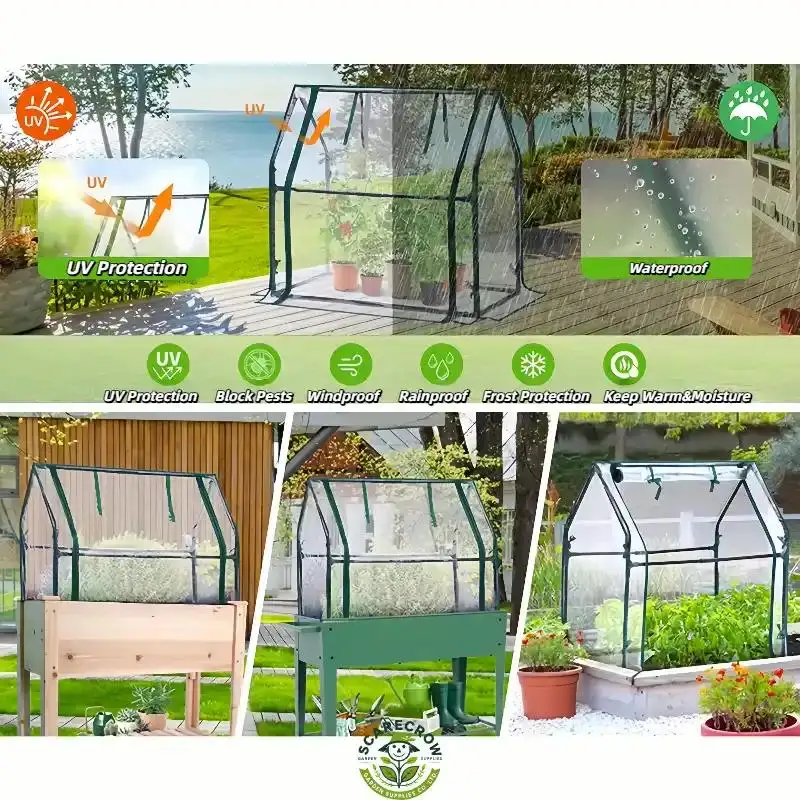
An Indoor Greenhouse for Seedlings should be selected around the crop being propagated, not simply around the external greenhouse size. Basil, tomato, pepper, lettuce, petunia, and zinnia differ in germination temperature, humidity tolerance, growth rate, and seedling height.
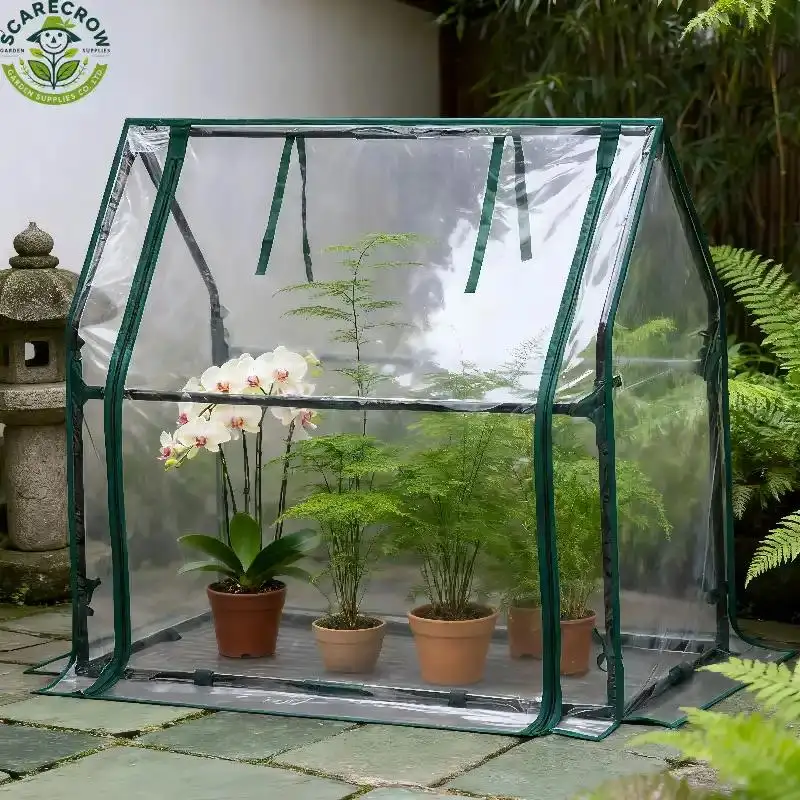
At Scarecrow Garden Supplier, we therefore evaluate an Indoor Greenhouse for Seedlings as part of the complete propagation environment. The enclosure helps retain humidity and protect seedlings, while room temperature, ventilation, lighting, watering, and optional heat mats determine the actual growing conditions.
Start With Temperature and Humidity Requirements
During germination, most seeds benefit from stable moisture and relatively high humidity. After emergence, humidity normally needs to be reduced and airflow increased.
As a practical propagation reference:
• Germination humidity: Seed-starting media will dry quickly if humidity is too low. Humidities of approximately 70-85% RH guard against rapid media drying.
• Post-emergence humidity: Once seedlings have been established, humidities of approximately 50-70% RH are acceptable.
• Ventilation: Condensation will dissipate after a few days if the enclosure has been opened after emergence.
• Root-zone temperature: Many seedlings benefit from a heat mat if temperatures drop below the germination range of the crop.
Indoor Greenhouse for Seedlings does not automatically maintain a fixed temperature or RH value. The sloping sides and top cover allow moisture to escape more slowly and reduce the impact of rapid changes in temperature and humidity.
Scarecrow Garden Supplier's portable greenhouse use a cover and modular design for both door and roof, a heavy-duty zipper, and a waterproof base pad, enabling the user to manage the retention of humidity and ventilation.
Herbs: Moderate Warmth and Stable Surface Moisture
Herbs are well suited to most compact propagation systems, while some individual species do require different germination conditions.
| Herb | Practical Germination Temperature | Suggested Germination RH | Early Seedling Height Before Potting |
| Basil | 21–27°C | 70–80% | 5–10 cm |
| Parsley | 18–24°C | 70–80% | 5–8 cm |
| Cilantro | 18–24°C | 65–80% | 5–10 cm |
| Thyme | 18–24°C | 70–80% | 3–6 cm |
For herbs, an Indoor Greenhouse for Seedlings should include the following:
• Stable Moisture: Seeds can be started in small shallow cells.
• Compact Tray Accommodation: Use cell trays or nursery pots.
• Progressive Ventilation: Humidity should be reduced after leaves have fully formed.
• Water Containment: A water proof base pad should be used in case of frequent misting.
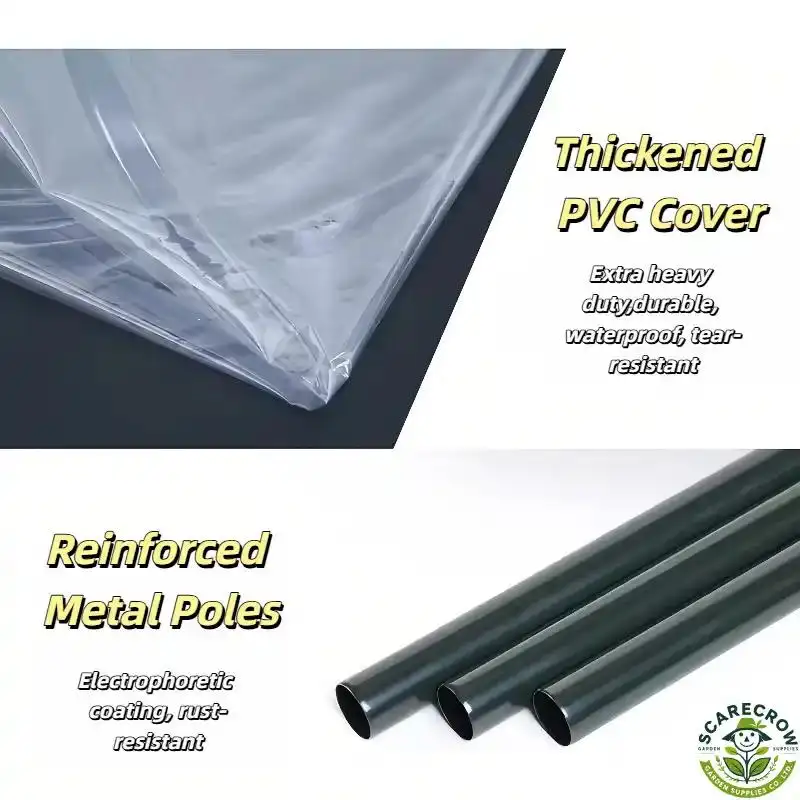
To provide resistance against constant exposure to extreme humidity of a seed-starting environment, Scarecrow Garden Supplier uses a PVC + iron frame with durable plastic connectors and a rustproof electrophoretic coating on its metal frame.
Rust can occur where moisture is present and meets uncoated metal, and metal will rust in humid seed starting environments. The metal frames will show signs of wear and will not last long in this environment. The materials used to construct the metal frames will not last long.
Vegetables: Temperature and Vertical Clearance Become More Important
Vegetable seedlings have a much wider temperature range than herbs.
| Vegetable | Germination Temperature | Suggested Germination RH | Typical Early Seedling Height |
| Tomato | 21–29°C | 70–80% | 10–20 cm |
| Pepper | 24–29°C | 70–80% | 8–15 cm |
| Cucumber | 21–29°C | 65–80% | 10–20 cm |
| Lettuce | 16–21°C | 65–75% | 5–10 cm |
| Broccoli | 18–24°C | 65–75% | 8–15 cm |
This difference affects Indoor Greenhouse for Seedlings selection.
Warm-Season Vegetables
Tomatoes, peppers, and cucumbers generally benefit from warmer germination conditions. When room temperature is insufficient, a heat mat can provide additional root-zone warmth.
The greenhouse base therefore needs to work with the intended propagation setup rather than trap excessive heat. Scarecrow Garden Supplier can evaluate base materials and dimensions according to heat-mat and tray requirements for OEM/ODM projects.
Cool-Season Vegetables
Lettuce and broccoli generally require less heat. Excessively warm and humid conditions can be less desirable after emergence, making ventilation more important than maximum heat retention.
The roll-up door and zipper opening on Scarecrow Garden Supplier's portable structure allow a larger ventilation area than a completely sealed enclosure.
Flowers: Seed Size and Growth Speed Change the Requirements
Flower species show equally large differences.
| Flower | Germination Temperature | Suggested Germination RH | Space Requirement |
| Petunia | 21–24°C | 75–85% | Low initially |
| Snapdragon | 18–24°C | 70–80% | Medium |
| Marigold | 21–24°C | 65–80% | Medium |
| Zinnia | 21–24°C | 65–75% | Medium–High |
Petunia seeds are very small, so maintaining surface moisture is particularly important. Zinnias and marigolds grow more rapidly and require additional vertical clearance after emergence.
For flower programs, the Indoor Greenhouse for Seedlings should therefore be specified according to both germination requirements and the planned transplant stage.
Compare Herbs, Vegetables and Flowers Before Selecting the Structure
| Selection Factor | Herbs | Vegetables | Flowers |
| Typical Germination Temperature | 18–27°C | 16–29°C | 18–24°C |
| Typical Germination RH | 65–80% | 65–80% | 65–85% |
| Heat Mat Demand | Low–Medium | Medium–High | Species dependent |
| Vertical Space | Low–Medium | Medium–High | Low–High |
| Ventilation After Emergence | Important | Very Important | Important |
| Main Design Priority | Moisture stability | Temperature + height | Humidity + growth habit |
These ranges are propagation references rather than fixed setpoints. Cultivar, growing medium, lighting, room temperature, and transplant schedule can all change the required setup.
Waterproof Base and Usable Interior Space Matter Indoors
An Indoor Greenhouse for Seedlings used on tables, racks, or the floors of apartments must have water management. There are many sources of moisture including bottom watering, misting, drainage holes, growing media that is wet, and condensation.
The waterproof base pad of Scarecrow Garden Supplier's reference design is easily cleaned as it is secured via hook-and-loop fasteners and should further protect the surface on which the greenhouse rests.
Buyers should also confirm:
• Actual tray length and width
• Number of trays per greenhouse
• Seedling height before transplanting
• Required door opening
• Heat-mat footprint
• Space needed for watering and maintenance
For standard 1020 trays or other defined propagation formats, actual dimensions should be confirmed before production instead of assuming universal compatibility.
Scarecrow Garden Supplier Reference Specifications
The current portable Indoor Greenhouse for Seedlings provides buyers with a practical sourcing reference:
• Frame Material: PVC + Iron
• Connector: Durable plastic
• Metal Finish: Rustproof electrophoretic coating
• Base: Waterproof pad
• Access: Roll-up door with zipper
• Assembly: Tool-free assembly and disassembly
• Package Size: 91 × 14 × 11 cm
• Gross Weight: 1.95 kg
• MOQ: 500 units
• Lead Time: Approximately 15 days for up to 500 units, subject to order confirmation
• Customization: Dimensions, colors, logo, product configuration, and retail packaging
Scarecrow Garden Supplier can also evaluate combinations with seed trays, heat mats, plant labels, spray bottles, and other propagation accessories for retail seed-starting kits.
Choosing the Right Indoor Greenhouse for Seedlings
The indoor greenhouse that is right for you depends on your specific growing needs. The growing needs for most herbs are compact height and stability for humidity and moisture. Most warm-season vegetables need higher germination temperatures and more vertical growing space. Flowers also have varying space and speed-of-growth needs.
For garden centers or brands, Scarecrow Garden Supplier can review advertised growing needs such as target crop, germination temperature, humidity, tray dimensions, seedling height, the waterproof base, and how the packaged greenhouse is offered. Coordinating these specifications early in the sourcing process can help design an Indoor Greenhouse for Seedlings that addresses your needs for propagation and retail sale of your products.
FAQs
Q1. What does the Indoor Greenhouse for Seedlings be used for?
The Indoor Greenhouse for Seedlings can be used for herbs, vegetables, flowers, and for starting other young plants. Examples include basil, parsley, tomato, pepper, and cuttings of other young plants.
Q2. Does the Indoor Greenhouse for Seedlings have temperature control?
No. The Indoor Greenhouse for Seedlings provides a protected growing space, but does not actively heat or maintain a certain temperature. It can be used in combination with a heating mat specially designed for seedlings.
Q3. How does the cover help with humidity?
The cover helps retain humidity. Water loss and evaporation to the surrounding air is reduced. Moisture loss is particularly undesirable at certain stages of germination. Many crops can be grown at 65% to 85% relative humidity during germination, depending on the crop and conditions.
Q4. Does the Scarecrow Garden Supplier’s greenhouse include a waterproof base?
Yes. The base pad of the Indoor Greenhouse for Seedlings is waterproof and is fastened to the base using hook-and-loop fasteners. The Plastic base is designed to retain irrigation water, and drainage water as well as condensation when it is used indoors.
Q5. What is the frame materials of the greenhouse?The structure uses PVC and iron, and Plastic connectors. For the enhanced stability of metal components, used to construct the greenhouse in a propagation and humidity environment, a layer of rustproof electrophoretic coating is used.