







Updated 4 months ago
From Selling Individual Products to Selling Solutions: How Scene-Based Merchandising Helps Garden Trowels and Plant Labels Achieve Higher Margins

ScarecrowGarden
💡About Scarecrow Garden Supplier Co., Ltd.
Scarecrow Garden Supplier Co., Ltd. is a China-based sourcing and wholesale partner specializing in garden tools, landscaping equipment, and outdoor supplies for international wholesalers, distributors, contractors, and brands.
With hands-on experience rooted in real garden use scenarios, we focus on durable materials, functional design, and stable large-volume supply. Our product range covers pruning tools, watering systems, hand tools, outdoor hardware, and customized garden solutions to support both retail and professional landscaping markets.
Beyond products, we help our partners navigate supplier selection, quality control, compliance requirements, and long-term sourcing strategies in China. Through our blog, we share practical insights on product selection, material comparisons, industry trends, and cost-effective purchasing—helping global buyers build stronger, more competitive supply chains.

Garden Center Merchandising: Boost Margins with Scene-Based Displays | Scarecrow Garden Supplier
One of the most frustrating product categories for garden centers is not expensive products that do not sell—it is low-priced products that sell well but generate very little profit, such as trowels, plant labels, gloves, and watering cans.
Customers often pick up a trowel, pay, and leave. The transaction value may only be $8–15, leaving limited profit. These products are necessary because customers need them, but stocking more of them does not automatically increase profitability.
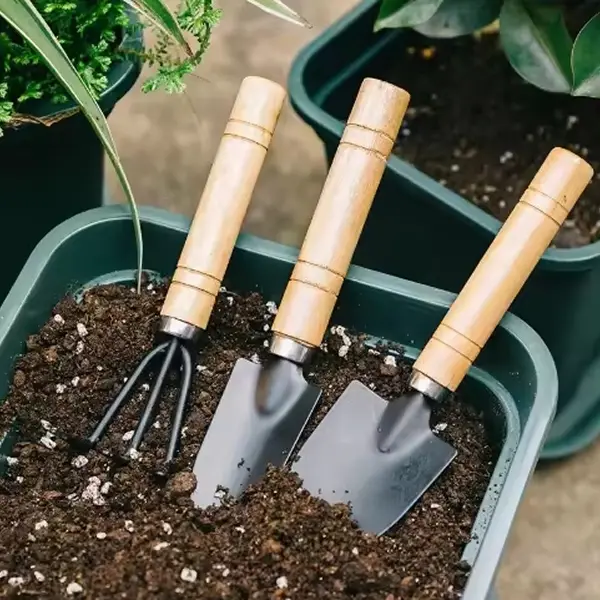
The problem is not the product itself. The real question is whether you are selling "a trowel" or "a seed-starting solution."
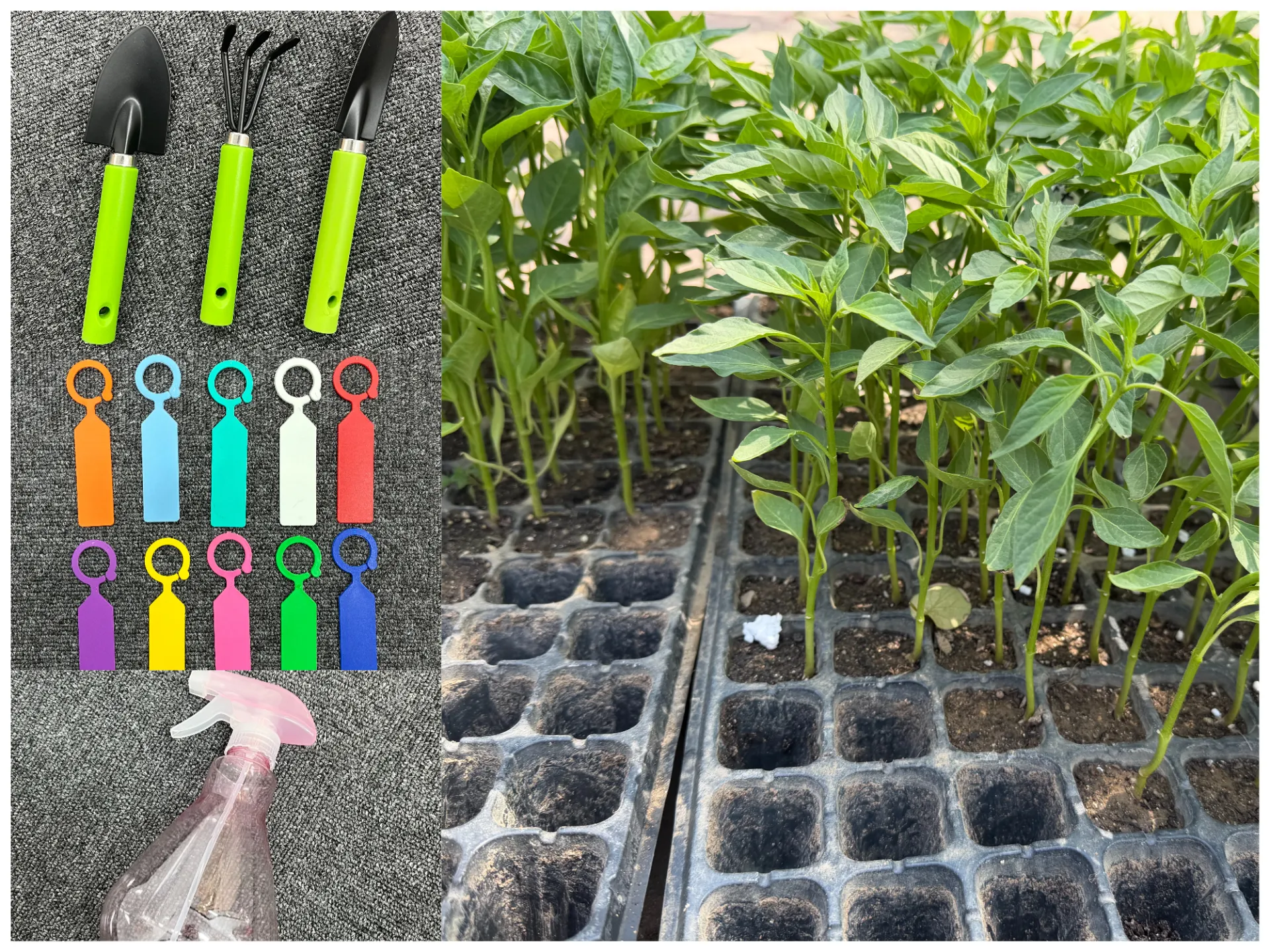
The same trowel displayed in a tool section is an $8–15 item. The same trowel displayed inside a "Seed Starting Station" together with plant labels, seed trays, and seed-starting mix becomes part of a $30–50 package. The product has not changed—the reason for purchasing has changed.
This article helps garden centers and retail buyers understand:
- The core logic behind scene-based merchandising
- Four high-conversion merchandising scenarios
- How low-cost products can drive sales of higher-value products
- How buyers can prepare procurement plans for scene-based displays
The Core Logic of Scene-Based Merchandising
Customers Buy Results, Not Products
When customers enter a garden center, they are not thinking:
"I need a trowel."
They are thinking:
"I want to grow something."
The trowel is simply one of the tools required to achieve that result.
If you only provide the trowel, customers must find everything else themselves. Most customers do not have enough patience to complete that process.
The logic of scene-based merchandising is simple:
Present everything required to achieve a specific result in one place.
Customers no longer see scattered products. They see a complete solution that can be used immediately at home.
From Category Thinking to Scenario Thinking
| Category Thinking | Scenario Thinking |
|---|---|
| Trowel section: trowels, forks, rakes | Seed Starting Station: trowel + seed trays + labels + seed-starting mix |
| Pruning section: pruners, hedge shears | Pruning Station: pruners + gloves + apron + collection bag |
| Watering section: watering cans, sprayers | Plant Care Station: watering can + gardening mat + apron |
| Label section: plastic labels, chalk labels | Labeling Station: labels + marker pen + seed trays |
Category thinking organizes products according to function.
Scenario thinking organizes products according to how customers actually use them.
The first helps inventory management.
The second helps customers make purchasing decisions.
The Data Behind Scene-Based Merchandising
Scene-based merchandising works because the scenario itself solves real gardening problems.
Take seed starting as an example.
Mini Greenhouse + LED Grow Light vs Natural Window Light
| Comparison | Mini Greenhouse + LED | Natural Window Light |
| Daily effective light | 12–16 hours (controllable) | 4–6 hours (weather and orientation dependent) |
| Seedling quality | Thick stems, dark green leaves, short internodes | Leggy stems, pale leaves, long internodes |
| Growing cycle | 20–30% shorter | Normal or longer |
| Transplant success rate | Higher | Lower |
| Suitable environment | Winter and early spring indoor growing, north-facing rooms | Limited use on sunny south-facing windows |
Mini Greenhouse + Heat Mat vs Indoor Windowsill
| Comparison | Greenhouse + Heat Mat | Indoor Windowsill |
| Temperature control | Maintains ideal germination temperatures (70–85°F) | Fluctuates with room temperature |
| Humidity | 70–80% | Usually 30–40% in heated homes |
| Germination rate | High and uniform | Uneven, some seeds fail |
| Space efficiency | Multi-layer growing possible | Limited windowsill area |
| Protection | Protected from pets and children | No protection |
These comparisons demonstrate an important point:
Seed starting is not simply buying a tray.
It often requires temperature control, supplemental lighting, germination heating, and plant identification.
It is a complete system.
If your display only includes trays, customers may struggle at home and achieve poor results.
The essence of scene-based merchandising is helping customers avoid the frustration of buying a product without understanding the full solution.
Four High-Converting Display Scenarios
Scenario 1: Seed Starting Station
Target Customers
Customers shopping for seeds and propagation supplies during February–April.
Core Products
- Seed trays
- Plant labels
- Waterproof marker pens
- Garden trowels
- Seed-starting mix
Add-On Products
- Mini greenhouses
- Heat mats
- LED grow boxes
Display Design
Set up a table with seed trays, labels, marker pens, trowels, and seed-starting mix.
Place an information card in the center:
What Do You Need for Seed Starting?
- Seed Tray
- Seed-Starting Mix
- Plant Labels + Marker Pen
- Garden Trowel
Complete kit price: $XX
Save $X compared with buying separately.
Premium vs Entry-Level Solution
One side of the display presents a complete setup:
Mini Greenhouse + LED Light + Heat Mat
The other side shows:
Seed Tray + Labels + Marker Pen + Trowel
Information card:
With Greenhouse Setup
- Germination rate above 90%
- Strong seedlings
- Higher transplant survival
Without Greenhouse Setup
- Germination rate 60–70%
- Weak seedlings
- Higher risk of legginess
Customers make their own choice, but many naturally gravitate toward the complete solution after seeing the comparison.
Why Labels and Marker Pens Belong Together
Customers often purchase labels but forget they need a marker.
Waterproof markers typically cost only $0.10–0.30 wholesale, yet retail for $3–5.
Place markers directly beside labels with a simple reminder:
Don't Forget a Waterproof Marker for Your Labels.
Why It Works
Seed starting is often where customers get stuck because they need multiple items.
Bringing everything together removes friction and encourages complete purchases.
Scenario 2: Pruning Station
Target Customers
Customers are purchasing pruning shears during spring and summer.
Core Products
- Pruning shears
- Gloves
- Apron
Add-On Products
- Hedge shears
- Collection bags
- Disinfectant spray
Display Design
Hang an apron beside the pruning shears.
Place gloves and labels inside the apron pockets.
Information card:
Everything You Need for Pruning
- Pruning Shears
- Protective Gloves
- Gardening Apron
Bundle Price: $XX
Why the Apron Matters
The apron is not simply protective clothing.
A multi-pocket canvas apron functions as a mobile tool station.
Customers immediately see where pruning shears, labels, markers, and gloves can be stored while working.
Why It Works
Pruning shears are already a higher-value purchase.
Adding gloves and aprons becomes an easy decision with very little purchasing resistance.
Scenario 3: Indoor Repotting Station
Target Customers
Indoor plant enthusiasts who repot plants throughout the year.
Core Products
- Gardening mat
- Trowel
- Gloves
- Apron
- Watering can
Add-On Products
- Flower pots
- Potting soil
- Plant labels
- Waterproof markers
Experiential Display Design
Lay a gardening mat open on a table.
Fasten the corner snaps to create a working area.
Place a small amount of potting soil and a trowel on the mat.
Allow customers to immediately visualize repotting without making a mess.
Information card:
Indoor Repotting Without Dirty Floors
Gardening Mat + Trowel + Gloves + Apron + Watering Can
Complete Kit: $XX
Demonstrating the Full Process
Create a realistic repotting workstation:
- Gardening mat
- Trowel
- Gloves
- Potting soil
- Labels
- Marker pen
Information card:
Three Easy Steps
- Set up the gardening mat
- Repot using gloves and trowel
- Label the plant and record the date
Why It Works
The gardening mat solves a very specific pain point:
Keeping soil off floors and carpets.
Customers instantly understand the benefit when they see it in use rather than folded on a shelf.
They are buying a cleaner repotting experience, not merely a mat.
Scenario 4: Balcony Gardening Station
Target Customers
Apartment residents and urban gardeners.
Core Products
- Mini garden tool set
- Indoor watering can
- Plant labels
- Marker pen
- Mini gardening mat
Add-On Products
- Mini greenhouse
- Gloves
Display Design
Arrange:
- Mini 3-piece tool set
- Watering can
- Labels
- Marker pen
- Small gardening mat
Information card:
Balcony Gardening Starter Kit
3 Tools + Watering Can + Labels + Marker + Gardening Mat
Starting at $XX
Why the Gardening Mat Matters
Balconies have limited space.
Soil easily spills onto the floor.
A compact gardening mat directly addresses this problem.
Why It Works
Urban gardeners typically do not need large tools.
This combination provides an affordable, low-risk introduction to gardening.
Using Low-Cost Products to Drive High-Value Sales
Scene-based merchandising also allows inexpensive products to act as entry points for premium products.
| Entry Product | Higher-Value Product | Scenario Connection |
| Plant labels + marker | Mini greenhouse | Label what is growing inside the greenhouse |
| Gardening mat | LED grow box | Protect the surface underneath the grow box |
| Gloves | Pruning shears | Safer pruning experience |
| Watering can | Heat mat | Water seedlings growing on heat mats |
A practical approach:
Place premium display products next to lower-cost items.
Add a simple message:
Works Better Together.
Customers who originally planned to buy labels may realize they also need a greenhouse for the seedlings they are labeling.
Pricing Logic: Bundles vs Individual Products
Seed Starting Bundle
| Product | Individual Retail Price |
| 72-cell seed tray | $8–15 |
| Labels + waterproof marker | $8–13 |
| Garden trowel | $8–15 |
| Seed-starting mix | $5–10 |
| Total | $29–53 |
| Bundle Price | $25–45 |
Customers save money while purchasing a complete solution.
Indoor Repotting Bundle
| Product | Individual Retail Price |
| Gardening mat | $12–25 |
| Garden trowel | $8–15 |
| Gloves | $6–15 |
| Apron | $15–30 |
| Watering can | $10–25 |
| Total | $51–110 |
| Bundle Price | $40–90 |
Pricing Strategy
Bundles are typically priced 10–20% below the combined individual retail price.
Customers save money.
Retailers increase total transaction value.
This is the core pricing advantage of scene-based merchandising.
Important Procurement Considerations
| Procurement Checkpoint | What Buyers Should Confirm | Why It Matters |
| Shared products across scenarios | Gloves, aprons, watering cans, labels | Unified style and lower purchasing complexity |
| Consistent product appearance | Products should visually match across displays | Improves overall scenario presentation |
| Labels and markers sourced together | Natural product pairing | Avoid missed sales opportunities |
| Information card content | Focus on usage scenarios rather than specifications | Customers understand applications more easily |
| Sample evaluation | Assemble products into complete scenarios | Identify compatibility issues early |
| Gardening mat display method | Open display vs folded display | Open displays communicate value immediately |
| Secondary packaging requirements | Gift boxes and bundles | Supports scene-based retail programs |
Common Procurement Risks and Solutions
| Risk | Why It Happens | How to Reduce It |
| Display strategy changes but procurement does not | Products arrive at different times | Plan purchases by scenario instead of category |
| Information cards focus on specifications | Customers ignore technical details | Emphasize practical use cases |
| Inconsistent product styles | Mixed visual appearance | Coordinate sourcing through one partner |
| No scenario testing during sample approval | Compatibility issues appear later | Assemble complete displays during sample review |
Frequently Asked Questions
Q: How much space is required?
Each scenario generally requires 1–2 square meters.
Four scenarios usually require 5–8 square meters in total.
The most important factor is customer flow between displays.
Q: How should information cards be produced?
We can provide reference content describing scenarios and product combinations.
Buyers can adapt and print the content for local markets.
Water-resistant materials are recommended.
Q: How much can conversion rates improve?
Results vary by product mix, pricing, and display quality.
Industry experience suggests that attachment sales rates are often two to three times higher than traditional category-based displays.
Purchase based on total demand and allocate inventory across displays.
Shared products such as gloves and aprons do not need separate inventory for each scenario.
Q: What is the difference between scene-based merchandising and bundled products?
Scene-based merchandising is a display strategy.
Bundles are a packaging strategy.
Displays may include bundles, individual products, or both.
The key is organizing products according to usage scenarios rather than product categories.
Q: How should labels and markers be priced?
Two common approaches:
- Bundle pricing: Labels ($5–8) + Marker ($3–5) sold together at $7–10
- Add-on promotion: Buy labels and add $1 for a waterproof marker
Both methods significantly increase attachment sales.
Q: How should gardening mats be displayed?
Always display them fully opened.
Fasten the corners to create a working area.
Add soil, gloves, and a trowel to demonstrate actual use.
Customers immediately understand the value.
How We Support Buyers
Scarecrow Garden Supplier helps garden centers and retail buyers organize scene-based garden product ranges from China. We focus on practical garden products, seasonal product combinations, packaging coordination, product checking, and consolidated shipment support.
If you are sourcing products based on display scenarios, we can help you:
- Organize scene-based product solutions — Tell us your display concept (Seed Starting Station, Pruning Station, Repotting Station, Balcony Gardening Station), and we can help coordinate product selection, size matching, sample confirmation, and consolidated shipping.
- Provide reference content for display information cards — Information cards should explain how products are used within a scenario rather than simply listing specifications. We can provide suggested content for each scenario that can be adapted for your local market.
- Arrange sample confirmation — Through our dual-sample process, smaller products can be shipped via UPS/FedEx, while larger products can be delivered through door-to-door logistics. After receiving samples, you can assemble complete scenarios and evaluate the customer experience before ordering.
- Coordinate secondary packaging — We can help combine products into gift boxes, retail kits, or bundled sets at the warehouse before shipment.
Simplify Your Garden Product Sourcing from China
We help you combine multiple product categories into one sourcing flow with supplier matching, sample verification, and consolidated shipping.
Written by
ScarecrowGarden
💡About Scarecrow Garden Supplier Co., Ltd.
Scarecrow Garden Supplier Co., Ltd. is a China-based sourcing and wholesale partner specializing in garden tools, landscaping equipment, and outdoor supplies for international wholesalers, distributors, contractors, and brands.
With hands-on experience rooted in real garden use scenarios, we focus on durable materials, functional design, and stable large-volume supply. Our product range covers pruning tools, watering systems, hand tools, outdoor hardware, and customized garden solutions to support both retail and professional landscaping markets.
Beyond products, we help our partners navigate supplier selection, quality control, compliance requirements, and long-term sourcing strategies in China. Through our blog, we share practical insights on product selection, material comparisons, industry trends, and cost-effective purchasing—helping global buyers build stronger, more competitive supply chains.