







Our coconut coir rooting plugs are designed for fast root initiation, high water retention, stable moisture release, and a balanced air-to-water ratio. They support both hydroponic and soil transplanting, making them suitable for seedling trays, cloning trays, plug trays, nursery cells, indoor grow kits, and garden retail refill packs.
For bulk buyers, we can help match plug size, hydration performance, tray compatibility, packing style, labeling, carton quantity, and mixed-container supply with other propagation products, including rooting cubes, hydroponics supplies, and biodegradable seedling pots.
Wholesale Coconut Coir Rooting Plugs for Propagation Programs
Coconut coir rooting plugs are compact propagation media made from processed coconut fiber. They are used to start seeds, root cuttings, support hydroponic seedlings, and prepare young plants for transplanting into soil, pots, grow bags, hydroponic channels, or nursery trays.
For wholesale buyers, the key advantage is versatility. A single coir plug product can serve multiple sales channels:
- Hydroponic seed starter kits
- Indoor gardening refill packs
- Nursery propagation trays
- Seedling starter sets
- Home gardening retail packs
- Commercial cutting propagation
- OEM grow sponge collections
- E-commerce gardening bundles
- Sustainable planting media lines
Unlike loose growing media, rooting plugs are easier to count, pack, ship, display, and use. The customer receives a consistent plug shape, a prepared planting hole, and a cleaner propagation experience.
Product Options: Coir Plugs, Grow Sponges and Starter Cubes
Garden Tools Wholesale can supply different propagation media formats depending on your target market and packing plan.
Coconut coir rooting plugs
Coir rooting plugs are suitable for buyers who want a natural, renewable, and biodegradable-positioned propagation media. They hold moisture well while still allowing oxygen around the developing root zone. This makes them useful for seeds, soft cuttings, leafy greens, herbs, flowers, and many general nursery crops.
Hydroponic grow sponges
Grow sponges are often used for indoor hydroponic kits, smart gardens, seed pod refills, and countertop growing systems. They can be supplied in shapes and sizes that fit specific baskets, pods, or trays. Buyers usually focus on clean cutting, expansion stability, center-hole consistency, and pack presentation.
Rooting cubes and starter blocks
For broader propagation categories, buyers may also source rooting cubes with different materials, densities, sizes, and tray formats. These are useful when building a full propagation media collection instead of one single SKU.
Key Performance Benefits
High water retention
Coconut coir naturally holds moisture well, helping seeds and young roots remain hydrated during the early growth stage. For retail and hydroponic customers, this reduces the risk of plugs drying out too quickly after watering.
For wholesale buyers, this feature is important because it supports better user experience, fewer complaints, and stronger product positioning on packaging and marketplace listings.
Fast rooting support
Good rooting performance depends on moisture, oxygen, contact with the seed or stem, and stable media structure. Coir plugs help maintain a moist but not fully waterlogged environment, supporting root emergence and early root branching.
For cuttings, the plug should hold the stem firmly without crushing it. For seeds, the center hole or top opening should be consistent enough for easy placement.
Balanced air-to-water ratio
Too much water can reduce oxygen around roots. Too little water can slow germination or rooting. Coconut coir plugs are popular because they help balance moisture retention with air space.
This is especially useful for hydroponic and indoor growing customers, where clean handling, predictable watering, and transplant convenience matter.
pH-stable propagation environment
Well-processed coir plugs can support a stable rooting environment when properly washed and buffered. For professional buyers, pH stability and low soluble salts are key concerns because inconsistent media can affect germination, rooting speed, and customer satisfaction.
Tray and system compatibility
Wholesale buyers often need plugs to fit existing trays, baskets, seed starter cells, or hydroponic systems. We can help check plug diameter, height, shape, center-hole size, hydration expansion, and packing quantity before bulk production.
Plug Sizes and Tray Compatibility
Coconut coir rooting plugs can be produced or selected in different sizes depending on your target use. Common buying considerations include diameter, height, dry compressed size, expanded size, center-hole diameter, and whether the plug is designed for round cells, square cells, baskets, or tray inserts.
| Application | Common buyer requirement | Product focus |
|---|---|---|
| Hydroponic seed pods | Fits baskets, net cups, smart garden pods or indoor grow kits | Clean shape, center hole, easy insertion |
| Nursery propagation trays | Fits 50-cell, 72-cell, 105-cell, 128-cell or similar trays | Uniform size, stable hydration, root support |
| Retail seed starter packs | Easy for beginners to use | Clear packing, simple instructions, small-count packs |
| Cutting propagation | Holds stems upright | Firm structure, good moisture retention |
| E-commerce refills | Lightweight and compact | Compressed packing, barcode-ready packaging |
| OEM gardening kits | Matches tray, dome, label and accessories | Custom packing, mixed product sourcing |
Before confirming a bulk order, buyers should test actual plug fit with their tray or hydroponic basket. A few millimeters of size difference can affect placement, hydration, and end-user experience.
Coconut Coir vs Rockwool vs Peat Propagation Media
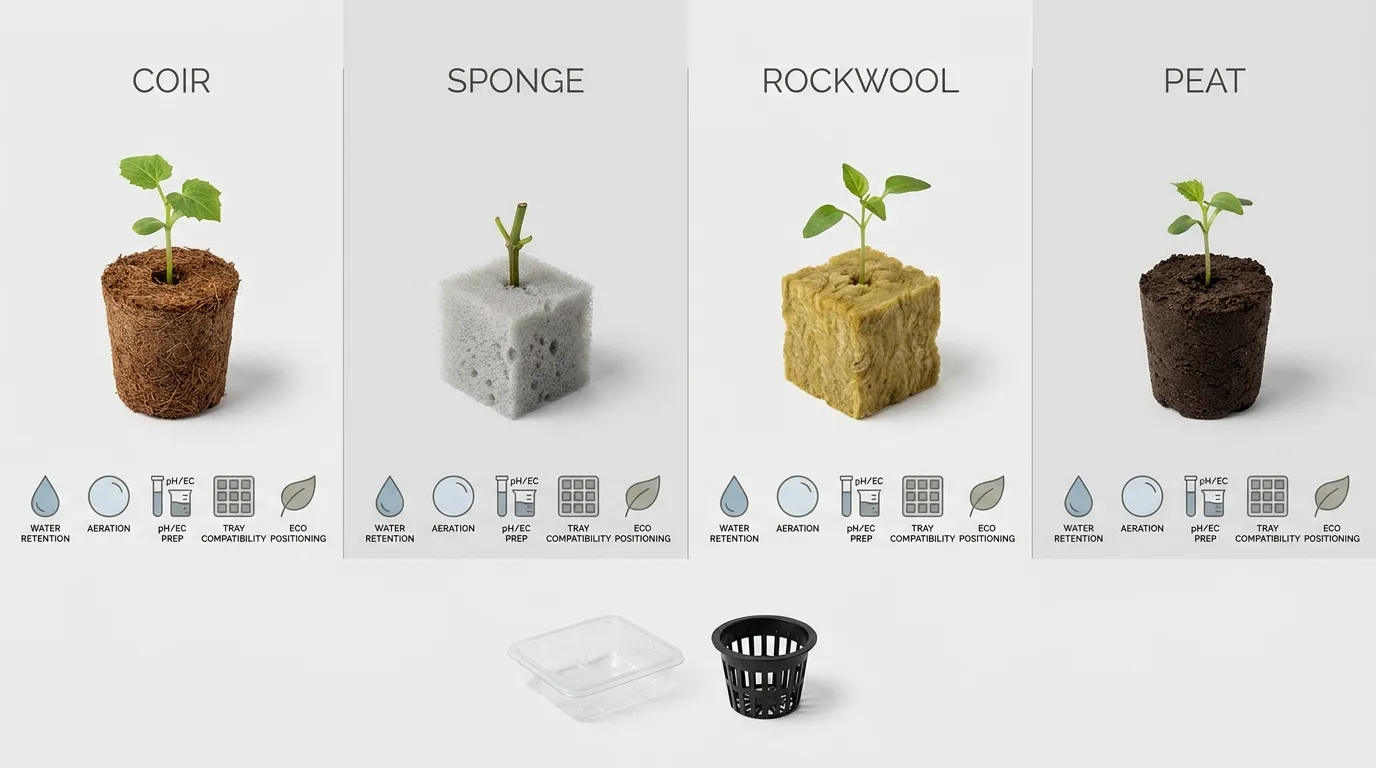
Different propagation media serve different buyer segments. A good commercial page should not only promote coir but also help buyers understand where it fits in a product collection.
| Media type | Best for | Water retention | Aeration | pH / EC considerations | Eco positioning | Wholesale buyer concern |
|---|---|---|---|---|---|---|
| Coconut coir rooting plugs | Hydroponics, seed starting, cuttings, soil transplanting | High | Balanced | Should be washed and buffered for low salt and stable use | Strong renewable and biodegradable positioning | Salt level, batch consistency, plug size, tray fit |
| Hydroponic grow sponges | Indoor growing kits, pod refills, smart gardens | Medium to high | Balanced | Depends on material formula and processing | Depends on material | Shape accuracy, hole size, pack appearance |
| Rockwool cubes | Commercial hydroponics and controlled propagation | High | High | Often requires pH preparation by the grower | Weaker eco positioning | Handling, pH preparation, disposal concerns |
| Peat plugs | Seed starting, nursery retail, beginner gardening | Good | Balanced | Usually easy to use, varies by formula | Biodegradable but peat sourcing may be questioned | Sustainability concerns, moisture consistency |
| Loose coco coir | Potting mix blending and transplant media | High | Good when blended | Requires processing control | Strong renewable positioning | Messier handling, not plug-ready |
For many importers and garden brands, coconut coir plugs offer a practical balance: natural positioning, clean handling, high moisture retention, good transplant performance, and broad compatibility with both hydroponic and soil-growing customers.
Washed and Buffered Coir: Why It Matters
Not all coconut coir rooting plugs are equal. Raw or poorly processed coir may contain excess salts, inconsistent fiber, or unstable performance. For wholesale buyers, washing and buffering are important because the end customer expects reliable germination and rooting.
Washing
Washing helps reduce unwanted salts and impurities from the coir material. This matters for seeds, seedlings, and young roots because early-stage plants are more sensitive than mature plants.
Buffering
Buffering helps prepare the coir for more stable growing performance. Properly buffered coir can reduce the risk of nutrient imbalance and support a more predictable rooting environment.
Low EC and stable pH
Bulk buyers should ask about EC range, pH range, moisture content, material consistency, and how batches are checked. If your brand sells to hydroponic growers, this is especially important because hydroponic customers often pay close attention to water quality, nutrient balance, and seedling performance.
Eco Positioning for Garden Retail and Hydroponic Brands
Coconut coir rooting plugs are attractive for brands that want a more sustainable propagation media line. Coir is made from coconut husk fiber, giving it strong eco-friendly positioning compared with some synthetic or mineral-based growing media.
Commercial messaging can highlight:
- Renewable coconut fiber base
- Biodegradable-positioned propagation media
- Cleaner handling than loose soil
- Suitable for transplanting into soil or containers
- Useful for seed starting, cloning, hydroponics, and nursery production
- Good fit with sustainable gardening kits and biodegradable pots
For a stronger product collection, coir plugs can be bundled with biodegradable seedling pots, plant labels, seed trays, humidity domes, mini greenhouses, and indoor hydroponic accessories.
Bulk Packing and OEM Packaging Options
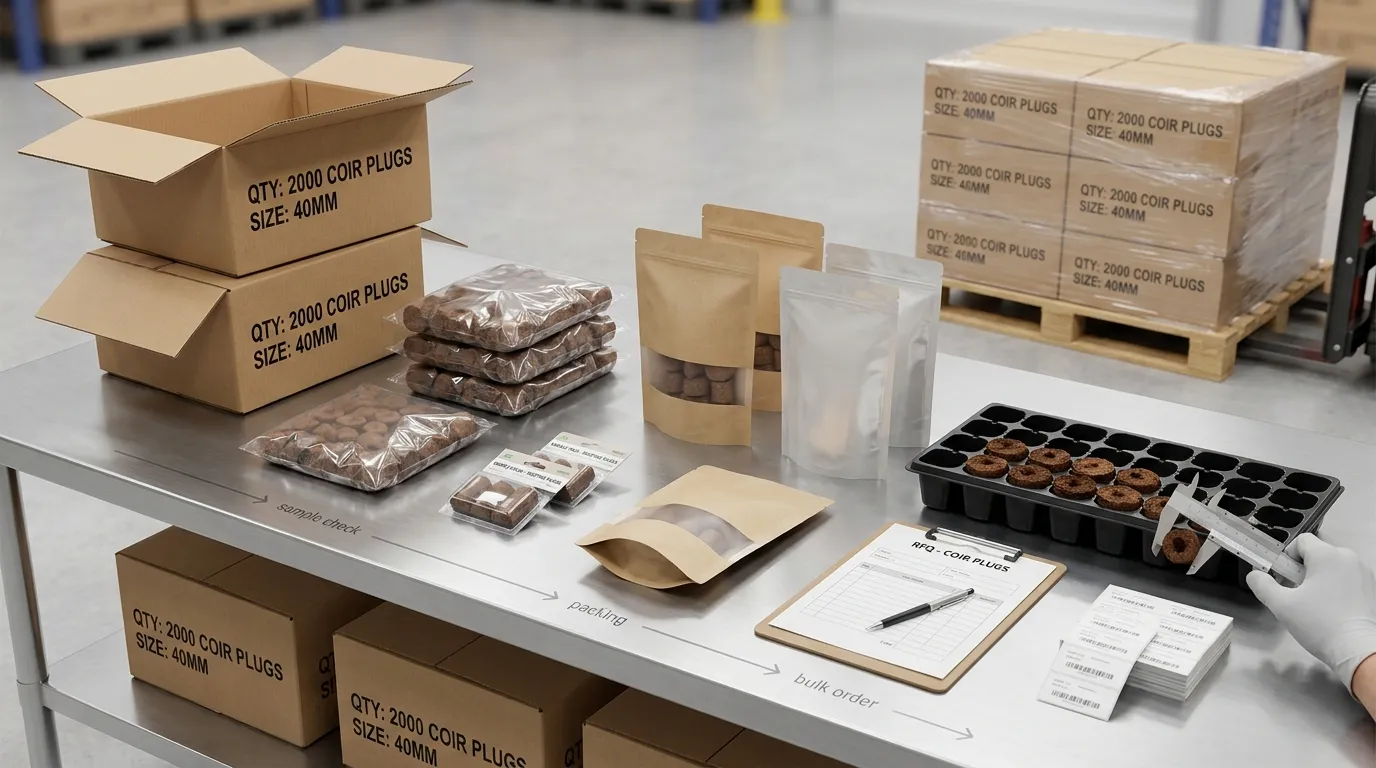
Wholesale coconut coir rooting plugs can be packed for different sales channels. The best packing method depends on whether your business sells to nurseries, retailers, e-commerce customers, hydroponic stores, or private-label gardening brands.
Common packing options include:
- Bulk carton packing
- Inner poly bag packing
- Retail pouch packing
- Paper box packing
- Tray set packing
- Hydroponic refill kit packing
- Barcode label and carton mark
- Private-label bag or box
- Mixed set with trays, domes or baskets
- OEM packaging for garden brands
For e-commerce and retail, packaging should clearly show plug size, quantity, application, hydration instructions, and compatible use. For nursery or professional buyers, carton count, pallet loading, product consistency, and landed cost are usually more important.
MOQ and Sample Support
MOQ depends on plug size, formula, packing style, label requirements, and whether the order uses standard stock packaging or custom OEM packaging. Standard bulk packing usually allows a more flexible start. Custom printed bags, boxes, labels, or hydroponic refill kits may require a higher MOQ because of packaging production.
Before placing a full order, buyers can request samples to check:
- Dry plug size
- Expanded plug size
- Center-hole position
- Tray compatibility
- Water absorption speed
- Moisture retention
- Plug firmness
- Crumbling resistance
- Salt and pH requirements
- Retail pack appearance
- Carton quantity and shipping volume
For brands building a wider propagation category, we can help combine coconut coir plugs with rooting cubes, seed trays, humidity domes, plant labels, small greenhouses, and hydroponics supplies in one sourcing plan.
Quality Checks Before Bulk Shipment
Propagation media quality affects customer results directly. For this reason, buyers should not evaluate only the price per plug. A cheaper plug that expands poorly, contains excess salts, does not fit trays, or breaks during handling can create higher after-sales risk.
Important quality checks include:
- Material cleanliness
- Washing and buffering process
- pH and EC consistency
- Dry size and expanded size
- Moisture content before packing
- Compression and expansion performance
- Center-hole accuracy
- Plug firmness after hydration
- Carton strength
- Inner packing protection
- Batch consistency across cartons
- Fit with buyer-provided trays or baskets
Garden Tools Wholesale helps buyers confirm these details before bulk shipment so the final product fits the intended market and sales channel.
How Importers Build a Complete Propagation Collection
Coconut coir rooting plugs work well as a core SKU, but many buyers prefer to build a complete propagation collection around them. This makes the product line more attractive to retailers, online stores, garden centers, and hydroponic distributors.
A practical collection may include:
- Coconut coir rooting plugs
- Hydroponic grow sponges
- Rooting cubes
- Seedling trays
- Humidity domes
- Seed starter kits
- Biodegradable pots
- Plant labels
- Spray bottles
- Small greenhouse kits
- Repotting mats
- Indoor hydroponic accessories
This type of sourcing plan helps buyers create entry-level retail packs, refill packs, professional nursery supplies, and private-label gardening kits from one supplier network.
RFQ Checklist for Coconut Coir Rooting Plugs Wholesale
To receive an accurate quotation, please prepare the following details:
- Target plug size or sample photo
- Dry size and expanded size requirement
- Round, square, sponge, cube or custom shape
- Center-hole size and depth
- Target tray, basket or hydroponic system
- Order quantity
- Bulk pack or retail pack
- Private-label artwork requirement
- Carton quantity preference
- Destination port or delivery country
- Required sample quantity
- Any pH, EC, washing or buffering requirements
- Whether you need mixed products in the same shipment
If you are not sure which plug size is best, send your tray size, basket size, target crop type, and packing idea. Our team can recommend a suitable option for sample testing.
Request a Wholesale Quote
Garden Tools Wholesale supplies coconut coir rooting plugs wholesale for garden brands, hydroponic suppliers, importers, distributors, nurseries, and OEM packaging projects. Whether you need bulk cartons, private-label retail packs, hydroponic refill sponges, or a full propagation product collection, we can help match product format, packaging, MOQ, and shipping plan.
Contact us with your target size, packing quantity, and application. We will help you confirm samples, tray compatibility, bulk packing, and quote details.
Coconut Coir Rooting Plugs Wholesale FAQ
What sizes of coconut coir rooting plugs are available?
Common options include small hydroponic pod plugs, nursery tray plugs, cutting plugs, and larger seed starter plugs. Size depends on your tray, basket, or retail pack design. Buyers can send samples or drawings for size matching.
Are coconut coir plugs suitable for hydroponics?
Yes. Coconut coir plugs are widely used for hydroponic seed starting and indoor grow systems. The key is choosing a plug size that fits the basket or pod and confirming water absorption, pH stability, and low EC requirements before bulk order.
Can coconut coir rooting plugs be transplanted into soil?
Yes. Coir plugs can usually be transplanted with the seedling into soil, pots, grow bags, or nursery containers. This helps reduce root disturbance and makes the product easy for beginner gardeners and nursery users.
Do coconut coir plugs need washing and buffering?
For quality wholesale supply, washed and buffered coir is preferred. Washing helps reduce salts, while buffering supports more stable growing performance. Buyers selling to hydroponic customers should pay close attention to pH and EC consistency.
What is the difference between coir plugs and rockwool cubes?
Coir plugs offer renewable, biodegradable-positioned media with strong water retention and transplant convenience. Rockwool is common in commercial hydroponics but may require pH preparation and has weaker eco positioning. The best choice depends on customer segment and growing system.
Can you supply private-label packaging?
Yes. Coconut coir rooting plugs can be supplied in bulk cartons, inner bags, retail boxes, pouches, tray sets, or hydroponic refill packs. Private-label packaging depends on MOQ, artwork, packing material, and the final sales channel.
Related Articles

Pump Head vs Flow Rate in Solar Irrigation: Why Buyers Need Both Numbers
