






Wholesale Buyer’s Guide: Using Soil Moisture Sensors to Prevent Overwatering and Root Damage
Abstract
A healthy root system is important for gardens and influences plants' nutrient take-up, water transport, and overall health. Subjective guesswork watering leads to missing data, judging soil oxygen incorrectly, and choking roots. Preventing root rot starts with soil moisture sensors to provide data that matches plant watering needs. This article covers the definition of overwatering, root damage mechanisms, sensor working principles, practical usage guides, and integration methods to help gardeners take care of root safety and encourage plant growth.
Root health maintenance provides a strong growth foundation for the plant. In gardening, healthy roots ensure that water and nutrients are transported efficiently for leaf growth, flowering, and fruiting. Well-meaning but common overwatering disturbs soil moisture and oxygen balance, both of which are crucial for roots and beneficial soil microorganisms. Many gardeners water based on surface dryness or a regular schedule, unknowingly causing soil waterlogging and root harm. A soil moisture sensor solves this by turning those guesses into something based on data from the ground, so that you have those ground truths about your plants matching what their needs are. This article will elaborate on why it is bad for nature to overwater, the harm to the roots from overwatering, the role of soil moisture sensors in preventing overwatering, and how these sensors can be used in various garden situations.
What Is Overwatering
Defining Overwatering Beyond “Too Much Water”
Overwatering provides plants with way too much water for their physiology, keeping the soil saturated for a long time. Underwatering is easy to spot by wilted leaves and a dry soil surface, but overwatering is hard to spot because it often produces misleading symptoms, showing similar symptoms like the yellowing of lower leaves. It makes the problem worse if it is mistaken for a water shortage.
Oxygen Displacement in Saturated Soil
The crux of the matter is oxygen displacement in the soil pores. Healthy soil is a mixture of mineral particles, organic material, water, and air in the pores; during normal conditions, the oxygen content in the pores is around 20-30%. This O2 is important for root respiration to produce energy for growth and to absorb nutrients. Soil pores filled with water mean overwatered roots cannot get oxygen and become stressed.
Common Gardening Practices That Lead to Overwatering
The causes include pots without drainage holes, compacted soil with insufficient water infiltration, insufficient knowledge of plant-specific requirements (such as treating succulents like tropical ferns), and a rigid watering schedule ignoring the weather, such as rainfall or humidity. Overwatering disrupts the soil ecosystem balance, its root system, and beneficial mycorrhizal fungi that break down organic matter and release nutrients. Recognizing these multiple types of influences is the first step to properly controlling overwatering.
How Overwatering Damages Roots
Oxygen Starvation and Root Stress
Roots are a plant's lifeline; they absorb water and nutrients like nitrogen, phosphorus, potassium, and oxygen. Overwatering hurts roots by cutting off oxygen, which makes roots use inefficient energy-making ways that produce dangerous substances like ethanol. Toxins from these harmful species will harm the root cell structure and make the structure weaker; because the cells are weaker, they will be sensitive to pathogenic fungi and bacteria.
Pathogen Growth and Root Rot Development
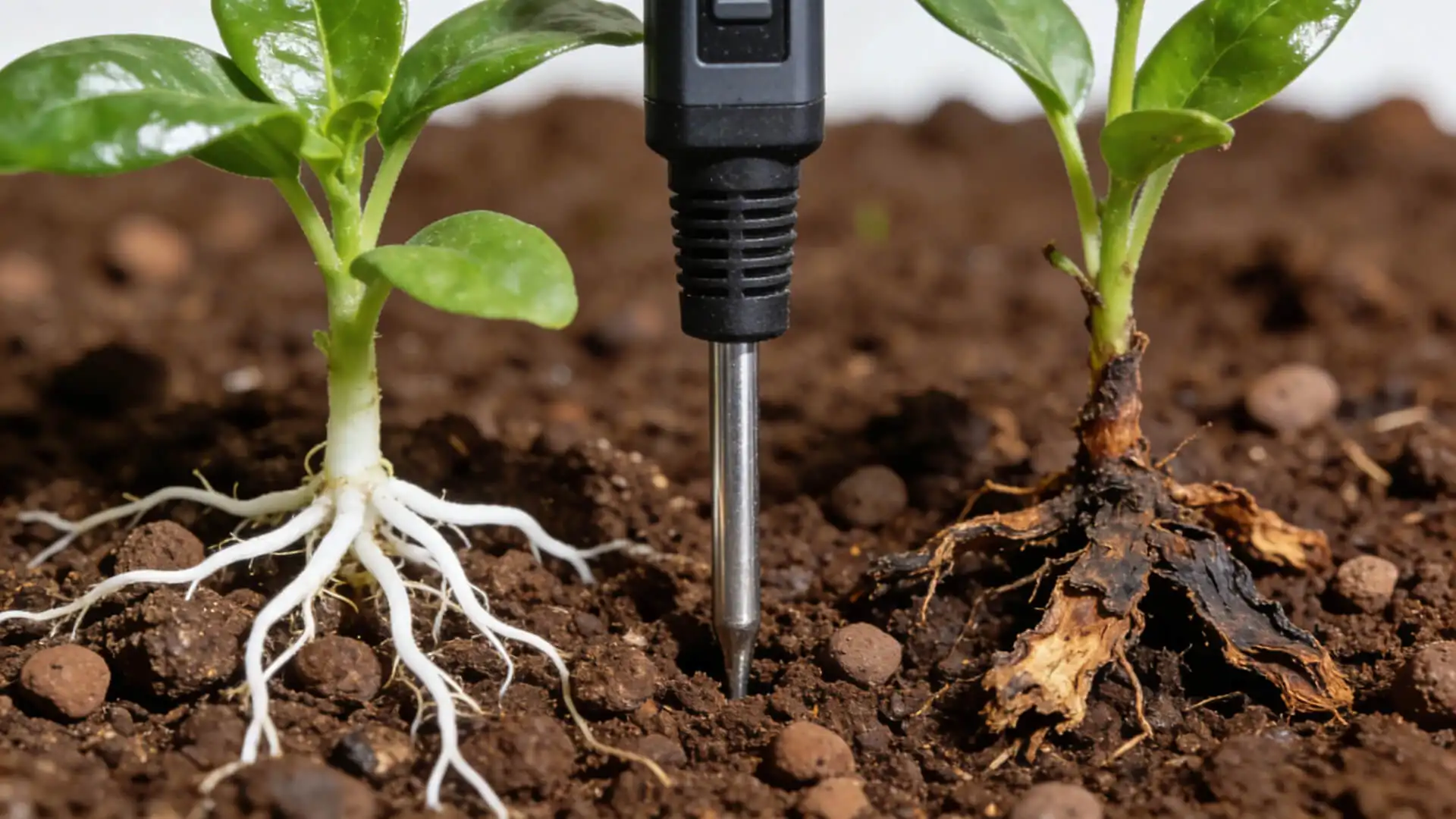
For example, pathogenic Phytophthora can grow and reproduce in a wet and oxygen-poor environment and cause roots to rot. Root rot is marked by the decaying of roots instead of healthy white/tan roots that are firm; the rotting roots turn soft, mushy, and dark.
Long-Term Effects on Plant Stability and Growth
Progressive rot reduces water and nutrient uptake even when the soil is wet, causing the confusion of wilting. Overwatering can also flush out nutrients, causing yellow leaves and stunted growth. Plants also grow shallow roots from surface water, making them easily blown over or washed out by rain. It will kill the plants if it continues for a long time.
Role of Soil Moisture Sensors in Overwatering Prevention
How Soil Moisture Sensors Measure Water in Soil
Soil moisture sensors link guesses and accurate watering to real-time soil moisture quantities, addressing overwatering from the beginning by looking at the soil’s electrical properties or its ability to hold an electrical field, which is connected to the amount of water. Capacitive sensors are widely used in home gardening for being robust, needing little power, and being reliable; they have two metal pieces that the soil acts as a medium between. Wet soils have higher dielectric constants and conductivities, so capacitance changes in sensors are converted into readout values to eliminate manual probes.
Why Root-Zone Data Is More Reliable Than Surface Checks
Watering in the past was based on false surface soil conditions; surface dryness is often a clue, but the subsoil can still be moist, leading to more watering than necessary. Sensors get around this by actually measuring the water at the roots. Placed at root depth, they allow watering only when moisture matches plant's needs to avoid over- or under-watering and save water.
Integrating Sensors with Automated Irrigation Systems
For gardeners in a hurry or with large spaces, sensors can integrate into automatic irrigation systems using controllers programmed with specific thresholds. To ensure regular, accurate irrigation, sensors help to maintain a balance of moisture and oxygen in the soil, which prioritizes plant root health and helps grow plants.
Practical Usage Tips for Soil Moisture Sensors
Choosing the Right Sensor Type for Your Garden
Proper installation, calibration, and maintenance can improve the performance and life of the sensor. Incorrect use will cause the sensor to display a smaller number than it should. Here is some guidance on how to use these gardening tools on a regular basis for both beginners and professionals. The sensors should meet the needs of the garden soil types and plant types. Resistive sensors are low-cost but brittle and can corrode in wet/acidic soil in the short term. Tensiometers measure soil water tension and are good for sandy soil or crops that require strict moisture levels like vegetables. Spike-style sensors are good for containers, while multi-depth probes work for mixed in-ground plantings. Capacitive sensors remain the most flexible for home gardens due to their rust resistance and cross-soil accuracy, and reliability.
Proper Sensor Placement to Avoid False Readings
Proper installation requires putting sensors at root depth: 4-5 inches for annuals/flowers and 8-9 inches for shrubs/young trees, or at one-third soil depth for pots. Sensors have to be 6 inches from watering outlets or stems; otherwise, there will not be even watering. Soil needs to be firmly pushed down against the sensors to avoid air pockets that would give false readings.
Calibration Based on Soil and Plant Requirements
Calibration should match the soil type; clay holds onto water for a longer period than sand. Test sensors in fully dry and saturated garden soil, record the output, and adjust thresholds for plants. For example, drought-tolerant succulents may need 20-30% moisture, while plants like ferns that like it wet need 40-60%. Calibrate every 2-3 months to accommodate for any soil or sensor changes.
Maintenance Practices for Long-Term Accuracy
Regular maintenance is performed by cleaning the probes every 2-3 weeks with a soft brush to remove soil and mineral deposits that skew the readings; avoid harsh chemicals. For hard water areas, 10-15 minutes of soaking in distilled water is sufficient to remove stubborn deposits. Verify sensor readings by checking them manually by digging to the root zone and squeezing the soil once or twice a week. Store cleaned and dried sensors in a cool, dry place during the off-season to prevent corrosion and extend the sensor's service life.
Conclusion and Call to Action
Why Moisture–Oxygen Balance Is Key to Root Health
Soil moisture sensors change gardening from guessing to using data for management to keep the right amount of water and oxygen for the roots, to stop overwatering and damage, and to save water during times of scarcity. By understanding the causes of overwatering and the problems it causes for plants, sensors help gardeners go from being reactive to proactive in caring for plants, helping grow better, more resistant gardens with strong roots, no matter the gardener's skill level.
Moving Toward Sustainable, Smarter Watering Practices
Management maintaining soil moisture-oxygen balance is very important to the health of the root to avoid overwatering and root damage, and promote the conservation of water in a water-scarce era. Understanding overwatering and its root damage mechanism through sensor application turns plant care from reactive to proactive and also helps in growing a healthy garden with strong roots and good development irrespective of the gardener's experience.
Encouraging Adoption of Soil Moisture Sensors
Those gardeners who were using schedules or estimates could make the change to soil moisture sensors, which are not overly costly and are quite simple to employ to deal with a well-known gardening challenge. These foundational supplies are user-friendly and provide favorable results concerning maintaining one’s plants over a prolonged period. Choose sensors that match garden types (container or in-ground beds) and follow installation/calibration instructions to ensure the best watering and prevent overwatering/root damage. Adoption is essential to sustain the use of water in gardening. Those who want to improve gardening practices might look at good retailers for sensors to invest in a better plant and a better garden.
For importers, distributors, and wholesale buyers, sourcing garden tools is not just about price, but about long-term reliability and product-market fit.
At Scarecrow Garden Supplier, we help B2B buyers select and source suitable garden tools based on their target market, order volume, and sales channels.
If you are planning to source garden tools for wholesale or retail distribution, feel free to contact us to discuss your requirements and explore suitable sourcing solutions.
Written by
ScarecrowGarden
💡About Scarecrow Garden Supplier Co., Ltd.
Scarecrow Garden Supplier Co., Ltd. is a China-based sourcing and wholesale partner specializing in garden tools, landscaping equipment, and outdoor supplies for international wholesalers, distributors, contractors, and brands.
With hands-on experience rooted in real garden use scenarios, we focus on durable materials, functional design, and stable large-volume supply. Our product range covers pruning tools, watering systems, hand tools, outdoor hardware, and customized garden solutions to support both retail and professional landscaping markets.
Beyond products, we help our partners navigate supplier selection, quality control, compliance requirements, and long-term sourcing strategies in China. Through our blog, we share practical insights on product selection, material comparisons, industry trends, and cost-effective purchasing—helping global buyers build stronger, more competitive supply chains.