







Types of Garden Shears: A Complete Guide for Home Gardeners | Scarecrow Garden Supplier
Garden shears are indispensable tools in garden maintenance. Understanding the different types of garden shears helps wholesale buyers, distributors and landscaping start-ups choose the right garden hand tools for their customers' daily pruning tasks. There are a great many types of garden scissors, and this variety once made your customers, especially novice gardeners, feel extremely troubled. If you want to know how to source the types of garden shears, you can take this article as a sourcing guide for gardening scissors. Next, I will explain in detail the several mainstream types of gardening scissors for you and your customers.
This guide will help you compare the most common types of garden shears so you can choose the types that fit your customers' gardening style and plant-care needs.
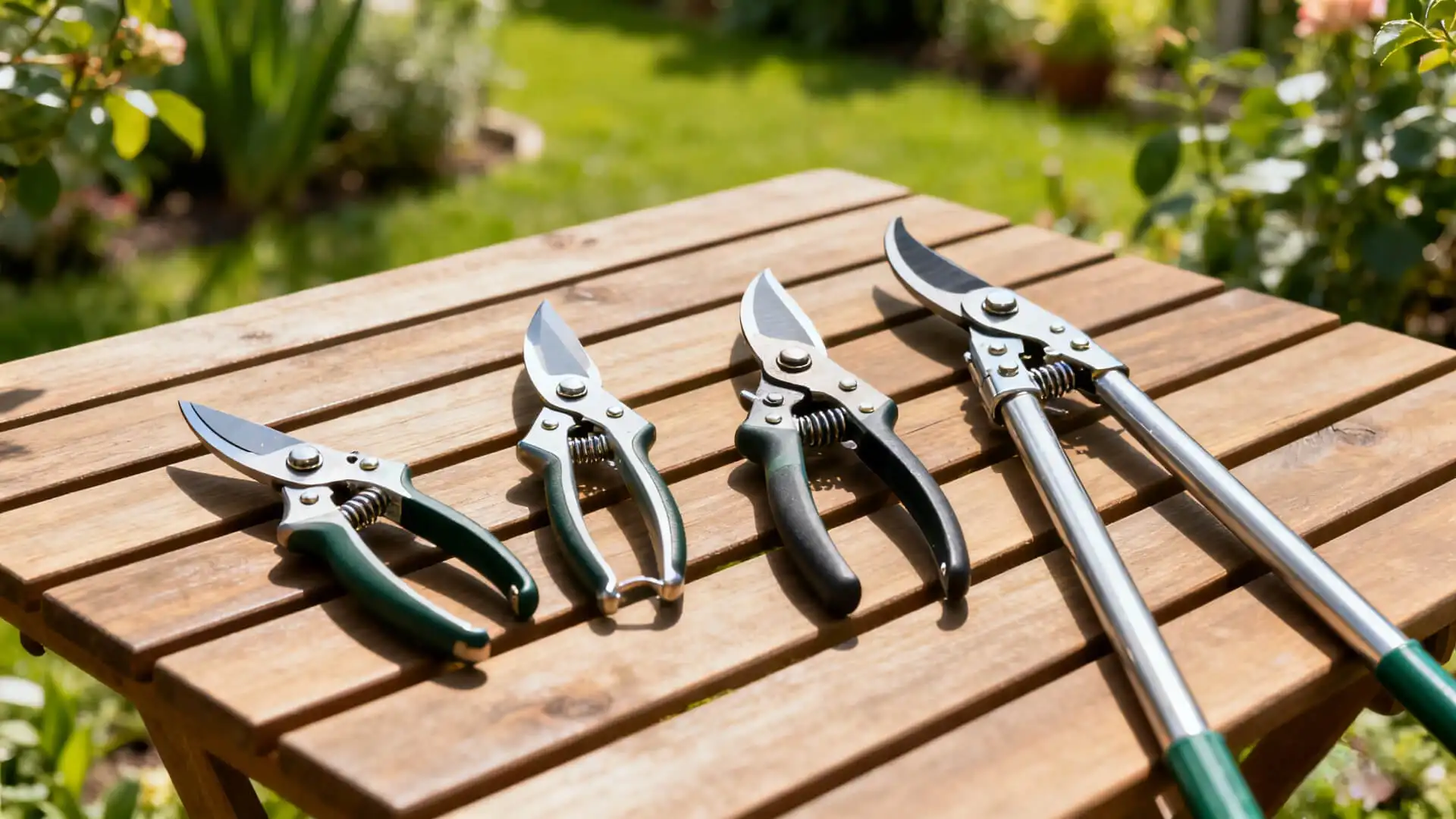
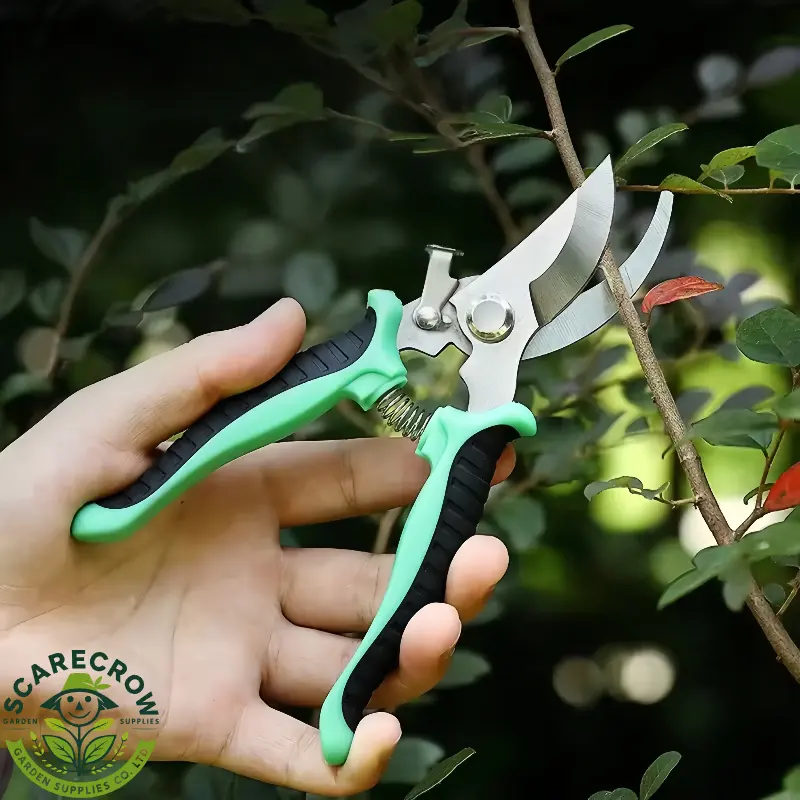
1. Pruning shears
Blade material: The mainstream material used for blades on the market is stainless steel, which has relatively high hardness. Some pruning shears are often used in damp environments, so it is advisable to choose those with anti-rust coatings, which can extend the service life of the blades.
There are roughly two types of structures. The first type is a double-edged blade, and the second type is a single-edged blade (one side is a blade and the other side is a chopping board). A double-edged knife is suitable for pruning live branches, while a single-edged knife is suitable for pruning dead and withered branches.
Applicable branches: short-diameter flower branches and relatively low shrub branches.
Among all garden hand tools, pruning shears are the most frequently used, especially for everyday garden maintenance.
Advantages: The resulting cut is very smooth, which is beneficial to the tree’s healing process. The pruning shears are small in size and can be operated flexibly with one hand!
Disadvantages: Due to the overly sharp blade, it is prone to cracking when cutting relatively thick branches. If the technique is not proficient, it may cause crush injuries to the plants. This is why pruning shears should be used mainly for live branches rather than thick woody stems.
Applicable scenarios include pruning roses, hybrid roses, and other flowering plants, as well as trimming the branches of fruit trees.
If your customers enjoy home gardening, we highly recommend choosing double-edged pruning shears.
2. Flower shears
Blade material: Similar to pruning shears, most are made of stainless steel.
Structure: The blade is very thin, the blade body is very slender, and most of them have fine serrations.
Suitable branches: Soft flower roots, stems, branches and leaves.
Advantages: The blade is extremely sharp and provides excellent cutting efficiency, allowing your customers to prune for long periods without hand fatigue. However, it takes no effort at all to prune branches. Even if your customers work hard all morning in the garden, their hands won't get tired.
Disadvantage: Due to the extremely thin blade, it is very, very prone to curling when encountering sharp objects. Once the blade curls, the knife is ruined.
Recommended scenarios: Picking fresh-cut flowers, pruning the roots of succulents, and taking care of delicate plants such as orchids.
3. Thick branch pruning
Material: Stainless steel is mostly used. The back of the blade is thicker than the average one, about one centimeter. The blade is very thick, which enables it to cut thick branches.
Structure: Refer to the well-known lever principle.
Applicable branches: Suitable for thick-diameter fruit tree branches, such as old branches of osmanthus trees and tea branches.
Advantage: It delivers strong cutting power for handling thick, old, or woody branches that regular pruning shears cannot manage.
Disadvantage: It's too heavy! And it's a huge creature that takes up a lot of space.
Recommended scenarios: Pruning shrubs at home in winter, trimming old branches in orchards, and the like.
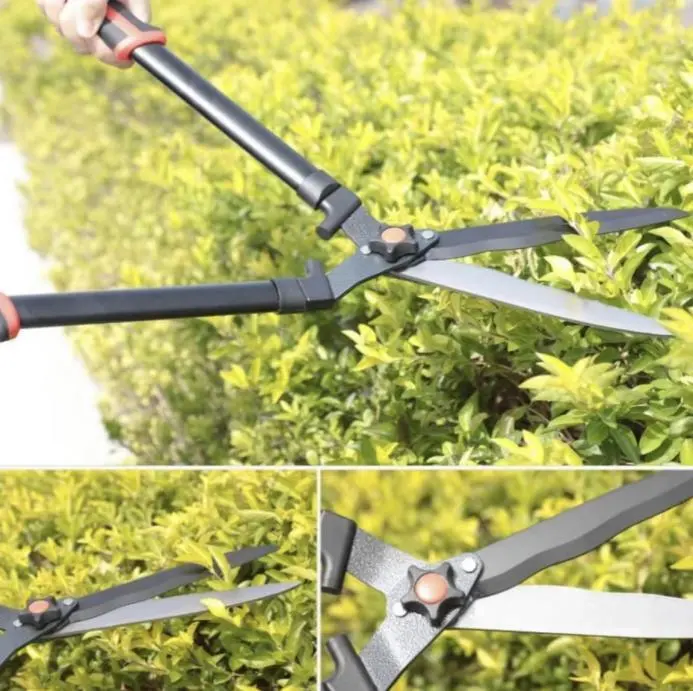
4. Hedge shears
Material: Most feed carbon steel or manganese steel, and some will use wavy blades.
Structure: Generally, they are single-edged scissors with relatively long handles, usually reaching up to sixty centimeters.
Suitable branches: It is suitable for pruning thick branches and leaves, but the diameter should not be too thick, otherwise it is easy to damage the cutting tool. Hedge shears are essential garden equipment for shaping bushes, hedges, and topiary.
Advantages: A single cut can cover a large area, allowing for the easy creation of hedges. Even with a handle length of 60 centimeters, it doesn't require frequent bending over for labor, making it very effortless.
Disadvantage: There's no way to handle thick leaves.
Recommended scenes: The edges of lawns with hedges such as boxwood and red-leaf photinia, as well as some small spherical plants.
5. Tall branch pruning
Material: Most high-branch shears are made of stainless steel and carbon alloy, and some are made of carbon fiber. However, the price will be higher.
Structure: Simply put, it is a pruning shear with an extendable rod added
Suitable branches: Suitable for fine branches, with a diameter not exceeding 4 centimeters.
Advantages: It can be operated on the ground to prune branches, extends high, has high safety performance, saves time and effort, and is very convenient. This makes them ideal for gardeners who want to trim high branches safely without climbing ladders.
Disadvantages: Due to the overly long stems of the tall branch shears, they are prone to being cut crooked during operation. Moreover, tall branch shears are generally quite expensive and cannot be used in extremely strong winds.
Recommended scenarios: Suitable for the landscaping department to prune street trees and some tall fruit trees in orchards.
6. Some tips for the maintenance and care of garden shears
1. After each use, your customers can apply some resin and sewing machine oil on the blade to prevent it from rusting, which can extend the service life of the garden scissors. Regular cleaning also prevents plant sap buildup, which can affect cutting performance.
2. When sharpening the knives, use 1000-mesh sandpaper for flower shears, 400-mesh coarse grinding and 800-mesh fine grinding for branch shears, and keep a 30-degree angle with the blade. After grinding, turn on the flashlight and shine it on the blade to ensure it is flat and free of sand and gravel.
3. A workman who wants to do his job well must first sharpen his tools. If your customers are just enthusiasts of home gardening, most problems can be easily solved with just a pair of flower shears or pruning shears. However, if your customers are professional gardeners, it is recommended to have a full range of scissors.
Conclusion
No single type of garden shears can handle all gardening tasks, which is why understanding their differences and how your customers' usage psychology is essential. Sourcing the comprehensive tools ensures all kinds of needs, including cleaner cuts, healthier plants, and a more efficient gardening experience.
Managing multiple garden tool categories often requires more than working with a single factory.
Scarecrow Garden Supplier assists landscaping start-ups, wholesalers and distributors by consolidating different garden tool products into efficient, market-ready sourcing solutions, helping you reduce communication costs and simplify procurement.
If you are looking to build or expand a garden tools product range, feel free to reach out and share your sourcing plan with our team.

Written by
ScarecrowGarden
💡About Scarecrow Garden Supplier Co., Ltd.
Scarecrow Garden Supplier Co., Ltd. is a China-based sourcing and wholesale partner specializing in biaogarden tools, landscaping equipment, and outdoor supplies for international wholesalers, distributors, contractors, and brands.
With hands-on experience rooted in real garden use scenarios, we focus on durable materials, functional design, and stable large-volume supply. Our product range covers pruning tools, watering systems, hand tools, outdoor hardware, and customized garden solutions to support both retail and professional landscaping markets.
Beyond products, we help our partners navigate supplier selection, quality control, compliance requirements, and long-term sourcing strategies in China. Through our blog, we share practical insights on product selection, material comparisons, industry trends, and cost-effective purchasing—helping global buyers build stronger, more competitive supply chains.
Related Articles

How to Source from China Without Missing Your Peak Season

China Public Holidays 2026: A Buyer’s Guide to Avoid Supply Chain Disruptions Before Long Shutdowns
Why Bulk Garden Tool Orders Fail — and How We Help Buyers Prevent Costly Quality Issues in China