






How Soil Moisture Sensors Improve Efficient Watering | Smart Garden Insights
Abstract
Modern gardeners face a core challenge: efficient watering. This approach not only conserves water resources but also promotes healthy plant growth. A soil moisture sensor is a key tool for this challenge, providing accurate, real-time data that reflects soil water content. In this article, we explain the basic functionality of soil moisture sensors, analyze common watering problems in modern garden management, describe specific ways these sensors enhance water use efficiency, identify suitable application scenarios and outline practical steps for gardeners to integrate sensors into daily irrigation management. Many gardeners rely on subjective guesswork when watering. Soil moisture sensors replace this guesswork. They enable decisions based on actual data. These data-driven decisions transform gardening practices. The transformation moves toward sustainable development. It also leads to better plant growth outcomes.
What Is a Soil Moisture Sensor
Definition and Purpose
A soil moisture sensor is a specialized tool.
It measures soil water content through two main methods. The first method is electrical conductivity. The second is capacitance.
How Sensors Work
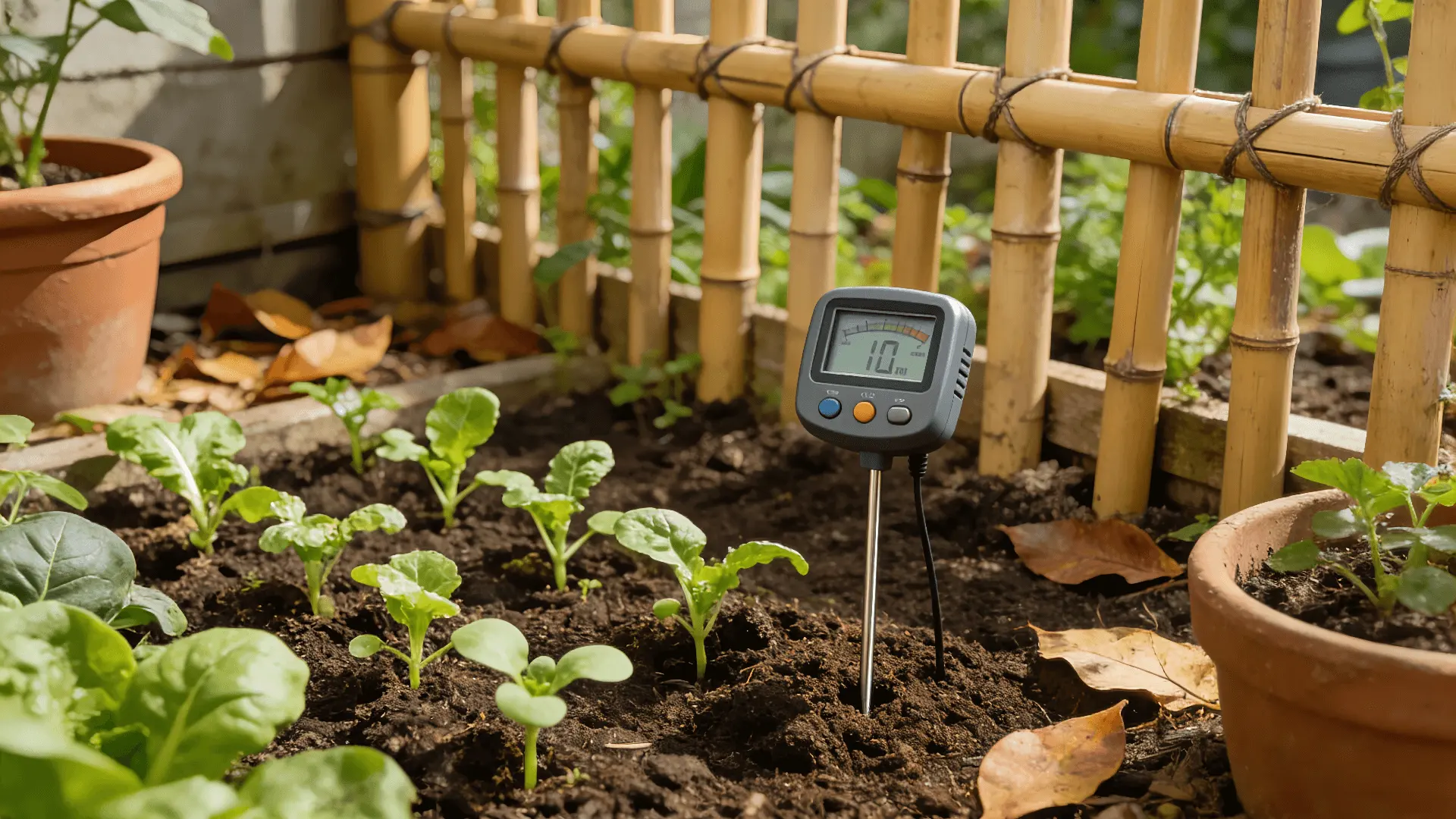
Most sensor models have long probes. Users insert these probes into the soil. The probes collect moisture-related data. The data is transmitted to a display screen. It can also be transmitted to a mobile phone. Transmission happens via a dedicated application.
Types of Soil Moisture Sensors
- Soil Moisture Meters: Digital displays showing moisture content as a percentage.
- Simple Handheld Sensors: Cost less than $20, easy to operate, no professional skills needed.
- Advanced Wireless Sensors: Connect to home automation systems, allow remote monitoring.
Core Function
All these sensors share a basic function. They display actual water content in the plant root zone. This function helps gardeners avoid guesswork. Guesswork leads to inappropriate watering decisions.
Watering Challenges in Modern Gardens
Common Issues
Modern gardeners encounter many problems during watering. Most people determine watering time based on two factors. These factors are surface soil appearance and texture.
Overwatering
Research shows 70% of home gardeners overwater plants, wasting about 20 gallons per household weekly. Effects include:
- Wasted water resources
- Damaged plant roots
- Destroyed soil structure
Underwatering
30% of garden plants die due to insufficient water, worsened by:
- Rainy periods cause waterlogged soil
- Hot weather increases evaporation by 30%
Inefficient Traditional Tools
Sprinklers and hoses are inefficient, losing about half the water due to evaporation and runoff. Urban gardens face additional challenges like limited space and poor soil quality.
How Soil Moisture Sensors Boost Water Efficiency
Accurate Data for Irrigation
Soil moisture sensors serve as gardeners’ primary data source by delivering targeted accurate real-time insights on soil water content. Such targeted data equips gardeners with a reliable basis. This basis supports the formation of rational watering decisions. These decisions align with the actual moisture needs of the soil. They water plants only in specific situations. The situation is when the soil is dry enough to indicate the need. These sensors reduce water waste. They direct water to areas of need. They direct water to times of need. They work well with manual irrigation systems. They also work well with automatic irrigation systems.
Manual Irrigation Systems
Gardeners can check sensor readings regularly. They use the readings to judge a key point. They judge if watering is necessary that day.
Automatic Irrigation Systems
Automatic systems have a specific operation. They start irrigation only when certain conditions are met. The condition is moisture levels dropping below a threshold. The threshold is set for the cultivated plant types. This targeted irrigation method has clear effects. It eliminates inefficiencies in traditional approaches. It supports scientific watering practices. These practices are consistent with sustainable garden management.
Reducing Overwatering
Harms of Overwatering
Overwatering causes multiple harms. It damages soil structure. It injures plant roots. Overwatering wastes water.
How Sensors Help
Soil moisture sensors prevent this issue. They provide accurate data. The data indicates appropriate watering times.
Research Evidence
Research from gardening institutions shows a clear result. These sensors reduce water consumption. The reduction range is 30-50%. This is compared to traditional methods. A study was conducted. It involved 500 residential gardens. The study recorded specific savings. Each property saved an average of 800 gallons yearly. Most garden plants have specific growth requirements. They grow well when soil moisture remains stable. The stability is within 20-30%. Soil moisture sensors maintain this optimal range. They maintain this optimal state consistently and reliably. Such consistency and reliability are crucial for long-term plant health.
Nutrient Retention
Overwatering triggers a specific process. The process is nutrient leaching. Nutrient leaching involves water flowing through soil. It flushes essential mineral elements. These elements, including nitrogen, phosphorus, and potassium, are flushed out of the root zone. These elements are key nutrients. They support plant growth. They support photosynthesis. They support overall physiological functions. Soil moisture sensors limit excess water use. This limitation helps retain these nutrients in the soil. It makes them accessible for root absorption.
Pollution Prevention
Overwatering leads to surface runoff. Runoff carries specific substances. It carries lawn and garden chemicals. It carries soil sediments. These substances enter local water bodies. They cause pollution. Sensors reduce this pollution. They support responsible, water-wise irrigation.
Improving Plant Health
Maintaining Stable Moisture
Stable, appropriate soil moisture is crucial. It is crucial for plant health. It is crucial for plant growth. Soil moisture sensors maintain this precise balance. They prevent drought stress. They prevent excessive waterlogging. Excessive waterlogging inhibits root function.
Research Findings
Horticultural research has been conducted. It covers home and commercial gardens. The research shows specific data. Plants under sensor-based watering have higher survival rates. The rate is 25% higher. They have more lush foliage. The increase is 15%. They have more abundant blooms or fruits. The increase is 20%.
Root Rot Prevention
Root rot is a common issue. It comes from prolonged overwatering. It is a top cause of plant death in home gardens. Sensors eliminate this risk. They tightly control soil moisture.
Drought Stress Prevention
Drought stress has negative impacts. It weakens plant cell structures. It weakens immune systems. Weakened plants are more susceptible to pests and diseases. Sensors ensure timely watering to address this. The watering happens before this stress occurs. Stable, uniformly distributed moisture has a positive effect. It improves nutrient absorption as plant roots take up key minerals, including nitrogen, phosphorus, and potassium. They take them up efficiently. Vegetable gardens use these sensors. They show a 30% yield increase. This is compared to gardens relying on traditional watering. Traditional watering is based on guesswork.
Suitable Garden Applications
Residential Flower Beds
Soil moisture sensors deliver stable performance. They deliver reliable performance.This performance applies across various garden types. It applies across application environments.The scope of use is wide. Residential flower beds benefit from these sensors. These beds can be ornamental. They can be mixed plantings.
Vegetable Gardens
Vegetable gardens also benefit. They can be small backyard plots. They can be large-scale areas. Both types gain tangible benefits. The benefits come from two main sensor types. The first type is simple handheld models. These models provide immediate moisture readings. They operate through easy steps. No professional skills are required. The second type is advanced wireless sensors. These sensors have remote monitoring functions. They have data recording functions. These functions enable convenient management. They enable efficient garden management.
Container Gardens and Potted Plants
Container gardens and potted plants benefit notably. Their soil is confined. This confined soil dries faster than open in-ground soil.
Greenhouses
Greenhouses rely on soil moisture sensors. They rely on them for daily operations. The goal is to maintain stable, consistent moisture levels. These levels are crucial for healthy seedling development. They are crucial for the robust growth of tropical plants.
Commercial Gardens, Parks, and Community Gardens
Commercial gardens, public parks, and community gardens use wireless sensor networks. These networks manage large-scale green spaces efficiently. These sensors are compatible with common soil types. Common types include clay, loam, sand, and improved garden soils. Each soil type has distinct characteristics. It has a distinct texture. It has distinct water-retention properties. Sensors adapt to these properties effectively. They integrate seamlessly with smart watering systems. They integrate with irrigation controllers. This integration streamlines management. It enables hassle-free automatic operation.
Handheld vs Wireless Sensors
Handheld meters are ideal for specific settings. They are ideal for small gardens, balconies, and indoor plants due to their lightweight portability. Another reason is the affordable price. These features make them accessible to ordinary gardeners. They make them accessible to hobby gardeners. Wireless sensors with app connectivity suit specific properties. They suit larger residential plots. They suit commercial properties. These sensors allow remote monitoring. The monitoring is of real-time moisture levels. They eliminate on-site checks. They enable timely adjustments. Adjustments are made from any internet-connected location.
Agricultural Areas and Raised Beds
Agricultural areas and raised bed gardens use these sensors. The sensors are reliable. Users fine-tune water usage with them. They optimize irrigation efficiency for different plant needs. They boost overall crop production efficiency.
If you have some questions about what kind of soil moisture testing equipment to choose, feel free to tell Scarecrow Garden Supplier Co., Ltd your requirements.

Written by
ScarecrowGarden
💡About Scarecrow Garden Supplier Co., Ltd.
Scarecrow Garden Supplier Co., Ltd. is a China-based sourcing and wholesale partner specializing in biaogarden tools, landscaping equipment, and outdoor supplies for international wholesalers, distributors, contractors, and brands.
With hands-on experience rooted in real garden use scenarios, we focus on durable materials, functional design, and stable large-volume supply. Our product range covers pruning tools, watering systems, hand tools, outdoor hardware, and customized garden solutions to support both retail and professional landscaping markets.
Beyond products, we help our partners navigate supplier selection, quality control, compliance requirements, and long-term sourcing strategies in China. Through our blog, we share practical insights on product selection, material comparisons, industry trends, and cost-effective purchasing—helping global buyers build stronger, more competitive supply chains.
Related Articles

How to Source from China Without Missing Your Peak Season
China Public Holidays 2026: A Buyer’s Guide to Avoid Supply Chain Disruptions Before Long Shutdowns
Why Bulk Garden Tool Orders Fail — and How We Help Buyers Prevent Costly Quality Issues in China