







Updated 1 month ago
Rattan Planter Drainage and Inner Pot Design: What Buyers Should Check Before Sourcing
SCARECROW GARDEN SUPPLIER
Rattan planters look straightforward on a product page — a woven outer body, an inner liner, a drainage hole. What could go wrong? Plenty, as it turns out. The drainage system and inner pot design are where most rattan planter quality problems originate, and they are the details most likely to be glossed over in supplier quotes.
When a customer buys a rattan planter and finds water leaking onto their patio furniture, or discovers the inner pot cracks after one season, or notices rust streaks on the woven surface — that is a return. And it is a return that could have been prevented by checking two things before placing the order: how the planter manages water, and what the inner pot is made of.
What to verify when sourcing rattan planters, focusing on the drainage system and inner pot design that determine real-world performance.
Why Drainage Is the Hidden Quality Problem in Rattan Planters
PE rattan — the material used for the outer woven body — does not absorb water. That is one of its advantages over natural rattan. But “does not absorb water” is not the same as “handles water well.” If the drainage system is poorly designed, water accumulates inside the planter, contacts the frame, and creates problems that the customer discovers only after using the planter for weeks or months.
The outer woven body is decorative. The inner pot or liner is the functional component that holds soil and manages water. If you evaluate a rattan planter by looking at the weave quality alone, you are looking at half the product. The other half — the drainage system — is what determines whether the planter performs in real use.
The Two-Body System: Outer Weave and Inner Pot
Outer Decorative Body
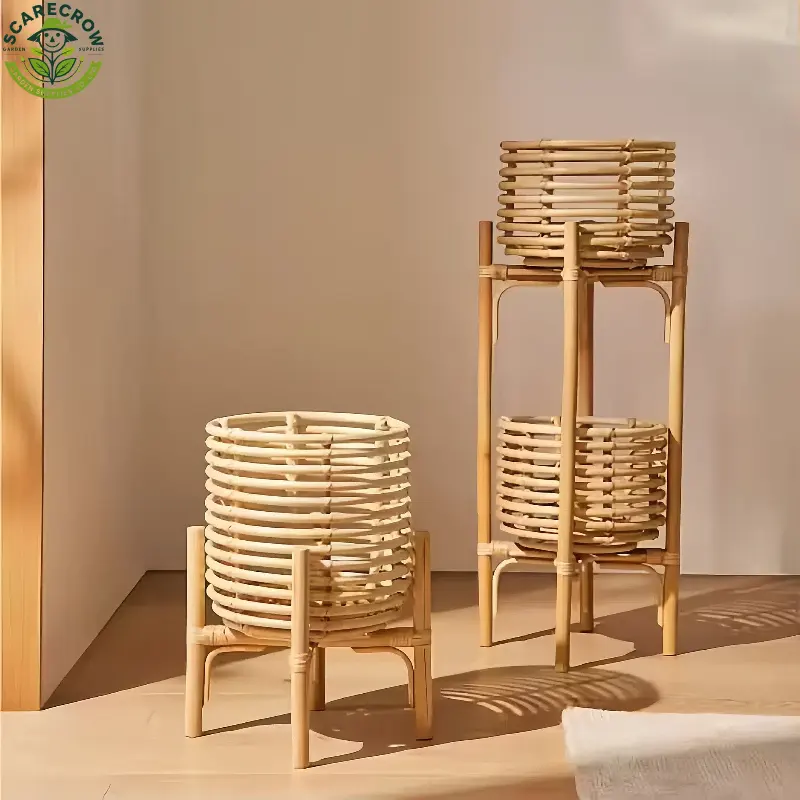
The outer body is what the customer sees. It is typically PE rattan woven over a metal frame — aluminum or steel. The weave pattern, rattan color, and frame finish determine the product’s visual appeal. But the outer body is not designed to hold soil or water directly. Its job is structural support and aesthetics.
Inner Pot or Liner
The inner pot is the functional component. It holds the soil, manages water drainage, and protects the outer frame from direct water contact. Liner designs are typically removable and installable on the inner surface of the planter base. Some designs use a rigid collapsible liner that can be folded for shipping and includes a drainage element.
The inner pot material varies across suppliers:
| Material | Common in | Advantages | Risks |
| Plastic (PP, PE) | Common across various price tiers | Lightweight, inexpensive, does not break down | Can crack in UV exposure or cold temperatures; thin plastic flexes and may not hold shape |
| Coir fiber (coconut) | Eco-positioned products | Natural appearance, biodegradable | Degrades over time; may not hold water management structure |
| Ceramic | Decorative planters | Aesthetic appeal, durable | Heavy, fragile during shipping, expensive |
When you request a quote, ask the supplier to specify the inner pot material, thickness, and whether it is included with the planter or sold separately. A planter that ships without an inner pot may require the end user to source one separately — confirm this with the supplier.
Drainage Hole Design: Indoor vs Outdoor Requirements
Drainage hole design is not one-size-fits-all. The correct drainage configuration depends on where the planter will be used.
Outdoor Use
For outdoor planters, drainage holes in the inner pot bottom are generally important. Without drainage, excess water from rain or watering can accumulate in the pot, saturating the soil and potentially drowning the plant. The outer woven body should also allow water to escape or evaporate, not trap it against the frame.
Indoor Use
For indoor planters, drainage holes create a different problem: water that drains through the hole needs somewhere to go. Indoor planters typically require a saucer, reservoir, or catch tray beneath the inner pot to collect drainage water. If the planter does not include a saucer, water will leak onto the floor — and that is a return.
Self-Watering Systems
Some rattan planters include self-watering components: a reservoir at the base, a wick or absorbent cord that draws water up to the soil, and sometimes a water level indicator. These systems add cost but provide a functional benefit that justifies a higher price point. If a supplier offers a self-watering planter, verify:
- Where the reservoir is located (inside the inner pot, or between the inner pot and outer body)
- How the water reaches the soil (wick, capillary action, or direct contact)
- Whether the reservoir is removable for cleaning
- What the water level indicator looks like and whether it is reliable
Self-watering components add cost and complexity — only specify them if your target market values the feature enough to pay for it.
Inner Pot Material, Fit and Removability
Fit
The inner pot should fit snugly within the outer woven body. A loose fit means the inner pot shifts when the planter is moved, which can damage the drainage alignment and create gaps where water collects between the pot and the frame. A fit that is too tight means the inner pot cannot be removed for cleaning or replacement.
When you inspect a sample, insert and remove the inner pot several times. It should seat firmly without excessive force and remove cleanly without binding.
Removability
Liners are typically designed to be removable — attached via heat-seal layers, detachable coupling to a frame, or simply dropped into the outer body. Removability matters for two reasons:
- Cleaning: Soil and mineral deposits accumulate in the inner pot over time. A removable pot can be cleaned or replaced.
- Replacement: If the inner pot cracks, a removable pot can be replaced without discarding the entire planter. Ask the supplier whether replacement inner pots are available for purchase separately.
Water Contact and Frame Corrosion Risk
This is the problem that does not show up in a product photo but shows up in customer returns after 3 to 6 months of use.
If the inner pot has a crack, the drainage hole is misaligned, or water overflows the pot during watering, water reaches the space between the inner pot and the outer frame. What happens next depends on the frame material:
- Aluminum frame: Aluminum does not rust, but it can oxidize. White powdery oxidation can appear on the frame surface. This is primarily a cosmetic issue, not a structural one.
- Steel frame: Steel rusts. If the frame coating is intact, rust is slow to develop. But if the coating has scratches or thin spots — which can happen during manufacturing or shipping — water accelerates corrosion. Rust streaks can then appear on the woven surface, visible as brown stains on the rattan.
- PE rattan weave: PE rattan itself does not absorb water or corrode. But if water is trapped between the inner pot and the weave for extended periods, mold can develop in the gap. This is a hygiene and odor problem.
What to Check
When you inspect a sample:
- Fill the inner pot with water to the rim. Observe whether water leaks through any point other than the drainage hole.
- Check whether there is a gap between the inner pot and the outer body where water could collect.
- Remove the inner pot and inspect the frame for coating integrity — scratches, thin spots, or exposed metal.
- Pour water through the drainage hole and confirm it exits the planter cleanly, without pooling inside the outer body.
Buyer Verification Checklist: Drainage and Inner Pot
| Inspection Point | What to Do |
| Inner pot presence | Confirm inner pot is included with the planter |
| Inner pot material | Verify material matches quote (plastic, coir, ceramic) |
| Inner pot thickness | Measure wall thickness; thin pots crack more easily |
| Fit and removability | Insert and remove 5+ times; check for binding or looseness |
| Drainage hole | Confirm presence, size, and location |
| Drainage flow | Fill with water; confirm clean drainage without pooling |
| Saucer/tray inclusion | Confirm if included for indoor use |
| Frame material | Confirm aluminum or steel; check coating integrity |
| Frame-water contact | Check for gaps where water can reach the frame |
| Self-watering components | If applicable: verify reservoir, wick, and indicator |
| Leakage test | Fill inner pot to rim; check for leaks at seams or cracks |
| Repeated fill/drain | Fill and drain 3+ times; check for water accumulation between pot and frame |
Before committing to an order:
- Define your rattan planter specifications and target market — sizes, inner pot type, and drainage configuration for indoor or outdoor use.
- Request a drainage and inner pot evaluation — use the checklist above to compare rattan planters from multiple suppliers.
- Verify frame protection — check coating integrity and gaps where water can reach the frame.
Explore Rattan Planter Options
Compare rattan planter materials, drainage systems, inner pots and packaging options before approving products.
View Wholesale Rattan PlantersResearch Notes
- Drainage system and inner pot design descriptions are based on general product construction principles. Specific designs, materials, and configurations vary by supplier and model. Buyers should verify all details on physical samples.
- UV testing and material durability for PE rattan are covered in a separate article on rattan planter materials. This article focuses on drainage and inner pot design.