






Updated 8 months ago
304 vs 201 Stainless Steel in Outdoor Furniture: How Importers Prevent Material Substitution Risks
ScarecrowGarden
💡About Scarecrow Garden Supplier Co., Ltd.
Scarecrow Garden Supplier Co., Ltd. is a China-based sourcing and wholesale partner specializing in garden tools, landscaping equipment, and outdoor supplies for international wholesalers, distributors, contractors, and brands.
With hands-on experience rooted in real garden use scenarios, we focus on durable materials, functional design, and stable large-volume supply. Our product range covers pruning tools, watering systems, hand tools, outdoor hardware, and customized garden solutions to support both retail and professional landscaping markets.
Beyond products, we help our partners navigate supplier selection, quality control, compliance requirements, and long-term sourcing strategies in China. Through our blog, we share practical insights on product selection, material comparisons, industry trends, and cost-effective purchasing—helping global buyers build stronger, more competitive supply chains.

304 vs 201 Stainless Steel: A Wholesale Buyer's Guide to Preventing Material Risks in Outdoor Furniture
For European and North American importers, distributors, and wholesalers of outdoor furniture, material selection is not just a technical decision — it directly affects product lifespan, visual appearance, warranty costs, and brand reputation.
In stainless steel outdoor furniture, 304 and 201 stainless steel are the two most commonly used grades. However, due to their significant cost difference, undeclared material substitution remains one of the most frequent sourcing risks when manufacturing in China.
This article explains the real differences between 304 and 201 stainless steel, why substitution happens, and how professional importers lock material specifications from contract to shipment.
304 vs 201 Stainless Steel: The Real Differences Go Beyond Price
Corrosion Resistance: The Key Factor for Outdoor Furniture
304 stainless steel (often referred to as 18/8 stainless steel) contains approximately 18% chromium and 8% nickel, forming a stable austenitic structure.
This composition provides excellent corrosion resistance in humid, coastal, and salt-exposed environments, making 304 the industry-accepted standard for outdoor furniture and patio applications.
201 stainless steel, by contrast, has a much lower nickel content (typically 1–4%) and replaces nickel with manganese and nitrogen to reduce cost. While suitable for indoor or decorative use, its corrosion resistance is significantly weaker.
In real outdoor conditions:
- 201 stainless steel may begin showing rust spots within 6–12 months, especially in coastal regions or areas using de-icing salts.
- 304 stainless steel typically remains corrosion-free for 5 years or longer under similar exposure.
This is why 304 stainless steel is considered true “outdoor-grade” material, while 201 is not.
Magnet Test Misconceptions
A common belief among buyers is:
“304 stainless steel is non-magnetic, while 201 is magnetic.”
In reality:
- 304 stainless steel is usually non-magnetic in annealed form, but may show weak magnetism after welding, bending, or cold working.
- 201 stainless steel generally exhibits weak magnetism.
⚠️ Conclusion:
Magnet testing alone is not a reliable method for distinguishing 304 from 201 stainless steel. Professional verification requires chemical composition analysis.
Why Material Substitution Happens: 2026 Cost Reality
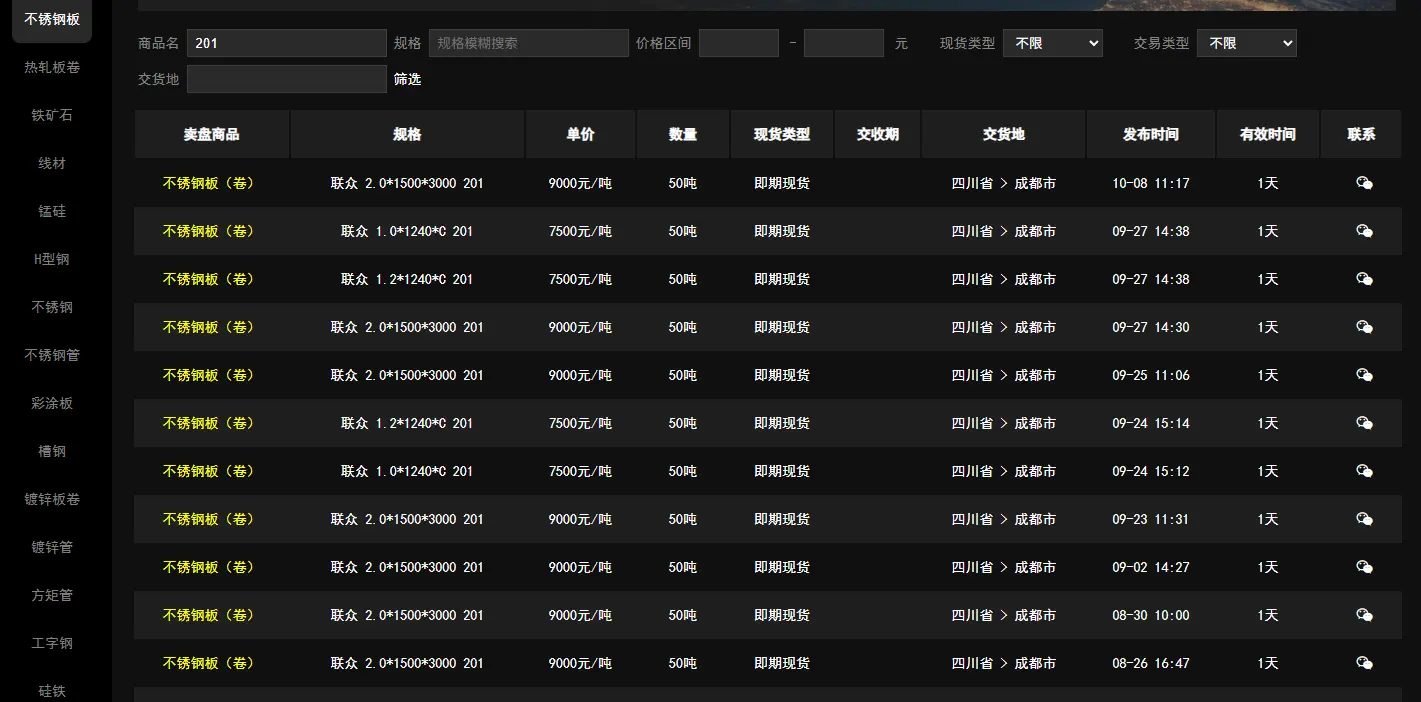
Based on China domestic market pricing in January 2026:
201 Stainless Steel:
7,500 – 9,000 RMB / ton
304 Stainless Steel:
11,400 – 12,750 RMB / ton
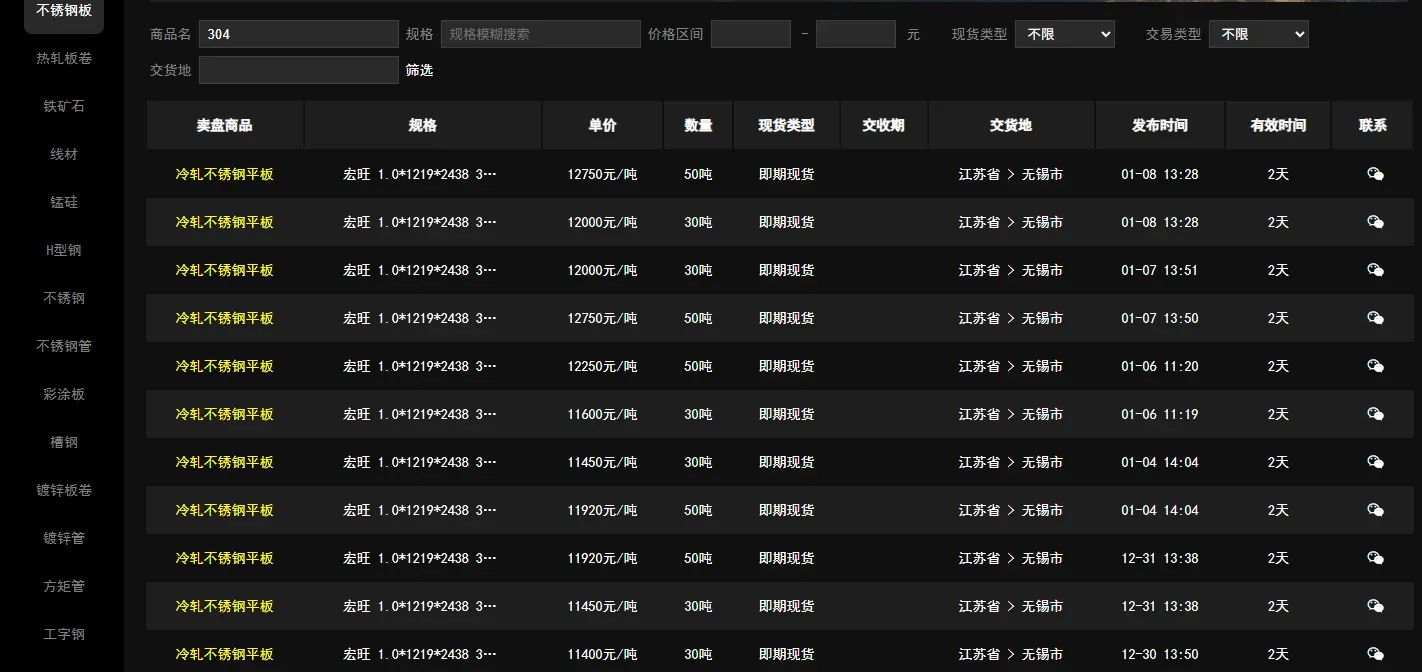
This represents a material cost gap of approximately 30–45%.
For finished outdoor furniture products, this difference can translate into:
25–40% higher material cost for a full 304 stainless steel furniture set compared to 201.
This cost pressure is the primary driver behind undeclared material substitution, especially when:
Pricing competition is intense
Contracts lack precise material definitions
Inspections focus only on appearance, not composition
Common Material Substitution Tactics in the China Supply Chain
1. Full Replacement Without Disclosure
Factories use 201 stainless steel throughout, while marketing products simply as “stainless steel outdoor furniture,” avoiding any grade reference.
2. Mixed-Grade Construction
304 stainless steel is used on visible areas, while 201 is used on internal frames or connectors, leading to uneven corrosion and accelerated failure over time.
3. Surface Coating Camouflage
201 stainless steel is painted, powder-coated, or plated to resemble 304.
Once the coating is scratched or worn, rust appears quickly.
4. Misleading Grade Names
Terms such as “304D”, “304J1”, or “enhanced 304” are non-standard and do not meet AISI 304 / SUS304 specifications.
How Importers Lock Material Specifications — From Contract to Production
1. Contract Clauses Must Be Explicit
Avoid vague language. Contracts should clearly state:
- “All stainless steel components must be AISI 304 (or equivalent SUS304), with chromium ≥18% and nickel ≥8%.”
Avoid terms such as “high-quality stainless steel” or “304 series.”
2. Material Documentation & Traceability
Require suppliers to provide:
- Mill Test Certificates (MTC) from the steel mill
- Material purchase invoices and batch tracking records
3. Penalty Clauses for Substitution
Include enforceable language, such as:
- “If inspection confirms material inconsistency, the buyer has the right to reject the entire shipment.
All return costs and penalties (up to 30% of contract value) shall be borne by the seller.”
Sample ≠ Mass Production: How Importers Verify Consistency
Even if a sample tests as 304 stainless steel, it does not guarantee bulk production uses the same material.
Professional verification steps include:
- Sample Locking
Approved samples are sealed and retained as inspection benchmarks. - Mid-Production XRF Testing
Handheld XRF spectrometers are used when 30–40% of production is completed, checking nickel, chromium, and manganese content. - Discrete Material Marking
Early production units may include internal “304” markings for traceability (if branding allows).
Third-Party Inspection: When It Becomes Necessary
For higher-value orders, importers often engage SGS, BV, or Intertek to conduct:
- Chemical composition analysis
- Neutral salt spray testing (e.g. 72-hour benchmark)
- Factory process and material flow audits
These steps significantly reduce post-shipment disputes.
Importer’s Practical Self-Protection Checklist
Before Ordering
- Request recent 304 stainless steel export references
- Conduct factory audits (on-site or live video)
- Verify steel sourcing channels (steel mill vs open market)
During Production
- Obtain copies of mill certificates
- Arrange at least one unannounced mid-production inspection
- Retain samples of key structural parts
Before Shipment
- XRF test ≥5% of finished products
- Verify correct material labeling
- Confirm container loading to prevent material mix-ups
Why Professional Sourcing Partners Matter
Experienced sourcing partners reduce material risk through:
- Pre-qualified factories with consistent 304 usage
- Multi-stage inspection systems, including material testing
- Full material traceability, from steel mill to finished goods
- On-site technical verification, not just visual inspection
Conclusion
Choosing between 304 and 201 stainless steel is not simply a cost decision — it is a quality, durability, and brand-risk decision.
Professional importers follow a “trust, but verify” sourcing strategy:
- Clear contracts
- Process-based inspections
- Verified material testing
This approach ensures that every piece of outdoor furniture delivered to the market meets its promised performance.
Concerned About Stainless Steel Material Authenticity?
Contact our team to receive:
- A customized material-verification plan
- Factory sourcing recommendations
- End-to-end quality control support
Scarecrow Garden Supplier help importers turn material risk into a controlled, predictable sourcing process.
Written by
ScarecrowGarden
💡About Scarecrow Garden Supplier Co., Ltd.
Scarecrow Garden Supplier Co., Ltd. is a China-based sourcing and wholesale partner specializing in garden tools, landscaping equipment, and outdoor supplies for international wholesalers, distributors, contractors, and brands.
With hands-on experience rooted in real garden use scenarios, we focus on durable materials, functional design, and stable large-volume supply. Our product range covers pruning tools, watering systems, hand tools, outdoor hardware, and customized garden solutions to support both retail and professional landscaping markets.
Beyond products, we help our partners navigate supplier selection, quality control, compliance requirements, and long-term sourcing strategies in China. Through our blog, we share practical insights on product selection, material comparisons, industry trends, and cost-effective purchasing—helping global buyers build stronger, more competitive supply chains.