









6 Common Landscaping Safety Hazards and How the Right Tools Prevent Them
Abstract (Introduction)
Landscaping work weaves together physical labor, power equipment operation, and outdoor hazard exposure, making the use of landscaping safety tools a non-negotiable priority for on-site teams. Occupational Safety and Health Administration (OSHA) data highlights this urgency: landscaping professionals face a 30% higher injury rate than average workers, with 78% of these incidents linked to preventable gaps—chief among them improper tool use and outdated equipment. Landscaping safety is not a one-dimensional effort rooted solely in training; it begins with equipping teams with tools engineered to address landscaping safety hazards.
This guide breaks down:
- The six most pervasive safety hazards in landscaping
- How each hazard is contextualized with industry-specific injury patterns
- How specialized tools act as proactive barriers rather than reactive solutions
- The critical overlap between equipment design and safety protocol effectiveness
By addressing risks through tool-driven solutions, landscaping businesses don’t just cut downtime and workers’ compensation costs—they build a safety culture that protects their most irreplaceable asset—their team.
This guide also outlines the essential landscaping safety equipment and safe landscaping practices that help companies comply with OSHA landscaping safety standards.
Main Body: Safety Risks and Tool-Driven Prevention Strategies
1. Lacerations and Amputations from Sharp Tools
Lacerations in landscaping typically occur when sharp tools are used without proper safety features or maintenance.
Sharp implements—pruning shears, hedge trimmers, machetes—are the backbone of landscaping work, yet they account for 28% of OSHA-documented injuries related to landscaping safety tools and landscaping safety hazards.
Root Causes
- Excessive force due to poor blade condition
- Blades without safety features
- Dull edges increasing slip risk
How Proper Tools Prevent Injuries
Proper ergonomic garden tools mitigate these risks through intentional design:
- Ergonomic handles with rubberized grips
- Spring-loaded blade locks
- High-carbon steel blades retaining sharpness
- Curved blade geometry that redirects cutting force
Regular maintenance—blade sharpening every 10-15 hours and safety mechanism checks—is also critical.
A structured landscaping tool maintenance checklist significantly reduces preventable tool-related injuries.
2. Falls During Elevated Work
Why Falls Occur
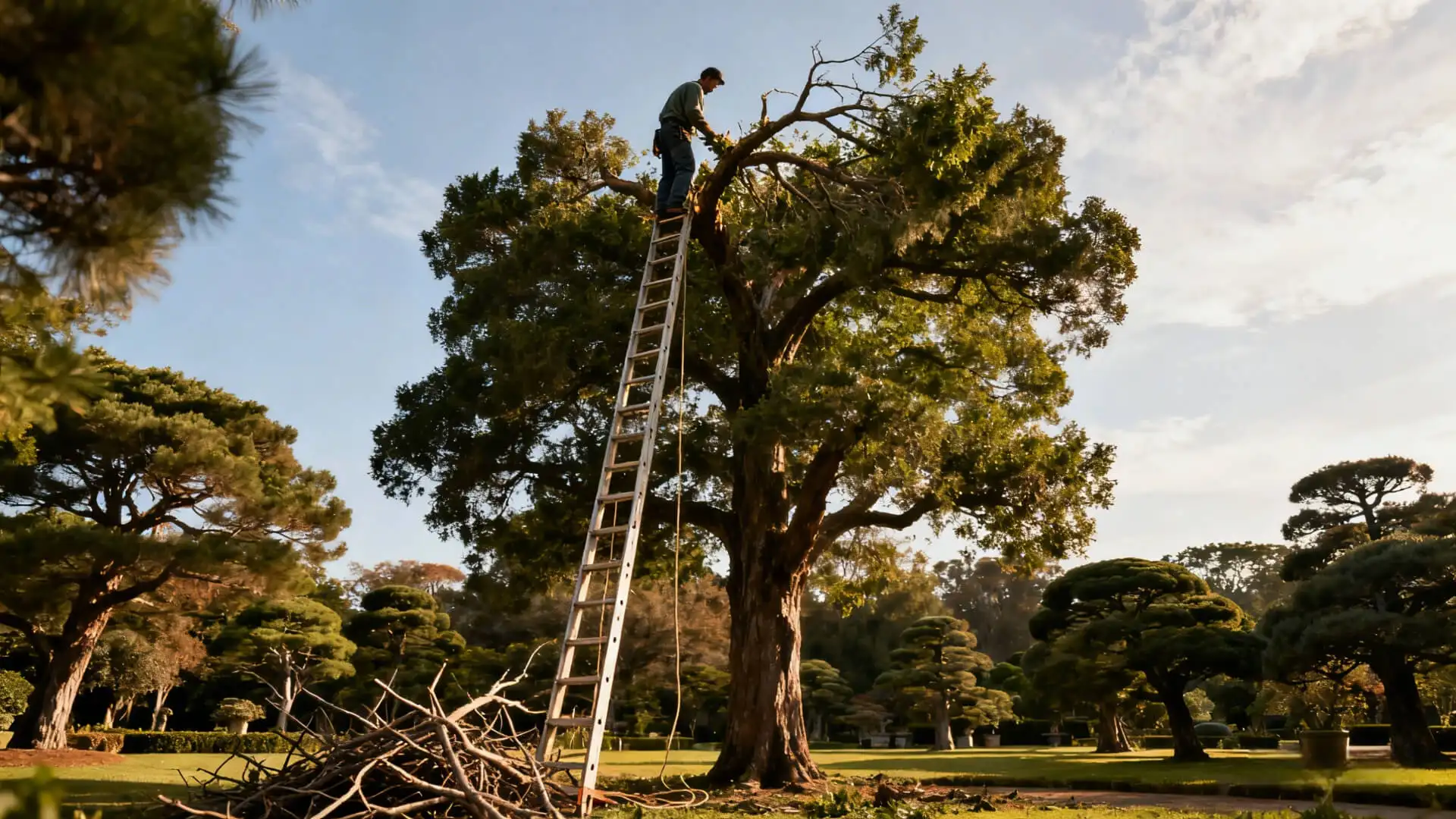
Falls remain a leading landscaping safety hazard due to unstable footing, uneven terrain, and improper elevated equipment use.
Statistics
BLS notes that 40% of falls occur due to improper ladder use.
Tool-Based Prevention
Proper landscaping safety tools solve this by extending reach:
- Extendable hedge trimmers (6–10 ft)
- Telescoping pruning saws (up to 15 ft)
- Remote-control articulating tools
Teams using extendable tools complete trimming tasks 22% faster than those using ladders.
3. Musculoskeletal Disorders from Repetitive Motion
Impact on Workers
Chronic musculoskeletal disorders (MSDs) affect 45% of workers in landscaping.
Why MSDs Develop
- Repetitive digging, raking, pruning
- Long hours of forceful motions
- Vibration exposure
Ergonomic Tools Reduce These Strains
Examples include:
- Curved-handle rakes and shovels
- Vibration-dampening handles
- Battery-powered pruning shears
Companies investing in ergonomic tools report 38% lower turnover among long-term workers.
These ergonomic garden tools also support safe landscaping practices recommended for long-term injury prevention.
4. Eye and Face Injuries from Debris
The Hazard
Flying debris is responsible for 70% of landscaping eye injuries.
Why Traditional Tools Fail
- Open discharge chutes
- Unguarded hedge trimmers
- High-speed propulsion of rocks and twigs
Tool Design That Prevents Injuries
Examples include:
- Mulching mowers with enclosed chutes
- Adjustable airflow blowers
- Hedge trimmers with face guards
Using proper PPE—face shields and ANSI-rated goggles—adds a critical layer of protection.
5. Electrocution from Power Tool Misuse
The Risk
Electrocution accounts for 12% of landscaping electrical injuries.
Primary Causes
- Frayed cords
- Ungrounded tools
- Water exposure
Electrical Safety Features That Protect Workers
- Double-insulated tools
- IPX-rated casings
- Battery-powered sealed systems
- Overload protection
Training teams to follow outdoor power equipment safety guidelines reduces electrocution risks by 90%.
6. Heat-Related Illnesses Worsened by Subpar Equipment
Why Heat Incidents Are Common
Landscaping workers are 15x more likely to suffer heat-related illness compared to indoor workers.
Equipment That Makes Heat Worse
- Heavy gas-powered blowers
- Non-adjustable, thick straps
- Poor airflow around the body
Tools Engineered for Heat Safety
These include:
- Lightweight battery-powered blowers
- Ergonomic airflow harnesses
- Adjustable tool straps
- Long-lasting batteries that reduce sun exposure time
Teams using heat-friendly tools report 50% fewer heat-related incidents.
Implementing heat safety guidelines for outdoor workers can prevent heatstroke during peak summer months.
The Role of Training in Maximizing Tool Safety
Proper landscaping safety tools are only effective if teams know how to use them.
Key training areas include:
- Mastering tool safety features
- Conducting hazard assessments
- Following maintenance protocols
- Understanding tool retirement criteria
Teams with monthly training experience have 65% fewer equipment-related injuries.
Call to Action
Landscaping safety is a shared responsibility—one that starts with investing in proper landscaping safety tools and ends with training teams effectively.
This section encourages:
- Tool audits
- Consultation with equipment specialists
- Monthly safety training
- Personalized assessments
If your team needs guidance on selecting compliant OSHA landscaping safety equipment, Scarecrow Garden Supplier Co., Ltd can help you build a customized injury prevention plan.

Written by
ScarecrowGarden
💡About Scarecrow Garden Supplier Co., Ltd.
Scarecrow Garden Supplier Co., Ltd. is a China-based sourcing and wholesale partner specializing in biaogarden tools, landscaping equipment, and outdoor supplies for international wholesalers, distributors, contractors, and brands.
With hands-on experience rooted in real garden use scenarios, we focus on durable materials, functional design, and stable large-volume supply. Our product range covers pruning tools, watering systems, hand tools, outdoor hardware, and customized garden solutions to support both retail and professional landscaping markets.
Beyond products, we help our partners navigate supplier selection, quality control, compliance requirements, and long-term sourcing strategies in China. Through our blog, we share practical insights on product selection, material comparisons, industry trends, and cost-effective purchasing—helping global buyers build stronger, more competitive supply chains.
Related Articles

How to Source from China Without Missing Your Peak Season

China Public Holidays 2026: A Buyer’s Guide to Avoid Supply Chain Disruptions Before Long Shutdowns
Why Bulk Garden Tool Orders Fail — and How We Help Buyers Prevent Costly Quality Issues in China