






Updated 1 month ago
How Professional Garden Tools Are Made: A Buyer & Wholesale Guide to Materials and Manufacturing
ScarecrowGarden
💡About Scarecrow Garden Supplier Co., Ltd.
Scarecrow Garden Supplier Co., Ltd. is a China-based sourcing and wholesale partner specializing in biaogarden tools, landscaping equipment, and outdoor supplies for international wholesalers, distributors, contractors, and brands.
With hands-on experience rooted in real garden use scenarios, we focus on durable materials, functional design, and stable large-volume supply. Our product range covers pruning tools, watering systems, hand tools, outdoor hardware, and customized garden solutions to support both retail and professional landscaping markets.
Beyond products, we help our partners navigate supplier selection, quality control, compliance requirements, and long-term sourcing strategies in China. Through our blog, we share practical insights on product selection, material comparisons, industry trends, and cost-effective purchasing—helping global buyers build stronger, more competitive supply chains.
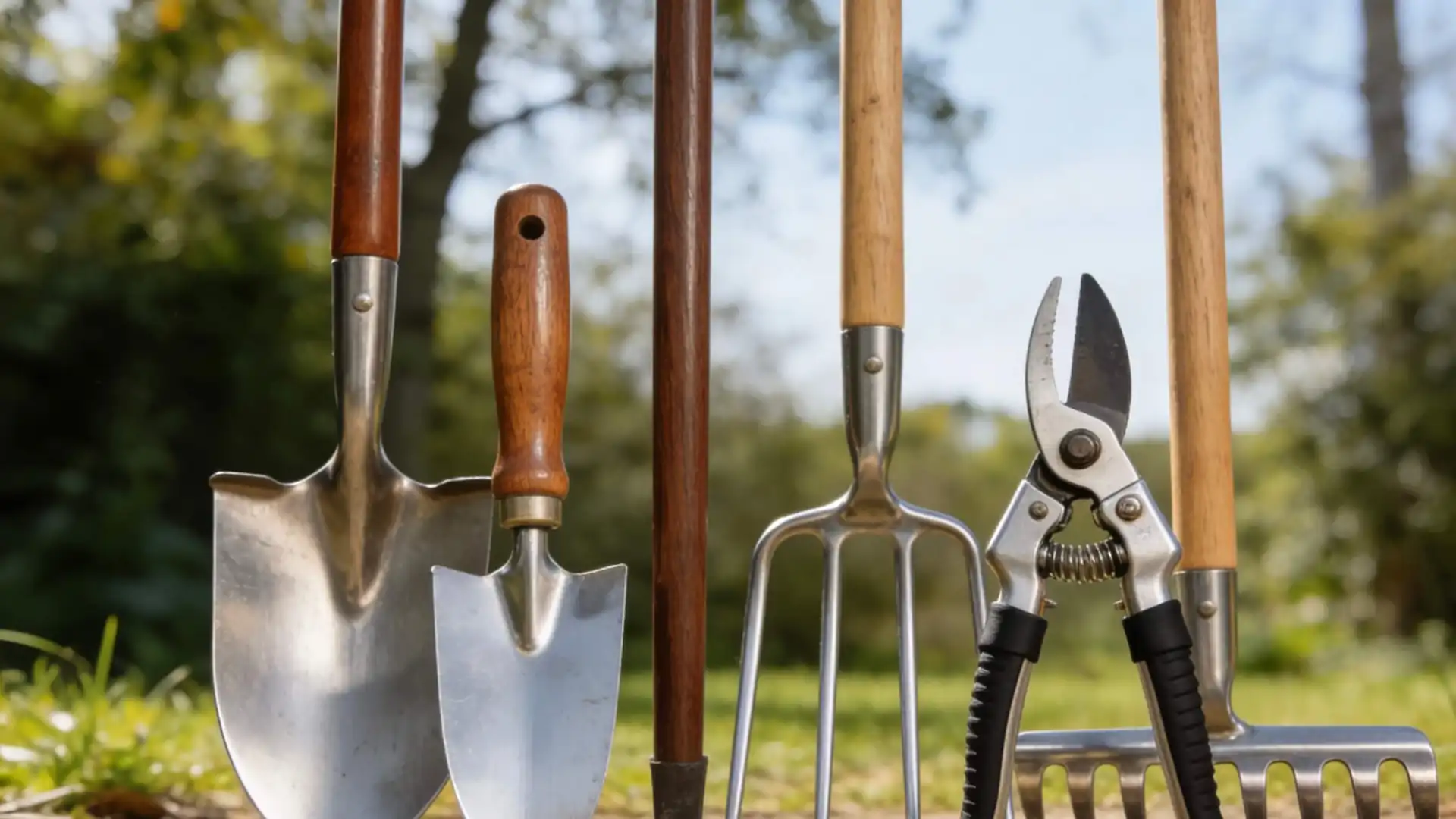
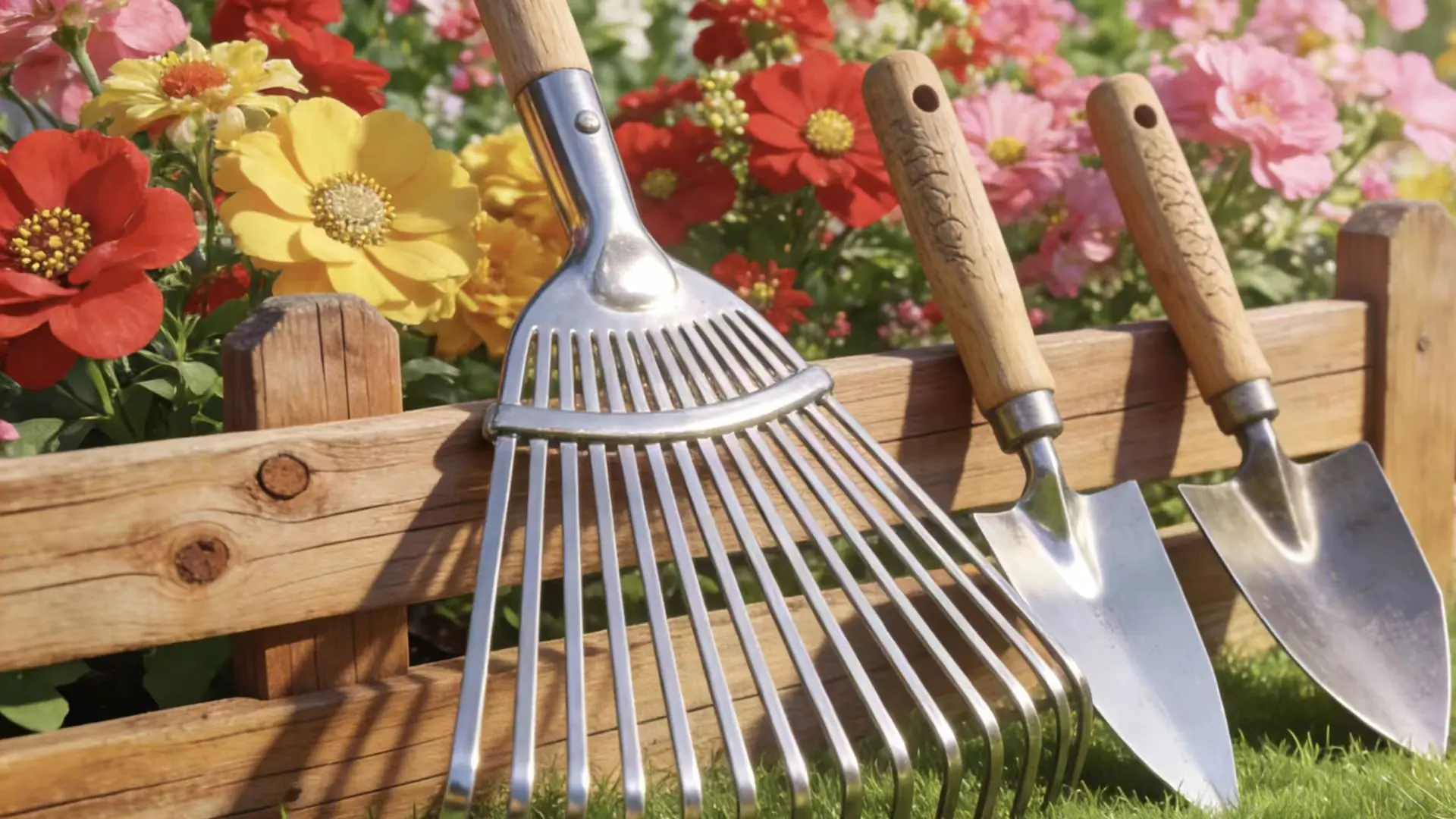
forged high carbon steel garden tools manufacturing process
Understanding how professional garden tools are made is essential for wholesale buyers, distributors, and new sourcing managers who want to distinguish truly professional tools from standard consumer products. From material selection to forging, handle construction, and surface coatings, every manufacturing decision directly affects durability, safety, and long-term value.
Materials & Forging

Metal Parts
High-Carbon Steel: It is the material of choice for professional-grade trimming tools. It is safe to say that high-carbon steel is far from comparable to ordinary steel in terms of hardness or ability to maintain sharpness.
Stainless steel: Professional-grade stainless steel garden tools are typically made of 420 or 440 series stainless steel. It is enough to recognize this when buying.
In fact, professional garden tool manufacturers will combine stainless steel and carbon steel. Allowing high-carbon steel to improve the sharpness of the blade and stainless steel to prevent rust from other parts. Ultimately, achieving the perfect combination of performance and durability.
The serrations of professional garden saws often use the "three-piece combination" process. The middle layer is soft mild steel, and the sides are high-carbon steel, forming a sandwich-like structure. Then through special grinding. Only the high-carbon steel is exposed at the tip of the teeth. It ensures the sharpness and retention of the teeth. Also ensures that the saw body has sufficient toughness and is not easy to break.
The shovel head of professional garden shovels also often adopts the structure of three-layer composite steel plates. The outer layer is high-carbon steel, which provides hardness and wear resistance. The middle layer is mild steel, which provides toughness and impact resistance. Finally, it achieves the ideal state of "the outside and tough on the inside".
Quality garden tools are rarely produced using the casting method, but mostly using the forging process. Forging is the process of plastic forming metal at high temperatures through hammering or pressure. It can make the grain structure of the metal tighter, thereby improving the strength and toughness of garden tools and making them more durable.
Handle part
High-quality garden tool handles still favor natural wood, especially these three:
Beech wood with fine grain, moderate strength and excellent shock resistance creates a comfortable fit in the hand after long-term use.
Ash wood with excellent toughness and impact resistance. It is a common material for gardening tools in North America and is not easy to break even when bent.
As a luxury choice for high-end tools, walnut is not only aesthetically pleasing but also dense, corrosion-resistant, and can last for decades.
Treating these woods is not simply cutting and shaping, but requires at least 6-12 months of slow drying to stabilize the moisture content of the wood between 8% and 12% to prevent deformation and cracking during use. Subsequently, it goes through multiple processes such as steam bending, sanding, and oil immersion to become a qualified handle material.
Fiberglass reinforced nylon. This is a process in which fiberglass filaments are embedded into a nylon matrix, resulting in handles that are lightweight. Extremely strong and impact-resistant, and completely resistant to moisture. So your customers don't have to worry about them getting wet like wood.
Carbon fiber composite. It weighs half as much as wood, but is more than 5 times stronger than steel. And it has excellent shock absorption, so your customers won't feel numb or sore palms during long hours of work.
Injection molded TPR (thermoplastic rubber): Commonly used in the handle wrap, it provides a comfortable grip, good slip resistance, and excellent weather resistance.
Connecting part
The connection between the handle and the metal head requires extra care because they are so fragile, and professional tools usually connect in three ways:
Solid rivets: Fixed by cold or hot forging to form a permanent connection, this connection is strong, so there is no need to worry about subsequent loosening.
Stainless steel bolt + lock nut: This connection allows users to change the handle or adjust the angle as needed, while ensuring that it will not loosen for long-term use through nylon lock rings or spring washers.
Epoxy + mechanical locking: This dual fixing system is filled with chemical adhesives and interlocked with mechanical structures to ensure that it is foolproof and very secure.
Coating part
The metal surface of professional garden tools mostly uses electrostatic powder coating technology. Compared with traditional liquid coatings, powder coatings do not contain solvents, have stronger adhesion, and are 2-3 times thicker than ordinary coatings.
It can resist ultraviolet rays, moisture, and even fertilizers and pesticides, and can be said to be powerful.
Another high-end process is the PTFE coating, a polymer material that is only a few microns thick, reducing resin and sap buildup, making cutting smoother and easier to clean.
At the same time, the PTFE coating provides additional rust protection.
Of course, traditional chrome plating and galvanizing can also effectively protect tools. Such as hard chrome plating is to electroplating a layer of chromium with a hardness of about 0.05 mm on the surface of the tool. Or dip the steel tool into molten zinc liquid to form a zinc-iron alloy layer of about 0.1 mm. So that even if the surface is scratched, the zinc will rust before the iron, so as to protect the substrate well.
Conclusion
For wholesale buyers, distributors, and sourcing managers, understanding how professional garden tools are made is the first step toward building a reliable product line.
After reading this blog, you will find that the manufacture of garden tools is so ingenious and exquisite.
If you want to make your gardening career smoother and save money on unnecessary trial and error, it is right to read more relevant information before buying gardening tools. Or ask more questions to professional gardening tool sellers, such as Scarecrow Garden Supplier Co., Ltd. We will recommend the best garden tools for you. I believe this will make your career extraordinary.
Written by
ScarecrowGarden
💡About Scarecrow Garden Supplier Co., Ltd.
Scarecrow Garden Supplier Co., Ltd. is a China-based sourcing and wholesale partner specializing in biaogarden tools, landscaping equipment, and outdoor supplies for international wholesalers, distributors, contractors, and brands.
With hands-on experience rooted in real garden use scenarios, we focus on durable materials, functional design, and stable large-volume supply. Our product range covers pruning tools, watering systems, hand tools, outdoor hardware, and customized garden solutions to support both retail and professional landscaping markets.
Beyond products, we help our partners navigate supplier selection, quality control, compliance requirements, and long-term sourcing strategies in China. Through our blog, we share practical insights on product selection, material comparisons, industry trends, and cost-effective purchasing—helping global buyers build stronger, more competitive supply chains.
Related Articles

How to Source from China Without Missing Your Peak Season

China Public Holidays 2026: A Buyer’s Guide to Avoid Supply Chain Disruptions Before Long Shutdowns
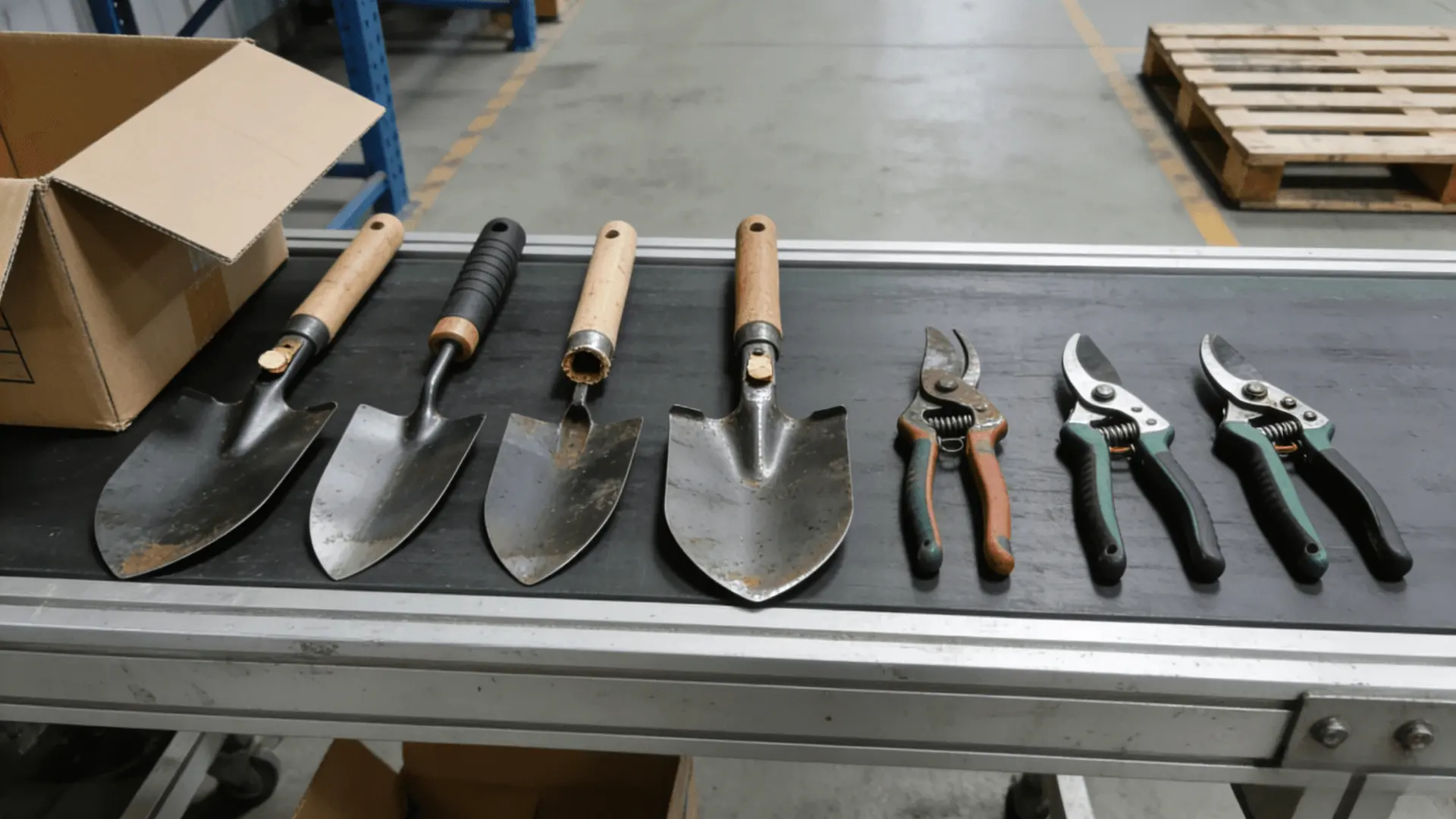
Why Bulk Garden Tool Orders Fail — and How We Help Buyers Prevent Costly Quality Issues in China