









Updated 12 hours ago
Garden Assortment Planning for Importers and Regional Distributors: Core, Seasonal and Test SKUs
SCARECROW GARDEN SUPPLIER
Building a garden product range is about structuring a catalog where each SKU has a role — core products that anchor the range, seasonal products that drive peak-period revenue, and test products that explore new categories without risking the core business.
For regional distributors and importers, assortment planning is the bridge between sourcing decisions and channel strategy. The buyer who plans the range before sourcing the products avoids the two most common range problems: SKU duplication (multiple products serving the same customer for the same task) and range gaps (missing the product the channel actually needs).
Define Region, Channel and End-Customer Before Choosing SKUs
Before selecting a single product, the distributor needs to answer three questions:
1. What region am I serving?
Climate determines what garden products sell. A distributor serving a Mediterranean climate zone has different seasonal patterns than one serving a temperate zone with hard winters. Spring arrives at different times. Growing seasons differ. The range must match the region’s gardening calendar.
2. What channel am I serving?
| Channel | Range Characteristics |
| Garden centers | Broad range, display-driven, seasonal peaks |
| Hardware stores | Narrower range, tool-focused, year-round demand |
| E-commerce | Broad range possible, but each SKU needs its own listing and photos |
| Supermarket seasonal | Limited range, high volume, aggressive pricing |
| Professional supply | Focused, durable products, less seasonal, higher price points |
3. Who is the end customer?
- Home gardeners: Buy for personal use, value convenience and appearance, moderate price sensitivity
- Professional landscapers: Buy for work, value durability and performance, lower price sensitivity for quality
- Hobbyists / enthusiasts: Buy for passion, value specialization and brand, willing to pay premium
The same product can serve different customers in different channels — but the range structure should reflect who the distributor’s customer actually is.
Core SKUs — Year-Round Demand That Anchors the Range
Core SKUs are the products that sell year-round or on a predictable repeat cycle. They are the foundation of the range — the products the distributor can count on for baseline revenue.
Characteristics of core SKUs:
- Stable, predictable demand across seasons
- Low return rate (the product works as expected)
- Repeatable reorder pattern (the distributor can forecast replenishment)
- Established customer expectation (the channel expects to find these products)
Typical core SKUs in a garden range:
| Category | Core SKU Examples |
| Hand tools | Bypass pruning shears, general-purpose trowel, hand fork |
| Watering | Standard watering can, hose connector set |
| Planting | Basic plastic pots (common sizes), standard soil tester |
| Protection | General-purpose garden gloves (nitrile-coated, standard sizes) |
Core SKUs are not the most exciting products in the range. They are the most reliable. A distributor who stocks 50 SKUs but has no clear core — where 30 of the 50 are seasonal or test products — has a range that may be vulnerable to seasonal demand fluctuations.
Seasonal SKUs — Climate, Spring/Summer/Autumn/Winter Programs and Lead-Time Logic
Seasonal SKUs drive peak-period revenue. They are the products that sell intensely for a few weeks or months and then disappear from the shelves until next year.
Seasonal structure by climate (northern hemisphere temperate zone example — adjust for your target market’s climate zone and hemisphere):
| Season | Product Focus | Sourcing Lead Time |
| Spring (peak) | Planting tools, pruning tools, soil preparation, seed starting | Order in autumn/winter for spring delivery |
| Summer | Watering tools, weed control, pest control | Order in winter for summer delivery |
| Autumn | Cleanup tools, leaf management, composting | Order in summer for autumn delivery |
| Winter | Tool maintenance, protective covers, storage | Order in autumn for winter delivery |
Lead-time logic: Seasonal products must be in the warehouse before the season starts — not during the season. If the spring selling window starts in March, the products need to be in the warehouse by January at the latest. For example, with a typical production lead time of around 45 days and sea freight transit of roughly 30 days, a spring product may need to be ordered by November to arrive in January. A distributor who orders spring products in February will likely miss the season. These are typical figures for reference — actual lead times vary by supplier, product complexity, and season. Confirm with your supplier before building your ordering calendar.
The risk of seasonal SKUs: Overstock. If a seasonal product does not sell through during its window, it sits in the warehouse for a year — occupying space and tying up capital. The distributor should plan seasonal quantities conservatively and reorder if demand exceeds expectations, rather than ordering aggressively and hoping.
Test SKUs and Attachments — Trialing New Categories Without Disrupting the Core
Test SKUs are products the distributor is not sure about. They may be new categories, new materials, or new price points. The purpose of a test SKU is to learn whether a product has a place in the range — without committing to a large order.
How to manage test SKUs:
- Small order quantity: Start with the minimum viable order — enough to place in a few stores or list online, not enough to fill a warehouse.
- Limited channel exposure: Test in one or two channels first. If the product works, expand. If it does not, the exposure is limited.
- Clear evaluation criteria: Define what “success” means before the test starts. Is it sell-through rate? Customer feedback? Margin? Without defined criteria, the test produces no useful data.
- Time limit: Give the test a defined period — one season, or 60 days. If the product has not proven itself by the deadline, exit it.
Attachments and accessories: These are products that complement the core range — spare blades, replacement spools, additional battery packs, replacement springs. They do not drive primary demand, but they can increase average transaction value and support after-sales satisfaction. A distributor who sells pruning shears but does not stock replacement springs may miss an after-sales revenue opportunity.
Good-Better-Best and Channel Tiers — Real Differentiation, Not Duplicated Products
A good-better-best range structure offers customers choice across price points. But the structure only works if the tiers are genuinely different — not the same product at three slightly different prices.
| Tier | What It Means | What Makes It Different |
| Good (entry) | Meets basic needs at a competitive price | Simpler material, basic packaging, standard handle |
| Better (mid) | Improved performance or features for moderate additional cost | Upgraded material, ergonomic handle, better coating |
| Best (premium) | Professional-grade or brand-level quality | Premium material, specialized design, premium packaging |
The test for real differentiation: If a customer held the “good” and “better” products side by side, would they see and feel a difference? If the answer is no, the tiers are not real — they are just price points. Real differentiation comes from material, construction, and features — not from packaging or marketing labels.
Cross-Category Balance — Tools, Watering, Planting, Protection and Outdoor Living
Beyond price tiers, the range needs category balance. A balanced garden range spans multiple categories. The distributor should not over-index on one category unless the channel is specialized (e.g., a tool-only hardware store).
| Category | Role in Range | Demand Pattern | Typical Share (Illustrative) |
| Tools (hand and power) | Core anchor, year-round demand | Year-round, repeat purchases | 30–40% |
| Watering | Seasonal driver, summer peak | Seasonal, concentrated in warm months | 15–20% |
| Planting (pots, testers, raised beds) | Seasonal + year-round mix | Spring peak, some year-round | 15–20% |
| Protection (gloves, knee pads) | Year-round, high volume | Year-round, replacement-driven | 10–15% |
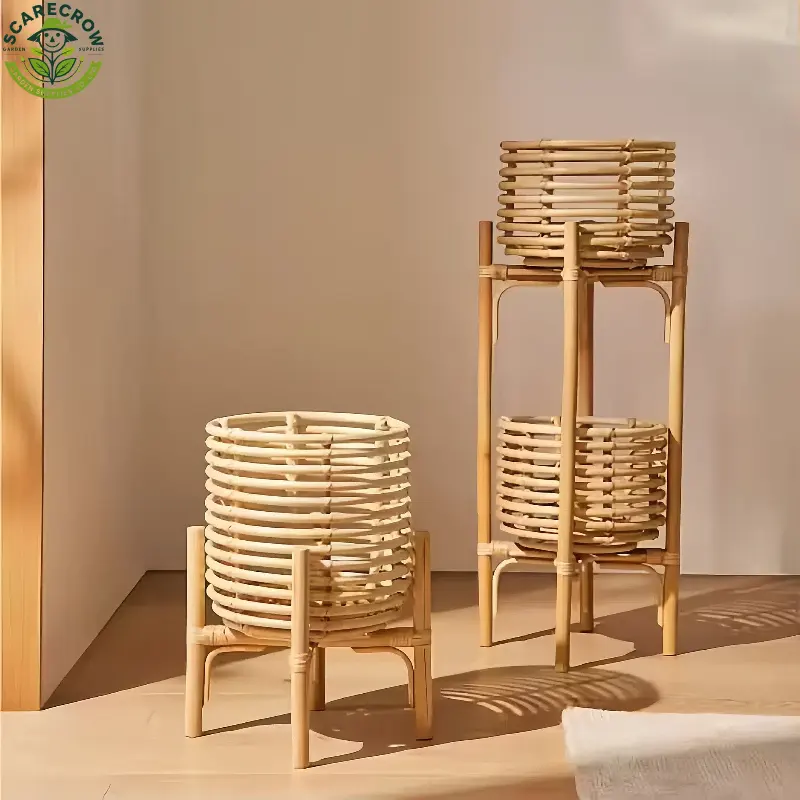
| Outdoor living (decorative, rattan) | Seasonal, higher price point | Spring/summer, impulse and display-driven | 10–15% |
Note: These share ranges are illustrative starting points based on general garden retail patterns, not industry-standard targets. Actual shares depend on the distributor’s channel, region, customer base, and product strategy.
Tools commonly anchor the range because they sell year-round and generate repeat visits — a customer who comes in for pruning shears may also pick up a trowel and a pair of gloves. The actual category balance depends on the channel, region, and customer base. A range that is heavily weighted toward tools may be missing revenue from watering, planting, and protection categories that the same customer would also buy.
Reorder and Exit Rules — Sell-Through, Feedback, Margin and Service Issues
Not every SKU stays in the range forever. The distributor needs rules for when to reorder and when to exit a product.
Reorder signals:
- Sell-through rate: Is the product selling at a rate that justifies restocking? The rate should be measured against the category average, not against an arbitrary target.
- Customer feedback: Are customers asking for the product? Are reviews positive?
- Margin contribution: Does the product contribute enough margin to justify its shelf space or warehouse slot?
- Supplier reliability: Can the supplier deliver reorders on time and to spec?
Exit signals:
The question is not whether to reorder or exit — it is whether you have defined the threshold before the data arrives. A rule applied after the fact is a rationalization, not a decision.
- Slow sell-through: The product is not moving at the expected rate.
- Quality issues: Return rate or complaint rate exceeds the category norm.
- Supplier discontinuation: The supplier stops making the product and no replacement is available.
- Margin erosion: Price competition or cost increases have squeezed margin below the distributor’s threshold.
Do not invent universal thresholds for reorder or exit decisions. The right threshold depends on the distributor’s cost structure, warehouse capacity, and strategic priorities. What matters is that the rules are defined — and that someone is applying them consistently.
Buyer Verification Checklist: Assortment Planning
Before your next sourcing cycle:
- Map your current range against core, seasonal, and test categories — identify gaps and duplications.
- Define your good-better-best tiers with real differentiation — material, construction, and features, not just price points.
- Set reorder and exit rules based on your own data — sell-through, margin, and return rate thresholds that match your business.
Plan a Multi-Category Garden Product Range
Turn your market, channel and seasonal plan into a clearer product assortment with supplier matching, samples and mixed-order coordination.
Explore Garden Product SourcingResearch Notes
- Category share percentages shown in the Cross-Category Balance table are illustrative starting points based on general garden retail patterns, not industry-standard targets. Actual shares depend on the distributor’s channel, region, customer base, and product strategy.
- Lead time figures (45 days production, 30 days sea freight) are typical reference values. Actual lead times vary by supplier, product complexity, season, and shipping route. Buyers should confirm lead times with their supplier before building the ordering calendar.
- Good-better-best tier examples are material-based differentiation examples. Actual tier definitions should be based on the buyer’s product positioning and market expectations.