









Bypass vs Anvil Pruners: Which Is Better for Gardening?
Pruning can be regarded as the most basic part of gardening.
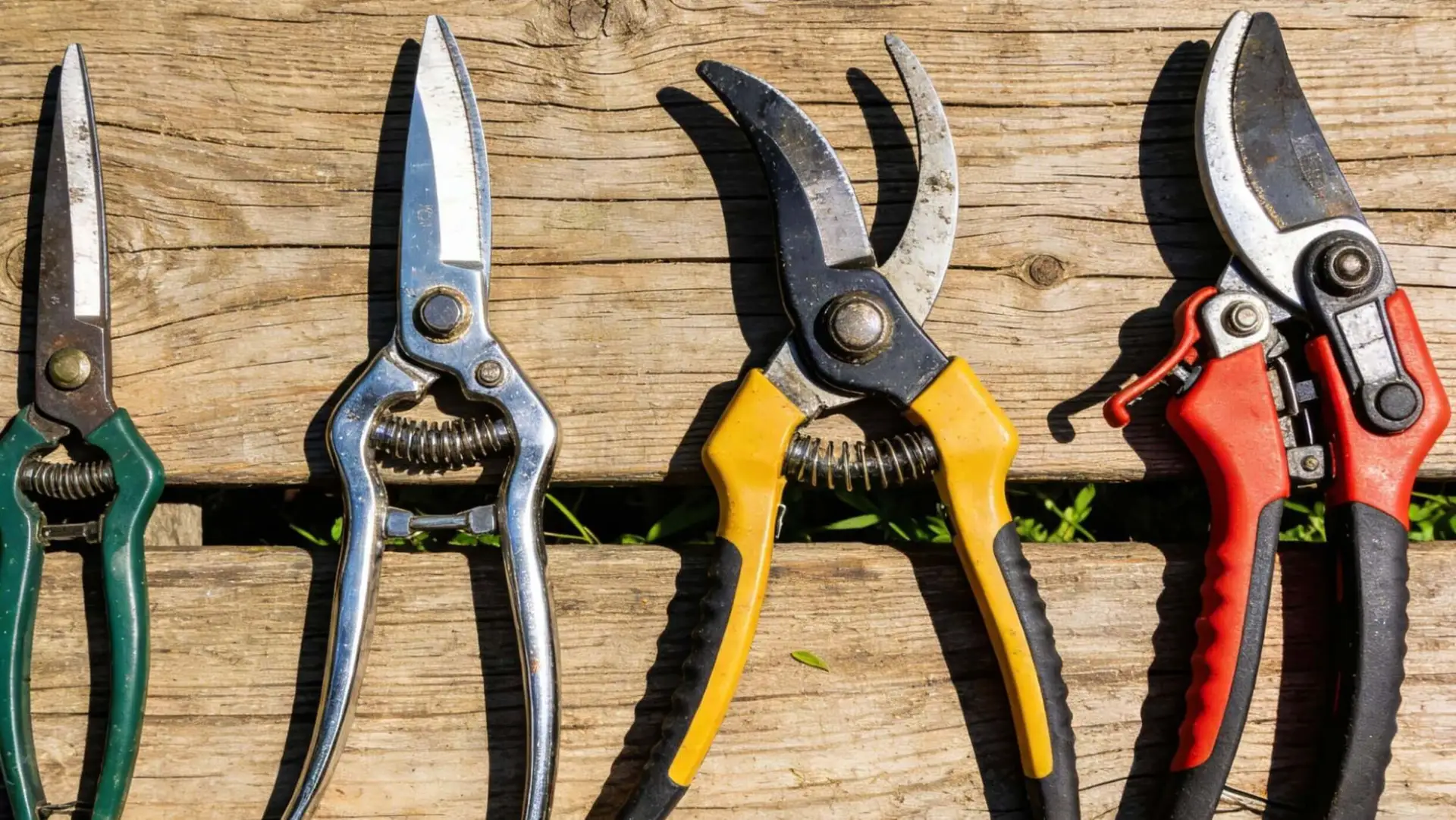
When comparing bypass vs anvil pruners, understanding their structural and cutting differences is essential not only for gardeners, but also for landscaping start-ups, distributors and wholesalers planning a pruning shears product line.
In this article I will go into depth about the most commonly used pruning shears in these two types of gardening so that you can get to know them better, so that you can source the suitable garden tools for your customers.
Basic cognition: The essential difference in working principles
Bypass Shears: Precision cutting like scissors
Bypass shears are designed on a design principle similar to traditional scissors: two sharp blades slide cross-over each other, one as an active cutting blade and the other as a support blade. This design allows it to produce clean cuts when cutting, especially suitable for pruning live branches.
Core Features
Double-edged design, the cutting action is done by two motion blades.
The cutting principle is similar to scissors and is a true "shearing" action.
Usually has a slightly curved blade for easy fit on the shoot.
The incision is flat and causes minimal damage to plant tissue.
Anvil pruning shears: powerful pressure like a kitchen knife.
Anvil pruning shears work on a completely different principle: a sharp blade moves downwards and presses against a flat and hard "anvil". This design is more like cutting something on a cutting board with a kitchen knife.
Core Features
Single-edged design with only one movement blade.
The cutting action is "pressing" rather than "cutting".
Anvils are typically wider, providing a stable support surface.
Concentrated cutting force for hard materials.
Structural Design Comparison: From appearance to details
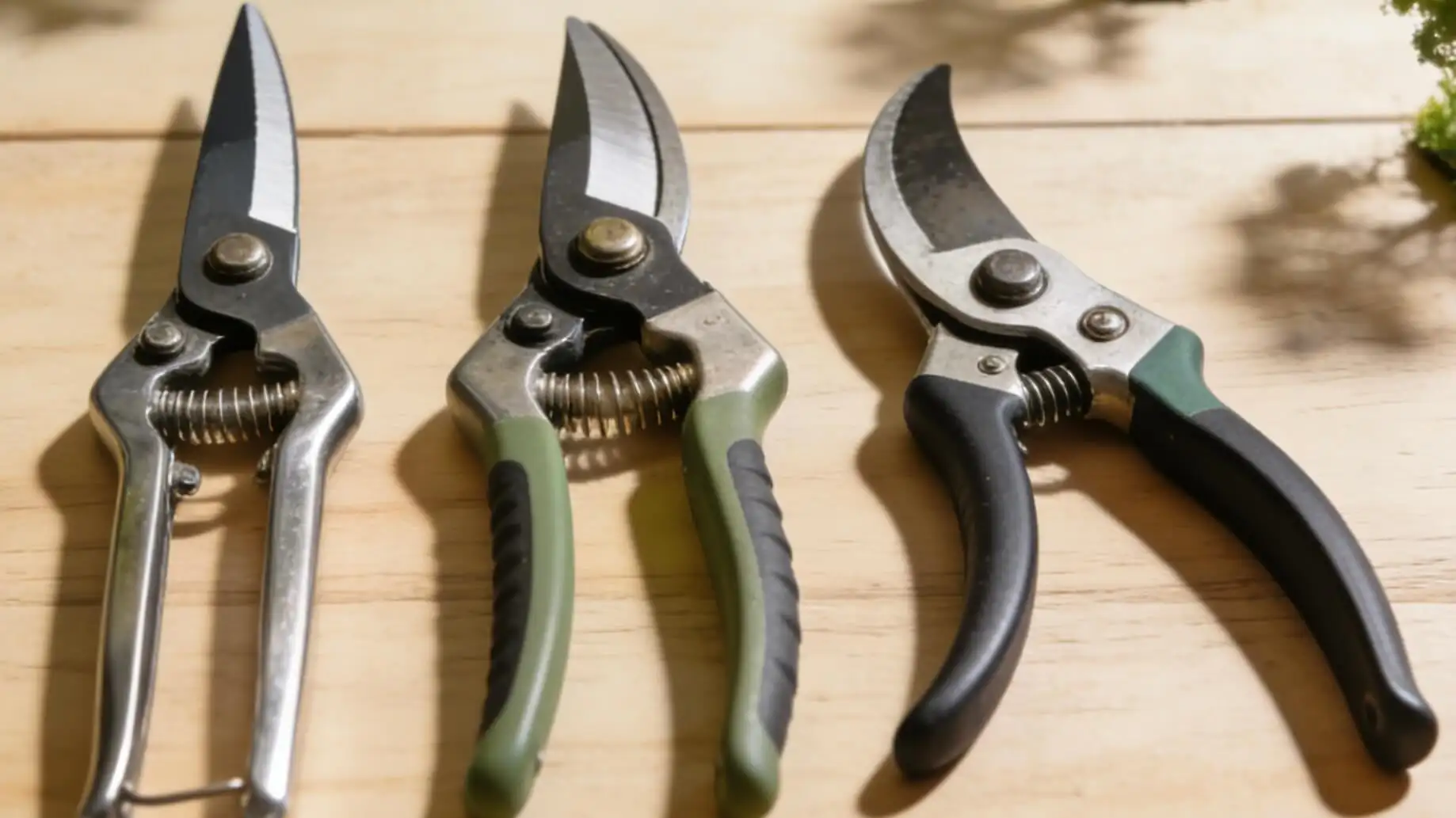
Fine Construction of Bypass Shears
- Adjustment Device: High-quality bypass shears often come with nut adjustments that allow for adjustment of blade clearance and tightness.
- Handle design: ergonomic and not easy to fatigue after long-term use.
- Security Locks: Most are designed with locking mechanisms for easy carrying and storage.
Robust Design of Anvil Pruning Shears
- Anvil material: In the early days, it was metal, but in modern times, high-strength plastics or composite materials are mostly used to reduce wear and tear on the blade.
- Blade Angle: Typically, thicker and more angled to withstand more pressure.
- Force Arm Design: The handle tends to be longer, providing greater leverage 3. Performance: each has its own strengths in the application fields.
Advantages of Bypass Shears
- Live Branch Pruning Expert: Excellent cutting effect on live branches, with flat cuts and fast healing.
- Fine trimming expert: It can perform precise positioning and cutting, suitable for fine shaping work.
- Preferred for Routine Maintenance: Lightweight and easy to use, suitable for frequent daily pruning tasks.
- Wound Minimization: Reduces plant tissue damage and reduces the risk of disease invasion.
- Smooth Cutting Experience: When cutting branches within the diameter, the operation is smooth and labor-saving.
Examples of the Best Use Cases
- Shape and prune roses and other ornamental flowers and trees.
- Fruiting branches of fruit trees are pruned and thinned.
- Fine modeling and maintenance of hedges.
- Shaping of young trees and shrubs.
- Any live branches that need to be cleaned, leveled for pruning.
Areas of Expertise of Anvil Pruners
- Dead branch cleaning expert: The effect of dealing with dry and hard dead branches is remarkable.
- Powerful cutting expert: can handle branches larger than its own nominal diameter.
- Outstanding Durability: The blade comes into contact with the anvil, reducing friction between blades and extending its lifespan.
- Obvious labor-saving effect: The leverage is stronger and more friendly to users with less power.
- Multi-functional treatment: In addition to dead branches, it is also suitable for dealing with some semi-dry and harder living branches.
Examples of the Best Use Cases
- Cleaning up dead branches in the orchard in winter.
- Broken branches after storms.
- The first forced pruning of trees that have not been pruned for many years.
- Thick branch cutting when the shrub is removed.
- Pruning of harder woody plants (e.g. certain conifers, old vines, etc.).
Comparison of Actual User Experience
The operation experience of the Bypass shears
- Cutting experience: Smooth feel and a clear "bite" when cutting.
- Precise Control: The tip allows for fine manipulation, making it suitable for cutting at complex angles.
- Obvious feedback: High-quality bypass shears have clear feedback when cutting, helping to judge the cutting effect.
- Continuous Workability: The design is lightweight, making it suitable for continuous operation for extended periods.
The Operation Experience of the Anvil Pruner
- Strong Sense of Force: The handle design provides a distinct mechanical advantage, allowing for a more powerful feel when cutting.
- Stable support: The anvil provides stable support, and the branches are less likely to slide when cutting.
- Easy operation: Lower alignment requirements and more friendly to novices.
- Impact feeling: There is a clear "impact" feeling when cutting, and some models have a large vibration.
- Plant health effects: invisible differences.
Plant Friendliness of Bypass Shears
- Cut Quality: Produces clean, flat incisions that are beneficial for callus formation.
- Tissue Damage: Minimizes crush damage to surrounding tissues.
- Healing Speed: Flat incisions generally heal faster, reducing the chance of infection.
- Disease Protection: Reduces cracking and rough edges, reducing the risk of germ invasion.
Potential Effects of Anvil Pruners
- Crushing effect: may cause some degree of extrusion damage to the branches.
- Cut quality: If the blade is not sharp enough or the shoots are too soft, it may have a slight crushing effect.
- Suitability of live branches: The cutting effect of soft living branches is not as ideal as that of bypass shears.
- Adjustment Needs: Keep the blade sharp more frequently to ensure cutting results.
- Selection Guide: Make an informed decision based on your customers' needs.
When to Choose Bypass Shears?
- Mostly prune live plants: If most of your customers' work is pruning growing plants.
- Focus on plant health: If your customers are particularly concerned about cut quality and plant healing.
- Delicate work needs: If your customers need to perform fine shaping and precise cutting.
- Professional Gardeners: If your customers are a professional horticulturist or a demanding hobbyist.
- Mix pruning tasks: If your customers' job includes both minor dead and live branch pruning.
When to Choose Anvil Pruning Shears?
- Primarily deal with dead branches: If your customers' focus is on cleaning up dead or dry branches.
- People with limited strength: If your customers need an extra mechanical advantage (e.g. less hand strength).
- Heavy-duty pruning tasks: If your customers frequently need to deal with shoots that exceed their regular diameter.
- Budget Priority: If your custoemers need a tool that is cost-effective and simple to maintain.
- Novice Gardeners: If your customers just starting out in gardening, they need simple and easy-to-use tools.
The Ideal Solution: A professional combination of both
For your customers, especially professionals and enthusiasts who regularly work in gardening, I usually recommend:
- Primary and secondary matching: Choose a high-quality bypass shear as the main tool and pair it with an anvil shear for special tasks.
- Specification differentiation: Bypass shears can be selected for medium sizes (such as 3/4 inch cutting capacity), and anvil shears can be selected for slightly larger models.
- Investment ratio: Invest the main budget into bypass shears, as it will do most of the fine work.
- Brand Selection: Consider products from the same brand to ensure that maintenance tools and accessories are universal.
Key Checkpoints when Purchasing
- Handle Comfort: Comfortable grip, especially pay attention to the special needs of those with larger or smaller palms.
- Weight Balance: The tool should feel balanced and not weigh down the front end.
- Security Lock Function: The locking mechanism should be reliable and easy to use.
- Brand reputation: Choose a brand with good after-sales service and parts supply guarantee.
Professional skills: Give full play to the maximum effectiveness of the tool
Tips for Using Bypass Shears
- Correct Positioning: Keep the branches close to the pivot point for maximum mechanical advantage.
- Direction Adjustment: Adjust the tool orientation based on the branch angle to avoid distorting the cut.
Tips for Using Anvil Pruning Shears
- Complete Closure: Ensure that the tool is fully closed with each cut for optimal cutting results.
- Anvil Alignment: Ensure that the shoots are perfectly centered on the anvil.
- Avoid Lateral Pressure: Avoid lateral force when cutting to prevent blade damage.
- Identify the limits: Do not forcibly cut branches that are significantly beyond your capabilities.
Conclusion
I believe that after reading this pruning tool buying guide, you have a deeper understanding of bypass shears and anvil pruning shears. In this way, you can source more comprehensive garden tools for your market.
And if you are expanding or adjusting a garden tools product line, you can browse the article 'Complete Guide to Garden Tools for Retailers & Wholesalers (2026)' to take a reference.
At Scarecrow Garden Supplier, we help B2B buyers develop and source garden tool assortments that align with their sales strategy and market positioning.
Contact us to discuss your product planning ideas and explore sourcing possibilities tailored to your business.
Written by
ScarecrowGarden
💡About Scarecrow Garden Supplier Co., Ltd.
Scarecrow Garden Supplier Co., Ltd. is a China-based sourcing and wholesale partner specializing in biaogarden tools, landscaping equipment, and outdoor supplies for international wholesalers, distributors, contractors, and brands.
With hands-on experience rooted in real garden use scenarios, we focus on durable materials, functional design, and stable large-volume supply. Our product range covers pruning tools, watering systems, hand tools, outdoor hardware, and customized garden solutions to support both retail and professional landscaping markets.
Beyond products, we help our partners navigate supplier selection, quality control, compliance requirements, and long-term sourcing strategies in China. Through our blog, we share practical insights on product selection, material comparisons, industry trends, and cost-effective purchasing—helping global buyers build stronger, more competitive supply chains.
Related Articles

How to Source from China Without Missing Your Peak Season

China Public Holidays 2026: A Buyer’s Guide to Avoid Supply Chain Disruptions Before Long Shutdowns
Why Bulk Garden Tool Orders Fail — and How We Help Buyers Prevent Costly Quality Issues in China