






20V vs 40V vs 80V Cordless Lawn Mowers: How to Choose the Right Power for Your Lawn
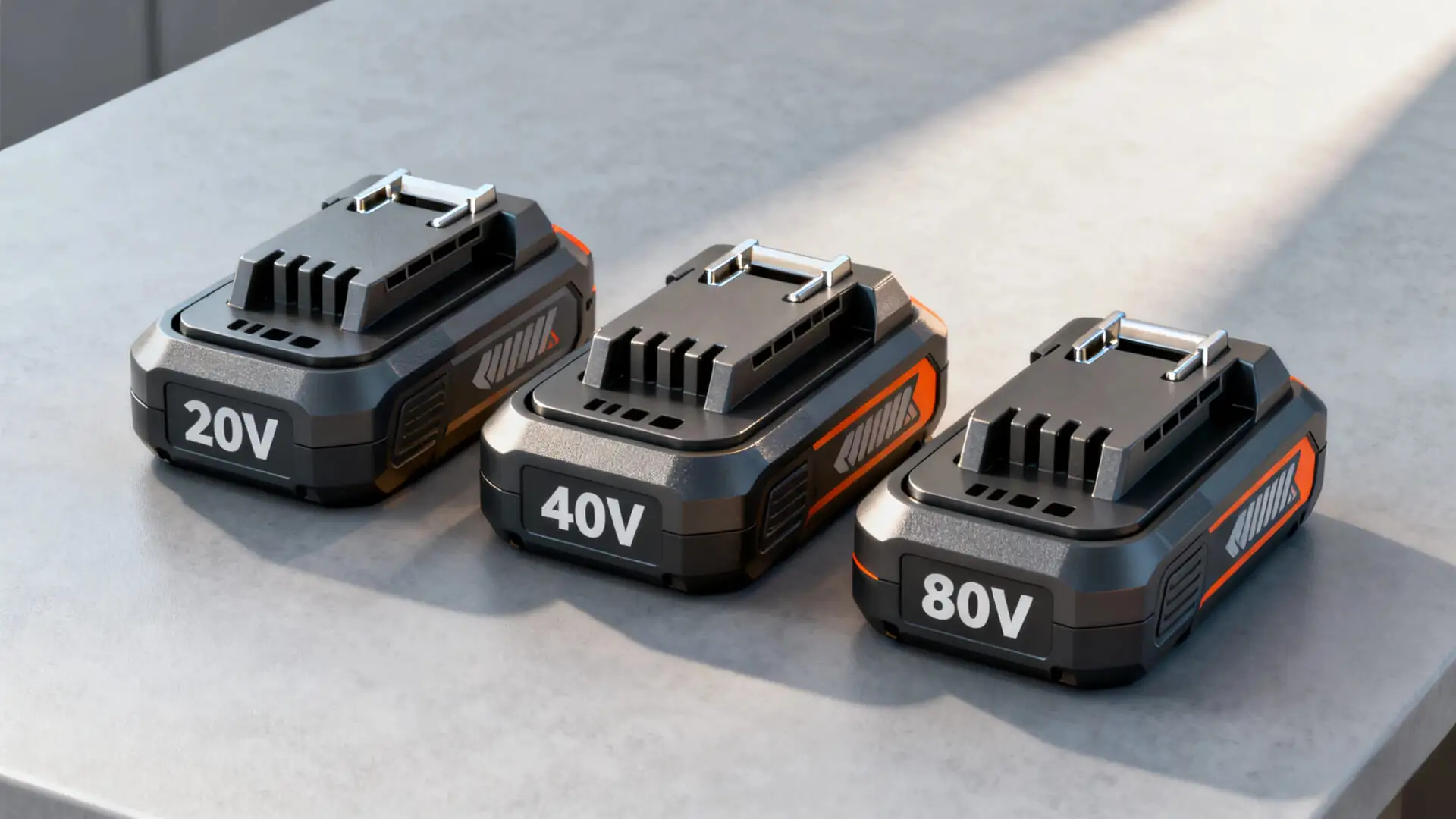
When choosing a cordless lawn mower, the voltage of the battery plays a crucial role in determining the mower's performance, runtime, and suitability for your lawn size. The battery voltage not only affects cutting performance but also influences how efficiently your mower handles different grass densities and terrains. This article delves into the differences between 20V, 40V, and 80V cordless lawn mowers, helping you make an informed decision based on your specific needs.
⚡ Battery Voltage and Its Impact on Lawn Mower Performance
Battery voltage directly determines the torque, cutting speed, and efficiency of a cordless lawn mower. Higher voltage mowers—such as 40V and 80V models—can handle dense or wet grass with greater ease. Higher voltage allows for more power, enabling the mower to handle thicker grass and larger areas more effectively. However, it's essential to match the voltage to your lawn's requirements to ensure optimal performance and battery life.
🧰 20V Cordless Lawn Mowers: Ideal for Small Yards
20V cordless lawn mowers are suitable for small yards, typically under 1,000 square feet. They are lightweight, easy to maneuver, and sufficient for light mowing tasks. However, they may struggle with taller or denser grass and might require more frequent recharging. These compact lawn mowers are perfect for homeowners seeking lightweight garden equipment with minimal maintenance needs.
🔋 40V Cordless Lawn Mowers: A Balanced Choice for Medium-Sized Lawns
40V cordless lawn mowers offer a balance between power and runtime, making them ideal for medium-sized lawns ranging from 1,000 to 5,000 square feet. They provide more torque than 20V models, allowing them to handle thicker grass and uneven terrains more effectively. Additionally, many 40V mowers come with features like brushless motors and multiple cutting modes, enhancing their versatility and efficiency. Many 40V cordless models are popular among garden retailers and distributors due to their versatility in both residential and commercial applications.
🚀 80V Cordless Lawn Mowers: Best for Large Lawns and Tough Conditions
80V cordless lawn mowers are designed for large lawns exceeding 5,000 square feet and challenging mowing conditions. They deliver higher power output, enabling them to tackle thick, overgrown grass with ease. These mowers often come equipped with advanced features such as self-propulsion, variable speed controls, and extended battery life, making them suitable for professional landscapers and homeowners with expansive properties. These heavy-duty cordless mowers are often used alongside other professional garden tools such as brush cutters, hedge trimmers, and leaf blowers for full-scale landscaping work.
🔍 Comparing Key Specifications
Here’s a quick comparison chart to help you evaluate which cordless mower voltage fits your lawn best.
| Voltage | Ideal Lawn Size | Power Output | Runtime (Approx.) | Suitable For |
| 20V | Small yards (<1,000 sq ft) | Low | 30–45 minutes | Light mowing, flat terrain |
| 40V | Medium lawns (1,000–5,000 sq ft) | Moderate | 45–60 minutes | Regular mowing, varied terrain |
| 80V | Large lawns (>5,000 sq ft) | High | 60+ minutes | Heavy-duty mowing, professional use |
🌿 Choosing the Right Mower for Your Needs
- 20V Mowers: Opt for a 20V mower if you have a small, flat lawn with minimal grass growth. These mowers are lightweight and easy to store, making them perfect for quick, light mowing sessions.
Consider sourcing your mower through reliable garden suppliers who can recommend models suited to your market needs.
- 40V Mowers: A 40V mower is a versatile choice for medium-sized lawns with varying grass types. It offers a good balance between power and runtime, handling thicker grass and uneven terrains more effectively.
Consider sourcing your mower through reliable garden suppliers who can recommend models suited to your market needs.
- 80V Mowers: Choose an 80V mower if you have a large lawn with dense or overgrown grass. These mowers provide the necessary power and features to handle extensive mowing tasks efficiently.
Consider sourcing your mower through reliable garden suppliers who can recommend models suited to your market needs.
🛠️ Expert Tip: Consider the Scarecrow Garden Supplier Range
For global distributors and garden retailers seeking reliable cordless lawn mowers, Scarecrow Garden Supplier offers a comprehensive sourcing range covering 20V, 40V, and 80V models from trusted hand tools manufacturers.
🔄 Conclusion
Selecting the right cordless lawn mower involves understanding your lawn's size, grass type, and your specific mowing needs. By considering the voltage and matching it to your requirements, you can ensure optimal performance and longevity of your mower. Whether you choose a 20V, 40V, or 80V model, investing in a quality mower like those from Scarecrow Garden Supplier can make lawn maintenance more manageable and enjoyable. Whether you’re a homeowner or a garden supplier, choosing the right cordless lawn mower voltage ensures efficient mowing, longer tool lifespan, and better landscaping results.
Written by
ScarecrowGarden
💡About Scarecrow Garden Supplier Co., Ltd.
Scarecrow Garden Supplier Co., Ltd. is a China-based sourcing and wholesale partner specializing in biaogarden tools, landscaping equipment, and outdoor supplies for international wholesalers, distributors, contractors, and brands.
With hands-on experience rooted in real garden use scenarios, we focus on durable materials, functional design, and stable large-volume supply. Our product range covers pruning tools, watering systems, hand tools, outdoor hardware, and customized garden solutions to support both retail and professional landscaping markets.
Beyond products, we help our partners navigate supplier selection, quality control, compliance requirements, and long-term sourcing strategies in China. Through our blog, we share practical insights on product selection, material comparisons, industry trends, and cost-effective purchasing—helping global buyers build stronger, more competitive supply chains.
Related Articles

How to Source from China Without Missing Your Peak Season
China Public Holidays 2026: A Buyer’s Guide to Avoid Supply Chain Disruptions Before Long Shutdowns
Why Bulk Garden Tool Orders Fail — and How We Help Buyers Prevent Costly Quality Issues in China